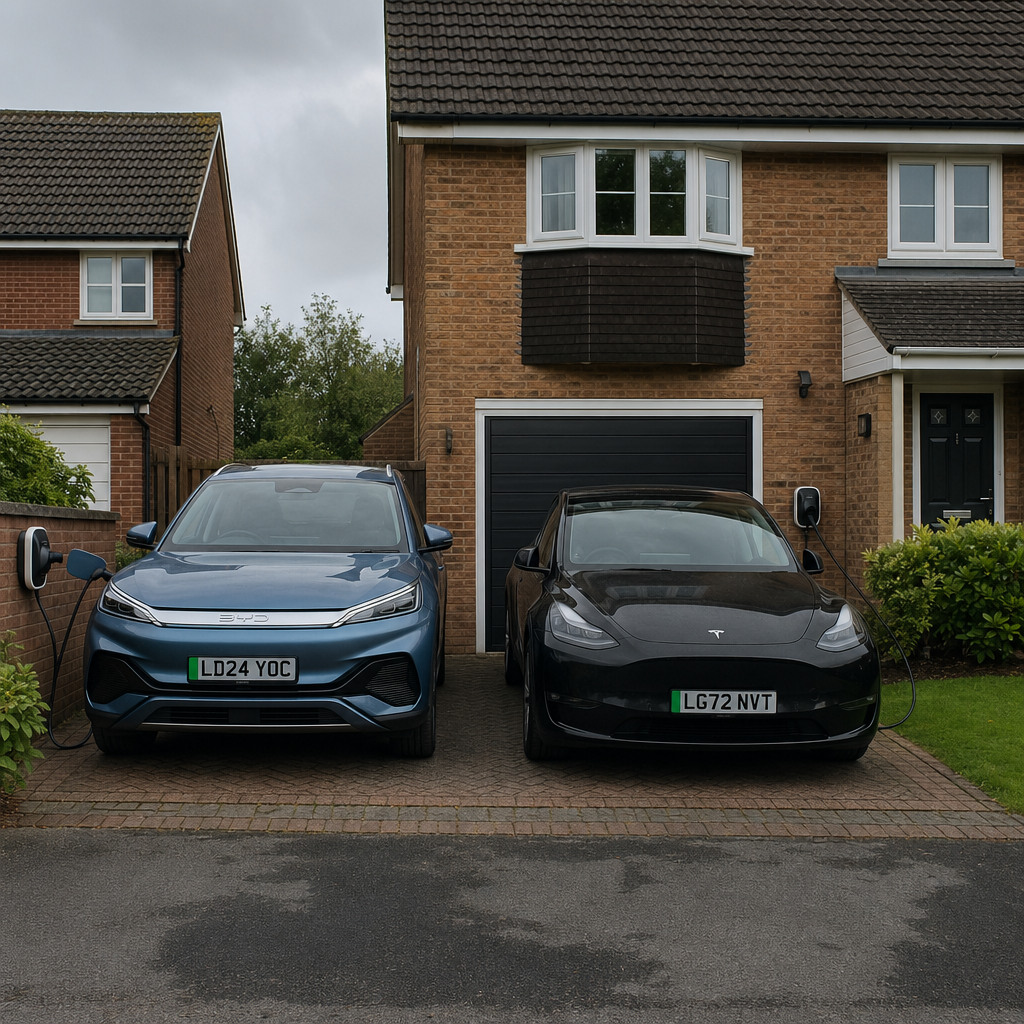
There’s a moment every EV-curious parent eventually hits. You’ve done a bit of research, you’ve got a rough budget in mind, and then you realise the choice isn’t really “petrol vs electric” anymore. It’s “which electric,” and suddenly there are a lot more options than there used to be. A few years ago, Tesla was essentially the default answer for anyone who wanted a proper family EV without compromise. These days, that’s genuinely no longer the case.
I’ve had my Tesla Model 3 Long Range for a few years now, and I love it. But I’m also honest enough to say that if I were buying today, I’d be doing a much more serious comparison before signing anything. BYD has arrived in the UK in a way that can’t be ignored. They now have a ten-car lineup here, they’re on course to overtake Tesla as the world’s biggest EV seller, and their prices are competitive enough to make anyone stop and think. So let’s actually do the comparison properly, the way a family with a real budget would.
This one’s for the parents standing in a dealership forecourt wondering whether the badge on the bonnet matters more than what’s inside it.
The Matchup: SUV vs SUV, Saloon vs Saloon
Before we get into specifics, it’s worth framing this correctly. The BYD Atto 3 and the Tesla Model Y are both SUVs, so that’s your family hauler comparison. The BYD Seal and the Tesla Model 3 are both saloons, so that’s your sleeker, sportier pairing. Mixing them up makes the numbers look misleading, so we’ll keep the comparisons clean.
The Atto 3 just got a significant update in April 2026, relaunched as the Atto 3 Evo. Prices start from £38,990 for the Design trim, rising to £42,730 for the dual-motor all-wheel-drive Excellence. The Model Y, meanwhile, starts from £41,990 for the Standard RWD, with the Long Range RWD at £44,990 and the Premium Long Range RWD at £48,990. If you want seven seats, that’s only available on the Premium Long Range AWD, and it’ll cost you an extra £2,500 on top.
So on the SUV side, BYD opens lower. The Atto 3 Evo undercuts the base Model Y by around £3,000, which on a family budget is real money. That said, the Model Y Standard is itself around £3,000 cheaper than the model it replaced, so Tesla has clearly been paying attention to the competitive pressure from China.
On the saloon side, the BYD Seal starts from £45,730 for the 2026 update, which puts it firmly up against the Tesla Model 3 Premium range rather than the entry-level. The new Tesla Model 3 RWD starts from just £37,990, which is genuinely aggressive. That’s a meaningful gap. If you’re after a saloon EV and budget is a real constraint, Tesla wins that opening skirmish on price.
Range: WLTP Numbers and Real-World Reality
WLTP figures are a bit like biscuit tin portions. The official number and what you actually get are rarely the same, and everyone knows it.
That said, here’s the official picture. The Atto 3 Evo Design claims up to 316 miles, which is a big improvement on the outgoing model’s approximately 260 miles. The Model Y Standard offers 314 miles, so they’re essentially neck and neck at this level. Move up the Model Y range and things shift. The Long Range RWD delivers 383 miles, and the Premium Long Range RWD stretches to 387 miles.
For the saloons, the BYD Seal Design claims 354 miles, while the AWD Excellence sits at 323 miles. The Tesla Model 3 RWD offers 332 miles from its starting price, and the Long Range RWD stretches to a fairly extraordinary 466 miles. If range anxiety is your main concern, the top-spec Model 3 puts most of the competition to shame.
Real-world testing of the Seal Excellence AWD returned roughly 270 miles between charges in genuine use, averaging around 3.2 miles per kWh over approximately 5,000 miles. That’s honest and useful data. With most families averaging well under 50 miles a day, even the lower real-world figures are more than adequate for the school run, commute, and weekend trips. Where range starts to matter more is on longer motorway runs, and that’s where Tesla’s Supercharger network still gives it a practical edge.
Charging, Comfort, and the Stuff Families Actually Care About
Charging infrastructure is where Tesla still holds a structural advantage that BYD hasn’t quite matched. Tesla’s Supercharger network in the UK is extensive, well-maintained, and genuinely reliable in a way that the public charging landscape in general is not. If you’ve ever stood in a motorway services car park jabbing at a broken charger screen in the rain with three kids in the car, you’ll understand why this matters. BYD owners use the public network, and while it’s improving, it remains patchier.
Boot space is another thing families obsess over, and rightly so. The Model Y has a large boot in five-seat configuration, which is genuinely cavernous. The Atto 3 offers a competitive amount of space for the class but is notably smaller. If you regularly load a boot with camping gear, buggies, or the sheer accumulated chaos of a family holiday, that difference is felt. The Model Y also has a front boot (frunk), which adds useful storage for charging cables and the other bits that otherwise live in your footwell.
Interior quality is a more subjective call. Tesla’s cabin is minimalist in a way that divides opinion. Almost everything is controlled via the touchscreen, which some people love and others find maddening, especially while moving. BYD’s interiors are more traditionally laid out, with physical controls for things like climate, and the Seal in particular has a rotating touchscreen that gets a lot of attention. Both brands are building genuinely nice interiors now, though Tesla has long been criticised for panel gaps and build consistency that hasn’t always matched the price tag.
Software and the connected car experience still favour Tesla. Over-the-air updates, navigation that actually accounts for charging stops, and the overall ecosystem integration are things Tesla has refined over years. BYD is improving but it’s catching up rather than leading.
Head-to-Head Comparison Table
| Feature | BYD Atto 3 Evo | Tesla Model Y Standard | BYD Seal (2026) | Tesla Model 3 RWD |
|---|---|---|---|---|
| Type | SUV | SUV | Saloon | Saloon |
| Starting price (UK) | £38,990 | £41,990 | £45,730 | £37,990 |
| WLTP range | Up to 316 miles | 314 miles | 354 miles | 332 miles |
| Charging network | Public (CCS) | Supercharger + CCS | Public (CCS) | Supercharger + CCS |
| 7-seat option | No | Yes (AWD, +£2,500) | No | No |
| AWD available | Yes (Excellence) | Yes (Long Range AWD) | Yes (Excellence) | Yes (Long Range AWD) |
Hype Cycle Check
LIKELY TO LAST: Tesla’s charging infrastructure advantage is real and durable in the near term. The Supercharger network gives families confidence that BYD simply can’t replicate yet. The Model Y’s boot space and seven-seat option also give it genuine practical legs for larger families.
WATCH CLOSELY: BYD’s pricing strategy. They’ve come in competitive and the Atto 3 Evo update shows they’re not standing still. If BYD partners with or expands rapid charging reliability in the UK, the remaining argument for paying more for Tesla gets thinner. The 2026 Seal pricing is a little steep against the Model 3, but that could shift.
VAPOURWARE RISK: Any dramatic claims about real-world range matching WLTP figures. Neither brand delivers 100% of the official number in British weather, on British motorways, with the heating on and three opinionated passengers changing the music. Plan around 75–80% of the headline figure and you’ll stay comfortable.
What This Means for CES 2027
CES has increasingly become a car show as much as a tech show, and the BYD vs Tesla dynamic will be playing out loudly by January 2027. Expect BYD to push its next-generation battery tech harder on the global stage, particularly its Blade Battery developments and any announcements around solid-state timelines. Tesla, meanwhile, will be under pressure to show what comes after the current refresh cycle for Model 3 and Model Y, especially if sales momentum in the UK and Europe continues to tighten. The software and AI integration story, from Autopilot and FSD developments on the Tesla side to whatever BYD announces in the autonomous and connected driving space, is likely to dominate the conversation. For families buying in 2027, that CES narrative will matter more than it does today.
What to Watch
1. BYD charging partnerships in the UK. If BYD secures a meaningful deal with one of the major UK rapid charging networks to offer a more seamless experience, it closes one of Tesla’s biggest remaining advantages overnight.
2. Tesla Model Y refresh sales data. The 2025 refresh dropped the starting price significantly. Watch how it affects used Model Y values and whether it reshapes the family EV market in the next 12 months.
3. UK EV incentives and tax changes. The government’s approach to EV incentives for private buyers remains a live conversation. Any changes to VED rates, benefit-in-kind rules, or the introduction of a renewed consumer grant scheme could immediately shift the price comparison in ways that make one brand or the other significantly more attractive.
4. Real-world Atto 3 Evo reviews. The Evo update only arrived in April 2026, and long-term owner data takes time to surface. The jump to 316 miles of claimed range is meaningful, but independent real-world tests over varied conditions will tell the real story.
If you want more buying guides, honest EV comparisons, and the kind of practical family tech content that doesn’t assume you have an unlimited budget, come and join the Tech Dads Life newsletter. I write it myself. No filler, no fluff, just the stuff worth knowing. Sign up at https://techdadslife.beehiiv.com/ and I’ll see you in your inbox.