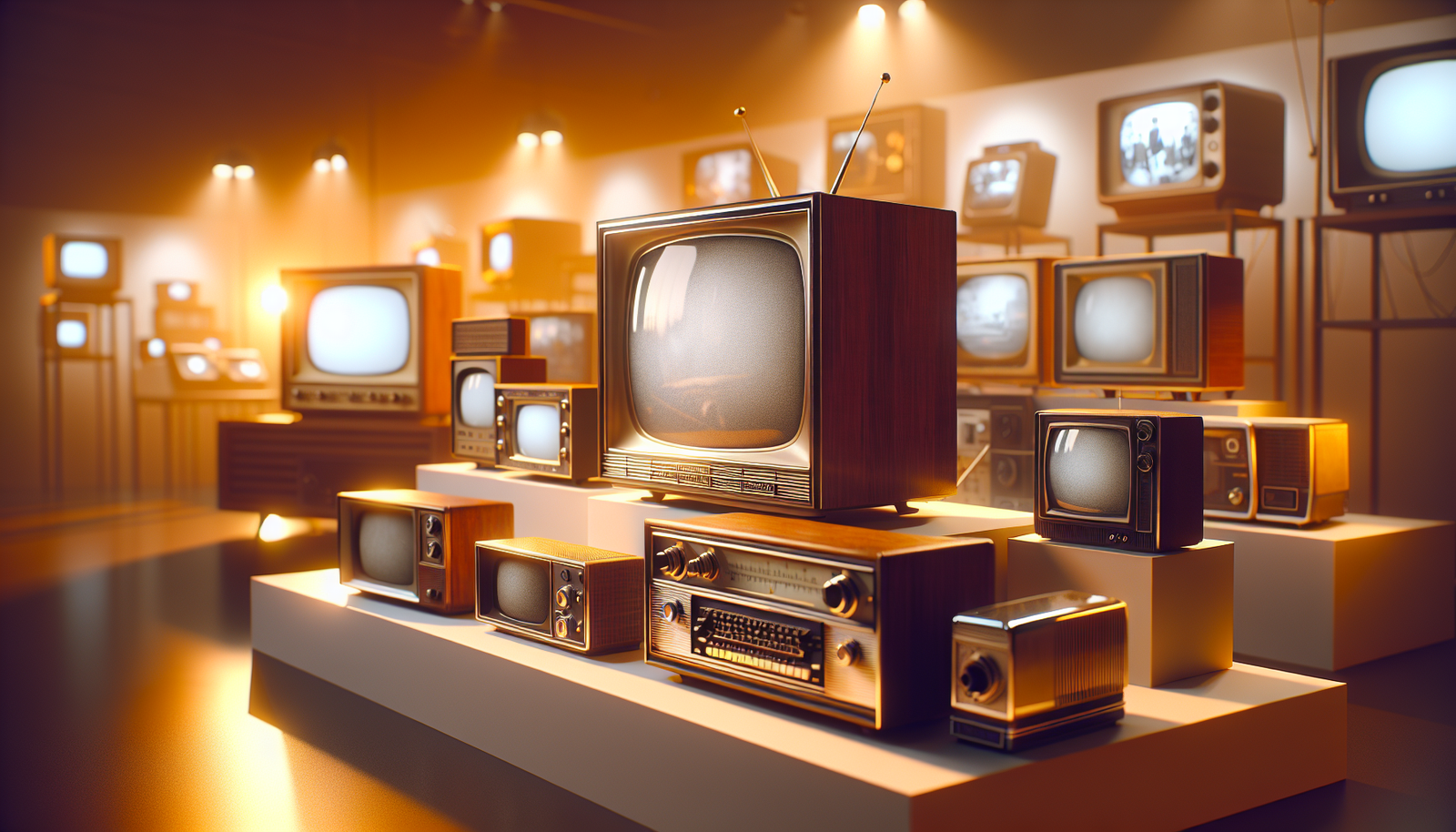
There’s a photo somewhere in my parents’ loft of my dad proudly standing next to our first VCR in 1983. It was the size of a small suitcase, cost him what I can only imagine was an eye-watering sum, and he treated it like it was the Ark of the Covenant. “Don’t touch the buttons,” he’d say, as if we might accidentally launch a missile. That VCR, like so many of the gadgets that shaped our childhoods, made its public debut at a trade show most people outside the tech industry had barely heard of at the time. A show called CES .
Fast forward to today, and CES is the single biggest technology event on the planet. Over 180,000 attendees descend on Las Vegas every January to see everything from AI-powered fridges to rollable televisions. It’s the place where the future gets unwrapped. But it didn’t start with robots and self-driving cars. It started with transistor radios, hi-fi systems, and a bunch of appliance retailers in New York City who just wanted to see what was new. The story of how CES grew from that humble beginning into a global phenomenon is, honestly, one of the most fascinating tales in tech. And if you’re a parent wondering why any of this matters, trust me, the gadgets in your kitchen, your kids’ school bags, and your living room all have roots on that show floor.
So grab a brew, settle in, and let me take you through the origin story of the Consumer Electronics Show, why it still matters nearly sixty years later, and what it means for families like ours heading into 2027.
From Transistor Radios to Times Square: The Birth of CES
The year was 1967. The Summer of Love was in full swing, the Beatles were recording Sgt. Pepper’s, and in New York City, a group of consumer electronics manufacturers and retailers gathered for the very first Consumer Electronics Show. It was held as a spin-off from the Chicago Music Show, which had traditionally been the place where audio equipment was showcased. But consumer electronics were growing fast, and the industry needed its own dedicated event.
That first CES attracted around 17,500 attendees and featured roughly 100 exhibitors. The star attractions? Transistor radios, black-and-white televisions making way for colour models, hi-fi stereo systems, and the earliest portable tape recorders. It was, by modern standards, a modest affair. But for the industry, it was electric. For the first time, there was a single venue where retailers could see the full landscape of consumer technology in one place.
The show bounced between New York and Chicago for its first few decades, sometimes running twice a year in both cities. It was very much a trade event, not a public spectacle. You wouldn’t find influencers livestreaming from the show floor. You’d find blokes in suits filling out order forms for the next season’s stock. But even in those early years, CES had a knack for being the stage where history was made. The VCR was introduced at CES in 1970. The laserdisc player appeared in 1974. The Commodore 64 debuted there in 1982. The Nintendo Entertainment System? CES, 1985. If a gadget changed your life in the late twentieth century, there’s a very good chance it was first shown off under the fluorescent lights of a CES exhibition hall.
The Las Vegas Era: Going Big, Then Going Enormous
CES made its permanent move to Las Vegas in 1998, and that’s when things really kicked into another gear. Vegas offered something New York and Chicago couldn’t match: sheer scale. The Las Vegas Convention Center, combined with venues across the Strip, gave the show room to grow in ways that would have been unimaginable to those 100 exhibitors in 1967.
The 2000s saw CES transform from an industry trade show into a cultural event. Bill Gates delivered keynote addresses. Major car manufacturers started showing up, not to sell cars but to showcase the tech inside them. Microsoft unveiled the Xbox at CES. Palm launched the Pre. The Blu-ray format won its war against HD DVD partly on the CES stage. Every January, the tech world held its breath to see what would be announced.
By the 2010s, CES had become almost absurdly large. At its peak, over 4,500 exhibitors spread across more than 2.9 million square feet of exhibit space. To put that in perspective, that’s roughly 50 football pitches of gadgets, prototypes, and demos. Walking the entire show floor in a single day isn’t just difficult, it’s physically impossible. I’ve spoken to journalists who wear fitness trackers at CES and regularly clock 15 to 20 miles of walking over the course of the week. If you ever needed motivation to invest in a decent pair of trainers, CES is it.
The pandemic forced CES to go virtual in 2021, and the 2022 show was a slightly subdued return to in-person events. But by 2024 and into 2025 , CES was back to its full, overwhelming glory. The show floor buzzed with AI, smart home tech, electric vehicles, health wearables, and an army of startups from every corner of the globe. The dad in me couldn’t help but notice that a significant chunk of the innovations were aimed squarely at family life. Smart baby monitors, kid-friendly tablets, home security systems, kitchen gadgets that practically cook dinner for you. CES had grown up, and so had its audience.
The Products That Changed Everything: A CES Hall of Fame
It’s easy to be cynical about trade shows. Plenty of what gets demoed at CES never makes it to shop shelves. But the hit rate for genuinely world-changing products is remarkable. Here’s a quick look at some of the most significant consumer tech debuts that happened at CES over the decades.
| Year | Product/Technology | Why It Mattered |
|---|---|---|
| 1970 | VCR (Videocassette Recorder) | Gave families control over what they watched and when |
| 1981 | Camcorder | Turned every dad into a film director (quality varied) |
| 1982 | Commodore 64 | Brought affordable computing into homes worldwide |
| 1985 | Nintendo NES | Revived the video game industry and created a generation of gamers |
| 1996 | DVD | Replaced VHS and transformed home entertainment |
| 2001 | Microsoft Xbox | Launched a console war that’s still going strong |
| 2007 | OLED TV prototypes | Set the stage for the stunning screens we have today |
| 2010 | First consumer tablets | Kickstarted the tablet era just before the iPad arrived |
| 2015 | Smart home ecosystems | Connected homes went from sci-fi to something you’d buy at Currys |
| 2024 | Transparent OLED TVs | Because apparently we needed to see through our tellies |
What strikes me about this list is how many of these products became deeply embedded in family life. The VCR meant recording kids’ shows. The camcorder meant preserving school plays (and embarrassing first steps footage that gets replayed at 18th birthday parties). The NES meant siblings arguing over who got to be Mario. CES didn’t just showcase tech. It showcased the future of how families would live.
Why CES Still Matters (Especially for Families)
You might wonder whether a massive trade show in the Nevada desert is really relevant to a family in Bristol or Birmingham. The answer is a resounding yes. CES sets the agenda for the tech industry each year. The trends that dominate the show floor in January tend to shape what lands on shop shelves by the following Christmas. If you want to know what smart home gadgets, wearables, or family-friendly tech will be on your radar in twelve months, CES is your crystal ball.
More importantly, CES has become increasingly accessible. You don’t have to fly to Las Vegas to benefit from it. Coverage is extensive, with thousands of journalists, YouTubers, and tech bloggers (hello) covering every announcement. Brands use CES as a launchpad, so the products you see demoed in January often come with pre-order links by February.
For UK families specifically, there’s another angle worth knowing about. The UK’s official presence at CES has faded, so we’re organising a self-run UK Meetup for CES 2027. If you’re curious enough to want to experience CES first-hand, it’s more achievable than you might think, and going with other Brits makes it easier. It’s worth checking out ces.tech if the idea of seeing the future of tech in person appeals to you.
Hype Cycle Check
Let’s be honest about what aspects of CES are genuinely significant and what deserves a raised eyebrow.
LIKELY TO LAST: CES as the annual launchpad for smart home, AI, and family-focused tech. The show has reinvented itself multiple times over nearly six decades. It’s not going anywhere. The trend of car manufacturers treating CES as a major auto show is also firmly established now, with the likes of BMW, Mercedes, and Sony Honda all using it as a primary stage.
WATCH CLOSELY: The growing role of health and wellness tech at CES. Every year brings more wearables, sleep trackers, and family health devices. The question is whether the regulation and accuracy of these products can keep pace with the marketing. As a dad who’s been told by his watch that he’s “stressed” while sitting on the sofa watching Bluey, I have questions.
VAPOURWARE RISK: Concept products that generate headlines but never ship. Transparent TVs, holographic displays, and kitchen robots that promise to do everything short of the school run. CES has always had a healthy dose of “look what’s possible” alongside “here’s what you can buy.” The trick is knowing the difference.
The Road to CES 2027
With CES 2027 now firmly in the build-up phase, the speculation around what will dominate the show floor is already gathering pace. If recent years are anything to go by, expect AI to be woven into absolutely everything, from your toaster to your toothbrush. Generative AI tools for families, including homework helpers, creative tools for kids, and smarter parental controls, are likely to be a significant theme.
The automotive hall will almost certainly continue its expansion, with more electric vehicle announcements and in-car entertainment systems that could genuinely make long family road trips less painful. And keep an eye on the health tech area, where continuous glucose monitors, advanced sleep analysis, and kid-focused wellness wearables are all trending upward.
For anyone in the UK tech ecosystem, CES 2027 represents a real opportunity. Whether you’re coming to the UK Meetup, following along from your living room, or just keeping an eye on the announcements, understanding CES is understanding where consumer technology is heading.
What to Watch
AI integration in everyday family products. We’ve moved past the “AI for AI’s sake” phase. CES 2026 already showed signs of practical, useful AI in home devices. Expect CES 2027 to push this further with tools that genuinely save families time and stress.
The smart home interoperability push. The Matter standard is slowly bringing order to the chaos of smart home devices that don’t talk to each other. Watch for major announcements about cross-platform compatibility that could finally make the connected home seamless rather than frustrating.
Kid-focused wearables and safety tech. From GPS watches to health monitors designed specifically for children, this category is growing fast. CES is where we’ll see the next generation of these devices, and parents will want to pay close attention to privacy and data handling.
Sustainability in consumer tech. More exhibitors are focusing on repairability, recycled materials, and energy efficiency. For families trying to make greener choices, CES is increasingly a place where those options are showcased alongside the flashy stuff.
From 100 exhibitors and a room full of transistor radios to a 180,000-person spectacle sprawling across Las Vegas, CES has mirrored the evolution of technology itself. It’s gone from niche trade event to the place where the gadgets that define our family lives are born. Whether it’s the console your kids are gaming on, the smart speaker answering your six-year-old’s bizarre questions, or the TV you’re all huddled around on a Friday night, chances are it started at CES.
If you want to stay ahead of the curve on CES 2027 news, family tech recommendations, and honest takes on what’s worth your hard-earned money, come and join the community. Sign up for the Tech Dads Life newsletter here and get the good stuff straight to your inbox. No spam, no jargon, just a dad who’s done the research so you don’t have to.