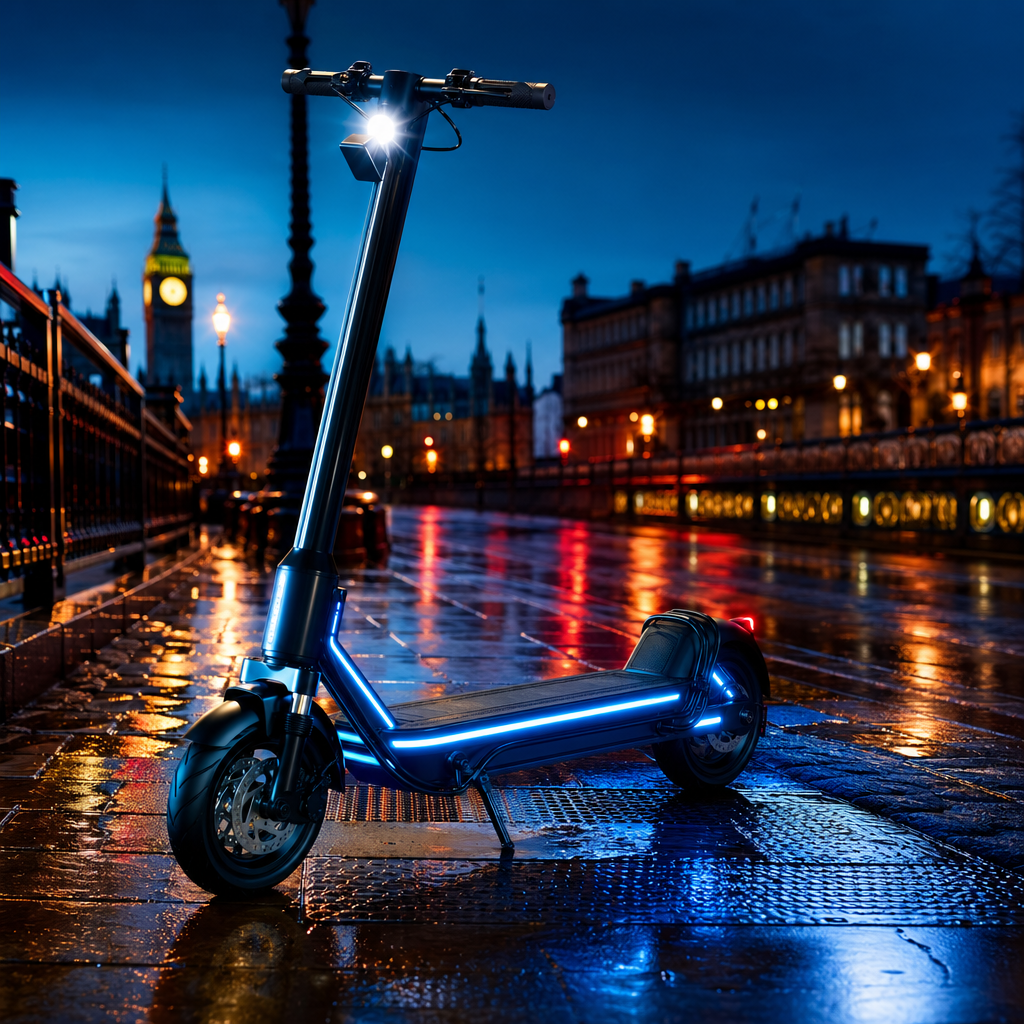
I’ll be honest with you: I thought I understood the electric scooter situation in the UK. Someone zips past me on one, I assume it’s fine, maybe the law changed and I missed the memo. But when my youngest started showing interest in e-scooters after seeing his mates on them, I figured I should actually look into it properly before making any decisions. What I found was a situation that is genuinely confusing, poorly understood by most people, and still unresolved in 2026 despite years of trials and parliamentary debate.
So let me save you the research rabbit hole and break it all down.
The Basic Legal Position (and Why It Trips Everyone Up)
Here is the thing that surprises most people: you can legally own an electric scooter in the UK. You just cannot legally ride it almost anywhere you might want to.
Under current UK law, privately owned e-scooters are classified as motor vehicles. That classification sounds reasonable until you follow the logic through. Being a motor vehicle means you would need insurance, registration, and tax to use one on public roads. But here is the structural problem: current e-scooters cannot be registered or insured through normal motor vehicle channels. The market for it simply does not exist in any meaningful way. So you end up in a situation where the law technically requires something that is practically impossible, which means riding your privately owned scooter on a public road, pavement, park, or cycle lane is illegal. Full stop.
This is not a grey area. It has not quietly changed. GOV.UK guidance is clear on this, and as recently as March 2026, law firm Weightmans confirmed the same position. You will find blogs and retailers claiming there is a “roadmap” to legalisation, or referencing a new vehicle category called an LZEV. None of that is confirmed by any authoritative source. Be cautious with anything that sounds like it is from a seller with an interest in you buying a scooter today.
The only legal way to ride an e-scooter in a public space in the UK right now is through an official government-approved rental scheme.
Rental Scooters: The Legitimate Version
Back in July 2020, the Department for Transport launched a series of rental e-scooter trials across the country. The idea was to test micromobility in real urban conditions before committing to permanent legislation. The trials have now been extended five times. The current window runs until May 2028, with new trial areas added as recently as July 2025.
The largest scheme in the UK is in London. Five years after it launched in just a handful of boroughs, it now covers 300 square kilometres, spans 11 London boroughs, operates more than 1,600 parking bays, and is run by Lime and Voi. TfL published new data in March 2026 showing that trips taken on rental scooters rose 54% in a single year, from 1.3 million to more than 2 million. That is not a niche pilot anymore.
To use a rental scooter legally, you need at least a provisional UK driving licence with category Q entitlement. In London specifically, you must be 18 or over. The national minimum age under trial rules is 16 for provisional licence holders, so London is stricter. You also have to complete mandatory in-app safety training before your first ride. The scooters are capped at 12.5 mph in London, slightly below the national trial maximum of 15.5 mph, and lights remain on throughout every ride. Crucially, the rental operator provides third-party motor insurance, which is part of why the whole scheme works legally.
Helmets are strongly recommended but are not a legal requirement. Pavements remain off-limits regardless.
A second national evaluation of the trials is currently underway and is due to conclude in 2026, which may finally feed into real legislative change. A Private Member’s Bill introduced in February 2026 also calls for a formal government review and a public awareness push, which tells you something. Parliament knows the public is confused and behaving accordingly.
So Where Does This Leave Families Thinking About Buying One?
This is the question I actually had to answer for my own household. And the honest answer is: you are buying something you cannot legally ride outside your own property right now. That might be fine in some circumstances. If you have a large private plot, a farm, or access to genuinely private land with the owner’s permission, then there is no legal issue. But if the plan is the road outside the house, the park at the end of the street, or the local cycle path, that is illegal and potentially risky if something goes wrong and insurance is not in place.
That said, legislation does appear to be moving, slowly, in the direction of some kind of regulated private use. The extended trials, the parliamentary bills, the government’s stated commitments to regulating micromobility vehicles. None of these are guarantees, but they do suggest the current situation is a stepping stone rather than a permanent wall.
If you are buying now with future use in mind, here are the models people are currently rating highly ahead of any potential legalisation.
The Segway Ninebot F2 Plus is consistently well reviewed, offers solid range, dual braking, and a build quality that feels worth the money. It sits comfortably in the mid-range bracket.
Xiaomi’s scooter line has earned a strong reputation for value. The 4 Pro improves on earlier models with better build quality and app integration, and it remains one of the more sensibly priced options.
If you are looking at something more premium, the Unagi Model One is frequently cited for its ride quality and build. It is not cheap, but for adult commuter use it ticks a lot of boxes.
Should You Care About This Right Now?
If you have teenagers asking for e-scooters, or if you have been tempted yourself as a commuter option, yes, this matters. The short version: rental is legal in many UK cities, private riding on public land is not, and that has not changed despite what some retailers might imply. Buy one if you want to be ready for when legislation catches up, but be honest with yourself about where you plan to ride it in the meantime.
If you found this useful, there is plenty more like it over at the Tech Dads Life newsletter. I cover tech for real family life, without the fluff and without pretending everything needs to be expensive. Come and join the community at techdadslife.beehiiv.com .
What I Actually Did With This Information
My eldest asked about an electric scooter for Christmas 2024. The question led me down exactly the rabbit hole this article describes, and my conclusion was the same one I have laid out here: the law is what it is, and pretending otherwise is not a useful thing to do.
What we ended up with was a rental scheme membership instead. They are near enough to a Lime trial zone that using the rental scooters for local journeys is genuinely practical, and the per-ride cost on a regular plan is cheaper than you would expect for occasional use. The experience of using a properly insured, regulated scooter on a defined rental scheme is also, frankly, better than riding a privately owned one illegally - because there is no anxiety about what happens if something goes wrong.
That said, I understand why families find this situation frustrating. The scooters are legal to buy. They are sold everywhere. They look like safe, sensible transport for short journeys. The gap between what you can purchase and what you can legally ride is genuinely confusing, and it is not helped by some retailers who imply the situation is more permissive than it is.
The practical position for 2026:
If you have private land, a large garden, or a farm - buy one and enjoy it. If you are a motorist who wants to buy one for use on roads or cycle paths, you are currently buying something you cannot legally use in those locations, and you should go in with that understanding rather than assuming it will be fine.
If you are waiting for legalisation: the direction of travel is positive, but timelines are uncertain. The Private Member’s Bill introduced in February 2026 shows parliamentary interest, and the trial extension to 2028 buys more time for evidence gathering. But there is no confirmed date for legislation, and basing a purchase on the assumption it will pass on a specific schedule is a gamble.
A note on insurance: One of the main reasons private e-scooters remain illegal on public roads is the insurance gap. Rental operators provide third-party motor insurance as part of the scheme. Private riders cannot currently get equivalent insurance for a private e-scooter on UK roads, because no insurer offers it. When legislation does come, insurance availability will likely arrive alongside it - and the cost of that insurance will be worth factoring into the true running cost of private ownership.