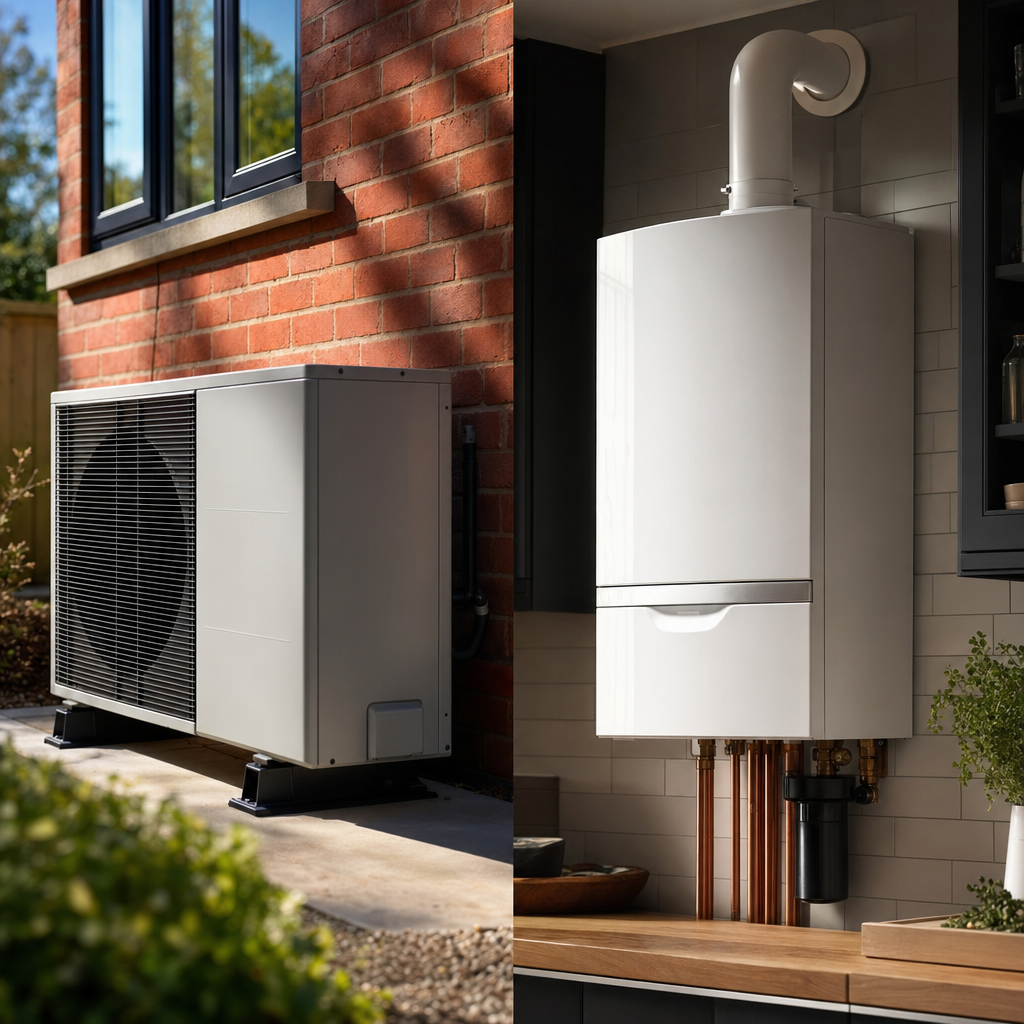
There’s a moment every homeowner dreads. You’re standing in the kitchen, it’s a Tuesday morning in January, everyone’s running late, and the boiler makes a sound like a cat being sat on. Then nothing. Cold radiators, lukewarm excuses, and a mental calculation that goes something like: how much is this going to cost me? I’ve been there. And every time I’ve gone looking for straight answers about whether to repair, replace, or switch to a heat pump entirely, I’ve found an internet full of people with something to sell me.
So let me try to be the mate who just tells it straight. No grant-chasing agenda, no greenwashing, no installers’ marketing dressed up as journalism. Just an honest look at what heat pumps and gas boilers actually cost, how they perform, and, crucially, whether a heat pump is right for your home or just right for someone else’s Instagram.
The UK still has roughly 23 million gas boilers in service. That’s not surprising. Gas has been cheap, the infrastructure is everywhere, and most people’s heating just quietly works in the background. But the government wants 600,000 heat pump installations a year by 2028, and in 2024 there were around 60,000 certified installs. That’s a record, but a long way short of the target. There’s a gap between ambition and reality here, and it’s worth understanding why.
What It Actually Costs to Install Each System
Let’s start with the number that makes most people’s eyes water. A new gas boiler, fully installed, typically runs between £1,800 and £3,000 for most UK homes, though you could spend up to £6,000 depending on the complexity of the job. It’s a significant outlay, but it’s familiar territory. Most boilers last 10 to 15 years, and the industry around them is mature, competitive, and quick. Your average boiler swap takes a day.
Heat pumps are a different story. The government’s own Boiler Upgrade Scheme statistics, from January 2026, put the average cost of an air source heat pump at £13,431 for an 8.4kW unit, installed. Ground source heat pumps, which involve drilling or digging into your garden, come in closer to £24,000. Those are eye-watering numbers, and some commercial websites will quote lower figures, but the official BUS data is the most reliable benchmark we have.
The other thing the brochures don’t always shout about: in many homes, the heat pump itself is not the whole job. Because heat pumps operate at lower flow temperatures than a gas boiler, they often need bigger radiators to heat a room effectively. Older pipework may need upgrading. Insulation may need improving. The vast majority of UK homes require some additional work before a heat pump will run efficiently. That’s not a dealbreaker. It’s just something that needs to be in your budget from day one.
The Boiler Upgrade Scheme (BUS) currently offers a £7,500 grant towards the cost of an air source heat pump, which brings that average £13,431 figure down to roughly £5,931. That’s more competitive, though still approximately twice the cost of a new gas boiler without the same level of disruption.
Running Costs: Where the Maths Gets Messy
Here’s where the heat pump conversation gets genuinely complicated, and where you need to be sceptical of anyone quoting you a simple saving figure.
The core problem is this: gas costs approximately 6.33p per kWh right now, while electricity costs approximately 30p per kWh. That’s nearly five times the per-unit cost. Heat pumps compensate for that gap through their efficiency. Rather than converting fuel to heat at a 1:1 ratio, they move heat from outside air into your home, delivering three to five units of heat for every one unit of electricity consumed. This ratio is called the Coefficient of Performance, or COP.
A heat pump running at a COP of 3.5 delivers 3.5kW of heat for every 1kW of electricity. Octopus Energy’s fleet of heat pumps has been delivering an average COP of 3.87 over a recent 90-day period, which is genuinely impressive. For reference, a modern condensing gas boiler runs at around 90% efficiency in ideal conditions, though government research puts average real-world boiler efficiency between 75% and 85%.
But here’s the honest truth: for a heat pump to match a modern A-rated gas boiler on running costs, it needs to achieve roughly a COP of 4. At current electricity prices, running a heat pump in a typical UK home may actually cost around £30 to £40 more per year than a gas boiler. If you’re switching from an old, inefficient G-rated boiler, you might save £300 to £350 per year. Swapping a modern boiler? The savings could be as little as £10 to £30.
Octopus Energy quotes average savings of £219 per year for their heat pump customers, but it’s important to note that figure is based on their own Cosy Octopus tariff. That tariff offers cheaper overnight electricity and is not a standard comparison against typical tariffs. It’s a genuine saving for their customers, but not necessarily representative of what you’d get on a standard deal.
The picture brightens considerably if you have solar panels, if you’re on a time-of-use smart tariff, or if you’re currently off the gas grid and heating with oil or direct electricity. For those households, switching to a heat pump can produce meaningful savings from year one. There’s also a standing charge argument: removing your gas supply entirely could save around £128 per year in standing charges alone.
Performance in Cold Weather: The Question People Actually Ask
This is the one I hear most. “Does it actually work in winter?” And the honest answer is: yes, modern air source heat pumps work in cold weather, but their efficiency drops as temperatures fall.
At 7°C outside, a well-installed heat pump runs happily and efficiently. At -5°C or below, the COP drops, and some older or cheaper units struggle. Most modern heat pumps are rated to operate down to around -15°C to -20°C, so the UK climate is not the problem people imagine. We rarely see sustained temperatures that low, even in Scotland. The bigger issue is that a poorly insulated house on a -3°C night is going to demand a lot from any heating system. A heat pump in a leaky Victorian terrace is working against itself.
This is why insulation is the unsexy but genuinely important part of this conversation. A heat pump installed in a well-insulated home, with correctly sized radiators, will perform well throughout a UK winter. The same heat pump dropped into an uninsulated 1970s semi will struggle and cost more to run. The technology works. The building envelope is often the weak link.
Gas Boilers vs Heat Pumps: Side-by-Side
| Factor | Gas Boiler | Air Source Heat Pump |
|---|---|---|
| Typical install cost | £1,800 to £3,000 | £13,431 avg (£5,931 after BUS grant) |
| Installation time | 1 day | 2 to 5 days |
| Fuel cost per kWh | ~6.33p | ~30p |
| Real-world efficiency | 75% to 90% | COP 3 to 4 (300% to 400%) |
| Annual running cost difference | Baseline | ~£30 to £40 more vs modern boiler |
| Cold weather performance | Consistent | Drops below -10°C, fine for UK |
| Carbon emissions | Higher | Lower (and falling as grid decarbonises) |
| Government grant available | No | £7,500 BUS grant |
| Additional work often needed | Rarely | Frequently (radiators, pipework, insulation) |
| Lifespan | 10 to 15 years | 15 to 20 years |
Hype Cycle Check
LIKELY TO LAST: Heat pumps are a genuinely mature technology that works well when correctly specified and installed. The efficiency argument strengthens every year as the electricity grid decarbonises. The same electricity that costs more now produces less carbon than it did five years ago, and that gap versus gas will continue to widen. For well-insulated homes, off-gas properties, and households with solar, the case is already compelling.
WATCH CLOSELY: The running cost argument depends almost entirely on the electricity-to-gas price ratio. If electricity prices fall significantly, or if smart tariffs become more widely available, the financial case improves dramatically. Conversely, if the BUS grant is reduced or withdrawn, the upfront cost becomes a serious barrier for most families again.
VAPOURWARE RISK: The government’s 600,000-per-year target by 2028 is not vapourware in concept, but it is wildly optimistic in practice. At 60,000 installs in 2024, we are a factor of ten away from that figure. The installer workforce, consumer appetite, and the economics of running costs are not aligned to get there on that timeline. Treat that target as directional intent, not a delivery forecast.
What This Means for CES 2027
Heat management and home energy systems are becoming a bigger part of the CES conversation every year. We’re already seeing smart heat pump controllers that integrate with EV charging schedules and solar inverters, treating the home as a single energy ecosystem rather than a collection of separate devices. By CES 2027, expect to see serious announcements around AI-optimised home energy management: systems that learn your heating patterns, monitor weather forecasts, and automatically shift your heat pump’s operating hours to overlap with cheap overnight tariffs or solar generation peaks. The brands to watch are the same ones already operating in smart home and EV charging, including Honeywell, Daikin, and the tech-forward energy companies like Octopus who are building the software layer themselves.
What to Watch
- The electricity-to-gas price ratio: This is the single biggest lever in the heat pump financial argument. Any significant policy change to electricity pricing, or smart tariff expansion, changes the sums overnight.
- BUS grant renewal and value: The Boiler Upgrade Scheme is time-limited. Watch for government announcements about whether the £7,500 grant continues, increases, or gets restructured as 2028 approaches.
- Installer capacity: The industry simply does not have enough trained heat pump engineers right now. Watch for apprenticeship and training announcements as a leading indicator of whether those install targets are realistic.
- Cold climate heat pump development: Manufacturers like Mitsubishi, Daikin, and Samsung are pushing COP performance at lower temperatures. Units that maintain a COP above 3.5 at -10°C will significantly change the conversation for colder parts of the UK.
If this kind of real-world tech breakdown is useful to you, I write one every week. No fluff, no affiliate-driven puff pieces, just honest takes on the tech that actually matters for family life. You can subscribe at techdadslife.beehiiv.com and I’ll land in your inbox every time there’s something worth reading. See you there.