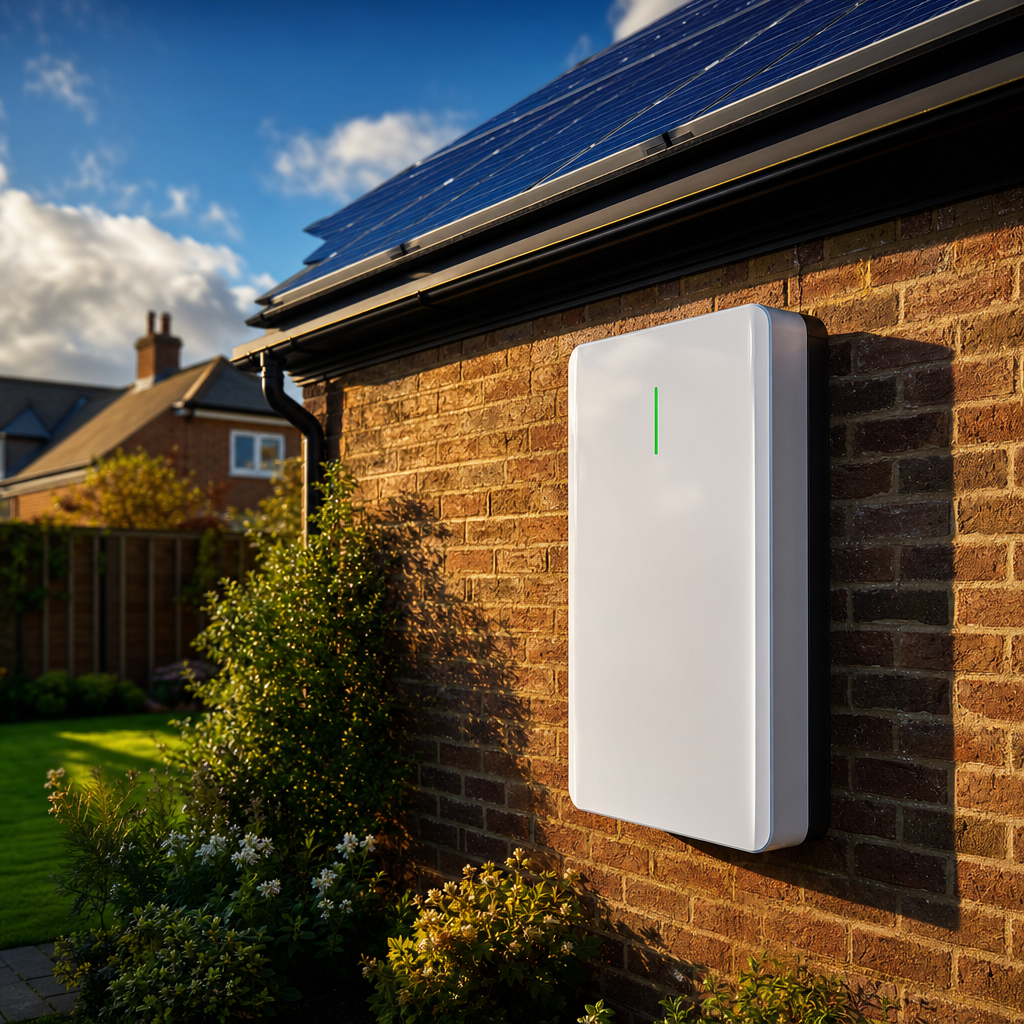
I’ll be honest, I drive a Tesla, I charge it at home, and I’ve been smugly telling anyone who’ll listen about how much I’ve saved on fuel. But when a neighbour asked me whether he should get a Powerwall to go with his new solar panels , I realised I was on shakier ground than I thought. I knew the broad strokes: solar makes electricity, battery stores it, you use it later. But the actual numbers? The payback period? Whether it genuinely makes sense for a normal family in the UK right now? I had to admit I didn’t really know. So I did what any self-respecting tech dad does. I went and found out.
This one’s for everyone who’s looked at their energy bills, glanced at their roof, and wondered whether 2026 is finally the year to actually do something about it.
What Home Battery Storage Actually Does
Let’s strip away the marketing for a second. A home battery system does one thing: it stores electricity so you can use it when it’s cheaper or more convenient than buying it from the grid.
If you have solar panels, they generate power during the day. Without a battery, any electricity you don’t use immediately gets exported back to the grid, often for a fairly modest rate. A typical solar household actually uses only about half of what it generates. A battery changes that equation dramatically. With one, you can push self-consumption up to 80 or 90 percent, drawing on your own stored power in the evenings rather than paying for grid electricity at peak rates.
No solar panels? A battery can still make sense on a time-of-use tariff. You charge it overnight when electricity is cheapest (some tariffs like Agile Octopus drop to genuinely low rates in the early hours), then run your house off it during peak evening hours when the price spikes. It’s essentially energy arbitrage, and it works.
The system itself has three main parts: the battery cells, a battery management system that keeps everything healthy and safe, and an inverter that converts the stored DC electricity into the AC your home runs on.
The Technology Behind It: What to Actually Look For
Not all batteries are the same, and if you’re spending serious money, it’s worth understanding the difference.
In 2026, the chemistry to look for in a home storage battery is LFP, which stands for lithium iron phosphate. It’s not the flashiest acronym, but a good LFP battery is rated for around 6,000 charge cycles. At one cycle per day, that’s over 16 years of daily use. The safety record is excellent too. If you’re seeing a battery spec sheet that doesn’t mention LFP, ask questions.
You’ll also come across the terms AC-coupled and DC-coupled. If you’re retrofitting a battery onto an existing solar system, you’ll almost certainly be looking at AC coupling. The battery connects to your home’s fuse board and works alongside your existing solar inverter. It’s simpler to install but slightly less efficient. DC coupling, where the solar panels feed directly into the battery before conversion, is roughly 3 percent more efficient and cheaper to set up, but only really works if you’re installing panels and battery at the same time. For new builds or complete installations, DC is the better option. For retrofits, AC works perfectly well.
The Tesla Powerwall 3: What You’re Actually Buying
The Powerwall 3 is Tesla’s current flagship home battery for the UK, having launched here in late 2024. The headline upgrade over its predecessor is that the solar inverter is now built in. That means one unit handles everything: solar input, battery storage, and home power output. Fewer boxes on the wall, simpler installation.
The specs are solid. You get 13.5 kWh of usable capacity and a continuous power output of up to 11.04 kW, which is more than enough to run a typical family home during an outage. DC-coupled efficiency hits 97.5 percent. Even in AC-coupled retrofit mode, you’re still looking at around 89 percent, which is competitive.
The 10-year warranty guarantees at least 70 percent of original capacity. In practice, Tesla estimates around 2 percent degradation per year, so after a decade you should realistically have close to 80 percent. Beyond that, lithium batteries in residential use typically go 15 to 20 years. There are no subscription fees, no app charges, and no annual maintenance costs baked in. The Tesla app is free.
On price, this is where you need to do your homework. In the UK in 2026, a fully installed Powerwall 3 ranges from around £8,000 to £11,500, depending on installer, property, cable runs, and whether you need backup capability via the optional Gateway. Octopus Energy, Tesla’s primary UK authorised installer, offers £7,499 as a starting point for a standalone installation. For context, the MCS industry average for a battery storage installation in 2024 was approximately £8,035, so Powerwall sits above the midpoint of the market. If you’re adding solar panels at the same time, combined packages start just under £10,000, with a two-battery setup coming in around £15,000.
One genuinely good bit of news on cost. From February 2024, standalone home battery installations qualify for 0% VAT. That’s not just batteries installed with solar. Standalone grid-charging batteries qualify too, subject to HMRC conditions. That’s a meaningful saving at these price points, and it’s worth confirming with your installer that they’re applying it correctly.
The broader market hasn’t stood still either. If the Powerwall’s price gives you pause, a 5 kWh system from other brands can be had for £3,500 to £4,500 installed, and a 9.5 kWh system typically runs £5,500 to £7,000. Battery prices have dropped significantly in recent years as manufacturing scale and competition have intensified. The direction of travel is good.
How This Plays Out in Real Family Life
Here’s where the honest conversation has to happen. If you’re on a time-of-use tariff, have solar already, or are about to install solar and live in a reasonably sunny part of the UK (Hampshire counts, just about), the numbers can work in your favour.
With three kids in the house, our electricity usage is not exactly modest. Between the gaming setups, the 3D printer running in the garage, and the Tesla charging overnight, we get through a fair bit. That’s exactly the kind of household where a battery starts to look interesting, because there’s always demand to soak up what you’ve stored.
A well-sized battery system combined with solar can make a real dent in electricity bills, though exactly how much depends on your usage, tariff, and how effectively you self-consume. At current price points, a Powerwall at around £9,000 installed is likely looking at a payback period somewhere in the region of 9 to 15 years. That’s a long time, and I won’t pretend otherwise. The warranty runs 10 years. The battery will likely last longer, but you’re not going to feel this in your wallet next spring.
Where it changes is if you’re doing a new build or full solar installation. You save £500 to £1,500 by installing battery and panels together rather than retrofitting later. And if electricity prices continue to rise, that payback period shortens.
There’s also the energy security angle. Having backup power during outages isn’t nothing, especially with a family in the house. But that’s a comfort factor, not a financial one.
Should You Actually Care Right Now?
Yes, but with realistic expectations. If you’re already planning a solar install in 2026, adding a battery at the same time is almost certainly worth doing. The combined cost saving over installing separately, plus 0% VAT, makes it a sensible decision. If you’re considering a standalone battery without solar, the numbers are thinner unless you’re on a genuinely aggressive time-of-use tariff and disciplined about charging overnight.
The Powerwall 3 is a very capable product. But it’s a premium product at a premium price. If budget is tight, the broader battery market in 2026 has solid alternatives at lower price points. Value matters, and there’s no shame in going with a less glamorous brand if the specs stack up.
If You Want to Try It
Before spending anything, get at least three quotes. The price variation in this market is significant. Use MCS-certified installers only. Check whether Octopus Energy’s Powerwall route makes sense for your situation, as they offer a transparent price structure.
If you want to understand your home’s energy use before committing, a smart energy monitor is a good first step. Fitting one gives you real data on when you’re using power and how much you’re exporting. Far more useful than guessing.
For grid registration, be aware that Powerwall 3 installations typically fall under G99 engineering requirements due to the integrated inverter’s output rating. This means you’ll need formal approval from your local Distribution Network Operator before installation can proceed. A good installer will handle this for you, but ask the question upfront so you’re not caught out by the timeline.
If you want more articles like this one, practical, honest, and light on flannel, come and join the Tech Dads Life newsletter. I cover tech for real families, not just the people who can afford to be early adopters.