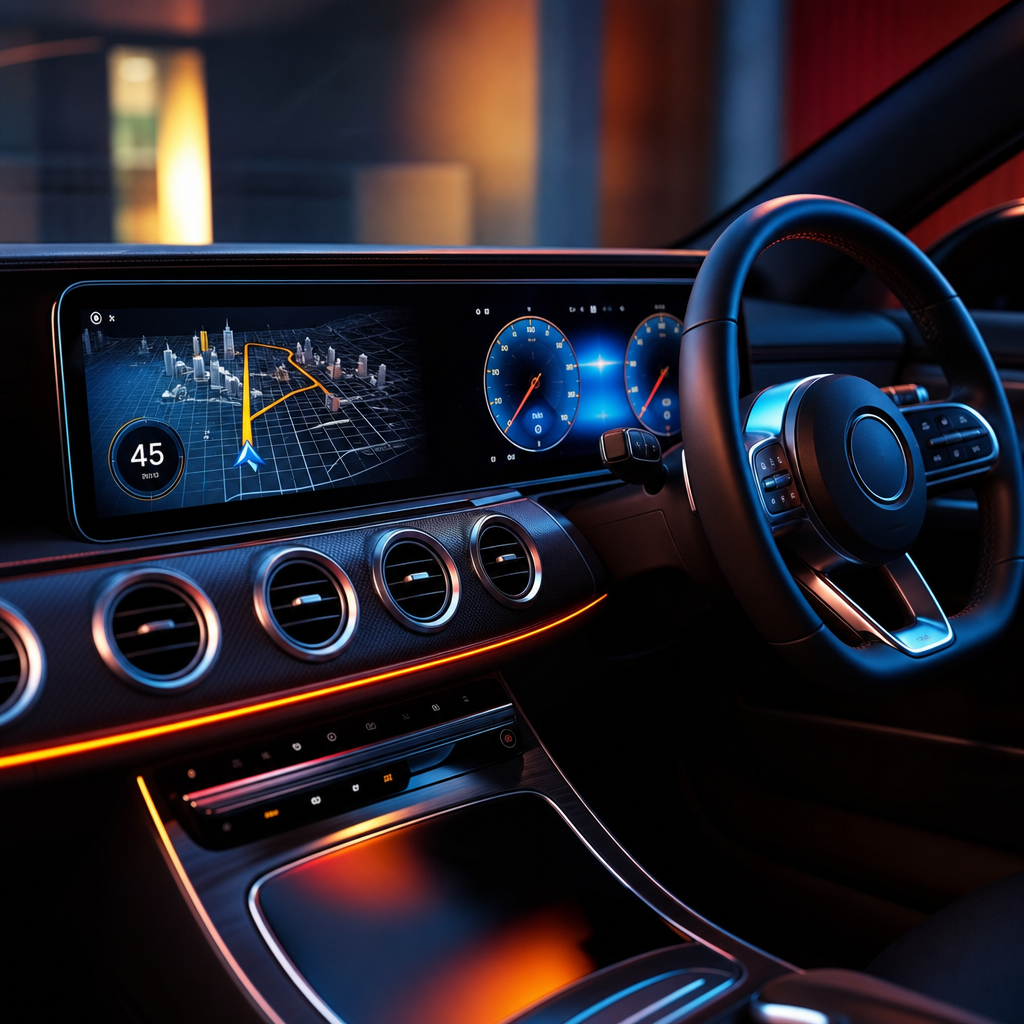
We drove to France a few years back and I spent most of the motorway miles genuinely relaxed behind the wheel. Not because I was being reckless, but because the Tesla’s adaptive cruise control was doing the heavy lifting. It matched the speed of the car in front, slowed down, sped up, and kept me centred in the lane. It felt like the future. However, this year we are taking the bigger car for the trip to France (the Tesla’s great, but it’s not exactly a seven-seater), and it hit me: I’m going backwards. The Ford S-MAX has lane assist and a navigation screen, which is fine, but the cruise control just locks at 70mph and stays there. I have to watch the car in front myself and brake like it’s 2005. After years of driving with proper AI-assisted features, that feels like a genuine step down.
Which got me thinking about how quickly all of this has crept into everyday driving, and how most families don’t realise how much AI is already in their car, or how fast it’s moving. This week the FT Future of the Car Summit runs in London (12–14 May), bringing together car makers, tech companies and policymakers to map out exactly where automotive AI goes next. It’s a sign that we’re at a real turning point. So let’s break down what’s actually happening, in plain English.
What Do We Mean by “AI in Cars”?
Artificial intelligence in cars isn’t one single thing. It’s a collection of systems that use sensors, cameras, radar and software to make decisions in real time, or to learn from patterns over time. Some of it you’ve been using for years without thinking of it as AI. Some of it is genuinely new.
The most useful way to think about it is in three broad areas: driving assistance (the stuff that helps you stay safe and reduces fatigue), in-car intelligence (navigation, voice control, personalisation), and maintenance and monitoring (the car keeping an eye on itself so you don’t have to).
These aren’t sci-fi concepts. They’re in cars on UK roads right now, at varying levels of sophistication depending on what you’re driving and when it was built.
Driving Assistance: The Bit That Actually Matters Day to Day
This is where I feel the difference most acutely. Adaptive cruise control, when it’s done properly, uses cameras and radar to detect the vehicle ahead and automatically adjusts your speed to maintain a safe gap. If the car in front slows down, yours does too. If they speed up, you follow. On a motorway run to the Channel Tunnel, that’s not a luxury. It’s transformative. It reduces fatigue, reduces the chance of a rear-end incident, and honestly makes long trips with kids in the back significantly less stressful.
Pair that with lane-keeping assist, which gently steers you back if you drift, and you’ve got what the industry calls Level 2 autonomy. You’re still in control and responsible, but the car is actively helping. According to industry research, AI-powered automatic braking systems can reduce rear-end crashes by around 50%. By the end of this year, close to 60% of new cars sold globally are expected to include some form of Level 2 autonomy features as standard.
The important distinction, and it’s one I learned the hard way when I realised the S-MAX doesn’t do what the Tesla does, is that “lane assist” and “adaptive cruise control” are not the same thing. Lane assist that just gives you a nudge if you drift is useful. Adaptive cruise that actually follows the car in front and stops in traffic jams is a different category entirely. If you’re buying a car and this matters to you, ask specifically: does it slow down and stop automatically, or does it just maintain a set speed?
Smart Navigation and the Connected Car
AI-powered navigation is moving well beyond “turn left in 200 metres.” Modern systems can predict traffic patterns, factor in real-time road conditions, and adjust your route on the fly. Google’s Gemini AI is now arriving in vehicles via Android Auto, which is supported in nearly all new cars sold, with close to 250 million compatible vehicles already on the road globally. The idea is that you can have a natural conversation with your car. Ask it to find a petrol station that also has a Greggs, or check what time you’ll realistically arrive given current motorway conditions.
Mercedes-Benz partnered with Google Cloud to bring conversational AI search into their MBUX system, offering tailored navigation recommendations based on your preferences and habits. That’s the direction everything is heading: a car that knows you, learns your routines, and quietly makes sensible suggestions rather than barking instructions at you.
For families, the practical upside is significant. AI that can predict your battery range on an EV trip, find the most efficient charging stop, or warn you that the M25 is a disaster before you’ve even left the driveway. That’s the kind of tech that earns its keep on a school run or a holiday drive.
Predictive Maintenance: Worth Knowing About, But Temper Your Expectations
One of the more talked-about AI applications in cars is predictive maintenance. The idea is that AI monitors your car’s components continuously and flags potential issues before they become expensive problems. Brake wear, tyre pressure, battery health. The car tells you what needs attention before it actually breaks.
It’s genuinely useful, particularly in the EV world where battery management is critical. My Tesla updates itself overnight via over-the-air software updates, which means it can improve performance or fix issues without me ever visiting a garage. That’s AI working quietly in the background, and it’s brilliant when it works.
That said, it’s worth being honest here. For most family cars, predictive maintenance is still more promise than reality. A lot of current warning systems only activate after something has already gone wrong, not before. Commercial fleets use proper predictive AI to avoid costly downtime, but in a personal vehicle, you’re often still just waiting for the engine light to come on. It’s improving, but we’re not all the way there yet.
Should You Care About This Right Now?
Yes, genuinely, especially if you’re buying a car in the next year or two. The gap between cars with proper AI-assisted driving features and those without is noticeable in a way that other upgrades simply aren’t. I didn’t fully appreciate how much I relied on adaptive cruise control until I didn’t have it. If you’re doing regular motorway driving, long family trips, or a commute on busy A-roads, it’s worth paying attention to exactly which driver assistance features a car has and how sophisticated they actually are. Not all “smart” cars are equal.
If You Want to Get Into This
The easiest entry point is Android Auto or Apple CarPlay, both of which bring AI-assisted navigation and voice control into almost any modern car. If you’re buying new, ask the dealer specifically about adaptive cruise control with stop-and-go functionality, not just basic speed control. It’s the difference that matters.
For monitoring your current car’s health, a Bluetooth OBD2 scanner plugged into your car’s diagnostic port lets you read real-time data and fault codes from your phone. It won’t give you full AI predictive maintenance, but it gives you a window into what your car is actually doing.
If you found this useful, I write about tech for real families every week over at the Tech Dads Life newsletter. No hype, no fluff, just stuff that actually matters. Come and join us at techdadslife.beehiiv.com .
The Features I Actually Use and the Ones That Disappoint
I have been driving a Tesla Model 3 since 2022, and AI-assisted driving is not an abstract concept for me - it is something I interact with every day. Here is the honest version of what is genuinely useful and what still needs work.
What has changed how I drive: Adaptive cruise control with automatic steering assistance is the feature I would find hardest to give up. On motorway trips - particularly the school holiday drives to Cornwall or Dorset that are long, predictable, and tiring - it transforms the experience. The car maintains lane position, adjusts speed for traffic, and handles the tedious middle-lane monotony that grinds you down over two hours. I arrive noticeably less fatigued than I used to. This is real and it matters.
Automatic emergency braking has saved us from a low-speed incident that I am fairly certain would have resulted in a minor collision without it. A vehicle pulled out from a side road on a country lane in low light. The car reacted faster than I did and applied significant braking before my foot was fully on the pedal. I do not know with certainty that this prevented an accident - it might have been fine regardless - but the car’s response was measurably faster than mine, which is exactly what it is designed for.
What is still overpromised: Full Self-Driving as a meaningful description of where the technology is today. The system is impressive and continues to improve through software updates, but it requires attention and occasional intervention. It is a sophisticated driver assistance tool, not an autonomous vehicle. Treating it as the latter is how accidents happen, and some of the coverage of FSD capability does not make that distinction clearly enough.
Voice control in cars has also improved significantly but still falls over in ways that break the experience. Natural language for navigation works well. Natural language for anything more nuanced - “find me a coffee stop on the route that isn’t a motorway services” - still produces patchy results depending on the system and the AI behind it.
For families buying a new car in 2026: The driver assistance tier you choose matters more than most other specs. Ask specifically about adaptive cruise control with stop-and-go capability, automatic emergency braking with pedestrian and cyclist detection, and lane keeping that actively steers rather than just warning you. Those three features represent the meaningful safety floor that reduces family road trip fatigue and provides genuine collision avoidance in the scenarios most likely to go wrong. Everything else is nice to have.