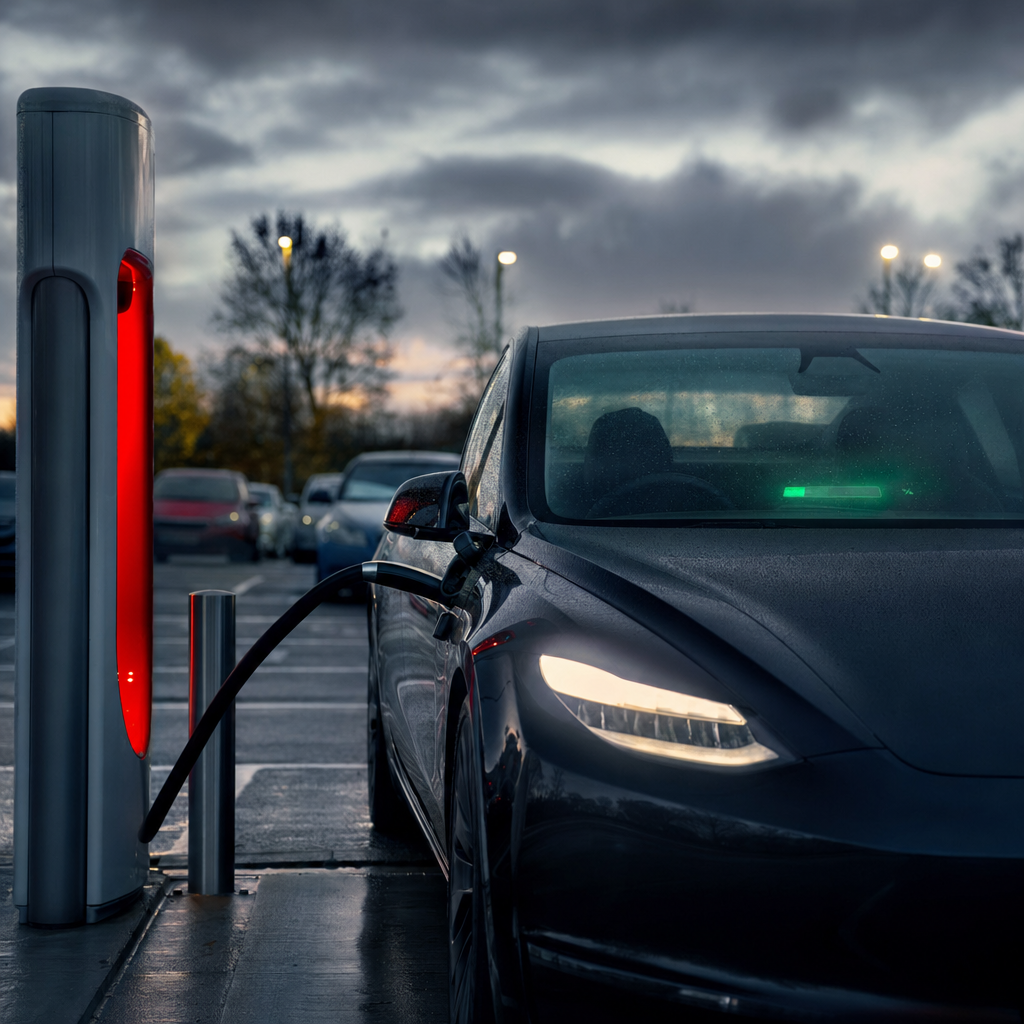
There is something nobody warns you about when you buy an electric car. You spend the summer feeling smug about your fuel costs, watching the miles tick by on a full battery, and then November arrives. The temperatures drop, the morning frost coats everything in white, and suddenly your range estimate looks like it has been revised by someone who genuinely dislikes you. I noticed it the first winter with my Tesla Model 3 Long Range. A car that had been happily cruising around Hampshire in August started looking considerably less confident in January. If you own an EV and winter has caught you off guard, this is the guide I wish someone had handed me.
The good news, and I do mean this, is that cold-weather range loss is temporary and manageable. The battery is not damaged, nothing is broken, and you have not made a terrible mistake. Lithium-ion cells simply work best between around fifteen and thirty degrees Celsius. Drop below that and the electrolytes inside thicken up, slowing the movement of lithium ions and temporarily reducing how much power the battery can deliver. On top of that, an EV has no waste engine heat to warm the cabin, so it generates heat from scratch using battery power. Running the heater at full blast can consume three to five kilowatts continuously. In winter, with the heater on and the battery cold, the two problems stack on top of each other. UK drivers typically see somewhere between ten and thirty percent range loss when temperatures fall below five degrees. Short city trips on sub-zero mornings with the heater running flat out can push losses towards forty percent. Understanding why it happens is the first step to dealing with it properly.
Before You Start
Before diving into the tips, it is worth knowing that almost everything in this guide works across most modern EVs, but the specific menus, app names, and settings will vary by make and model. A Tesla does things slightly differently from a Nissan Leaf, and a Hyundai Ioniq 5 has different options to an MG4. Check your owner’s manual or manufacturer app for the exact controls on your vehicle. Everything here is about strategy and habits, not magic settings.
Step 1: Pre-Condition the Car While It Is Still Plugged In
This is the single most effective thing you can do, and it costs you almost nothing. Pre-conditioning means warming the cabin and the battery before you unplug and drive away. Because you are doing this while the car is still connected to your home charger, all that energy comes from the grid rather than from the battery. You get into a warm car with demisted windows and, crucially, a battery that is already at its optimal operating temperature.
In practice, this saves somewhere in the region of five to ten percent of your range on a cold morning. For a car with a quoted two-hundred-mile range, that is a meaningful difference. It also removes the need to scrape ice off the windscreen manually. UK drivers spend an estimated fifteen minutes doing this every working morning. Between December and the end of February, that adds up to roughly fifteen hours of standing in the dark with an ice scraper. Pre-conditioning handles all of that while you are still inside having breakfast.
Most EVs offer pre-conditioning through a smartphone app. You can schedule it to kick in twenty to thirty minutes before you leave, or trigger it manually. On my Model 3, I set a schedule through the Tesla app tied to my weekday departure time. Dig into your manufacturer’s app and look for a “climate” or “scheduled heating” option. Set it, forget it, and thank yourself every frosty morning.
Step 2: Use Seat Heaters and Steering Wheel Heating Instead of Full Cabin Heat
Once you are on the road, your cabin heater is the biggest single drain on your battery. Running it at full temperature can chip nearly six miles off your range for every hour of driving. That is significant. The smarter approach is to reduce the cabin temperature setting and rely more on heated seats and a heated steering wheel instead.
These targeted heaters warm you directly rather than trying to heat an entire volume of air. Combined, they reduce driving range by roughly half a mile per hour, compared to nearly six with the cabin heater running hard. The trade-off is obvious. Drop the cabin temperature by a few degrees, turn the seat heaters to high, and if your car has a heated steering wheel, use it. You will feel just as comfortable and your battery will thank you considerably.
If you have passengers in the back, this gets trickier, as rear seat heaters are less universal. A lower cabin temperature with rear seat heaters, if fitted, is still better than blasting hot air throughout.
Step 3: Keep an Eye on Tyre Pressure
Cold air is denser and heavier than warm air, which increases aerodynamic drag on your car. Cold tyres also have higher rolling resistance, meaning they fight against you slightly with every revolution. And to add a third unwelcome fact, tyre pressure drops naturally in cold weather, roughly one PSI for every ten degrees Fahrenheit drop in temperature.
Check your tyre pressures regularly through winter, ideally weekly. Under-inflated tyres increase rolling resistance and steal range. Your manufacturer’s recommended pressures will be on a sticker inside the driver’s door frame or in the handbook. A decent digital tyre gauge takes thirty seconds per tyre to check.
Some EV drivers inflate their tyres to the top end of the recommended range in winter to compensate for the pressure drop in cold conditions. Do not exceed the maximum printed on the tyre sidewall, but running at the upper end of the manufacturer’s specification is reasonable practice.
Step 4: Plan Your Charging Strategy Around the Cold
If you are relying on public rapid chargers for a longer winter journey, cold temperatures affect not just your range but also your charging speed. A cold battery charges more slowly because the chemical processes that accept energy are sluggish at low temperatures.
The solution here is battery pre-conditioning before you arrive at the charger. Many modern EVs do this automatically when you enter a charging location into the navigation. The car warms the battery en route so that it is at optimal temperature when you plug in, allowing it to charge at a higher rate. On my Tesla, entering a Supercharger destination triggers this automatically. Check whether your car does the same, and if you have to trigger it manually via the app or settings, build that into your journey planning.
At home, keep your car plugged in overnight rather than leaving it disconnected in the cold. A car that warms its battery from the mains before you drive is starting in a much better position than one that has sat in a cold garage all night with no power.
Step 5: Heat Pump - Know Whether Your Car Has One
A heat pump is essentially a refrigerator running in reverse. Instead of generating heat by burning energy, it moves heat from the outside air into the cabin, which is far more efficient. Cars with a heat pump use significantly less battery energy to keep you warm in winter, which translates directly into better range.
Vehicles like the Hyundai Ioniq 5, Tesla Model Y, and BMW i4 all include heat pumps and consistently show some of the best winter range retention figures. The Tesla Model Y Long Range, for instance, lost just under twelve percent of its range in winter testing compared to summer driving. If you are buying an EV and you live in the UK, a heat pump should be on your must-have list.
If your current car does not have one, you cannot add it retrospectively. Knowing this helps explain why you might see more range loss than owners of other models, though, and it informs your heating management decisions.
If It Is Still Not Working
The range estimate looks much worse than expected even after pre-conditioning. Check that pre-conditioning is actually completing before you unplug. If you are leaving before it has finished, the car is still cold. Add more lead time, or trigger it manually earlier.
Tyre pressures are correct but range is still poor. Look at your recent trip data. Short journeys in heavy cold where the cabin heater has been running the entire time will show the worst range losses. The battery never gets warm enough to operate efficiently. Combining shorter trips where possible helps, as does reducing heater use.
The car charges slowly at a public charger. If you did not pre-condition the battery on the way there, this is the likely reason. Plan ahead next time. Also check that the charger itself is working correctly and delivering the expected output.
Winter EV driving in the UK is genuinely manageable once you understand what is happening and build a few simple habits. Pre-condition while plugged in, use seat heaters over full cabin heat, keep your tyre pressures up, and let the navigation warm your battery before rapid charging. Do those four things consistently and you will hold onto a meaningful chunk of the range you thought you had lost. If you are still struggling after working through all of this, drop me a message through the site and I will do my best to help.
If you found this useful, I send out practical tech guides like this one to a few thousand families every fortnight. No fluff, no sponsored waffle, just genuinely useful stuff. You can sign up free at techdadslife.beehiiv.com and join the community. There are some sharp people in there who will happily chip in with their own EV winter tips too.