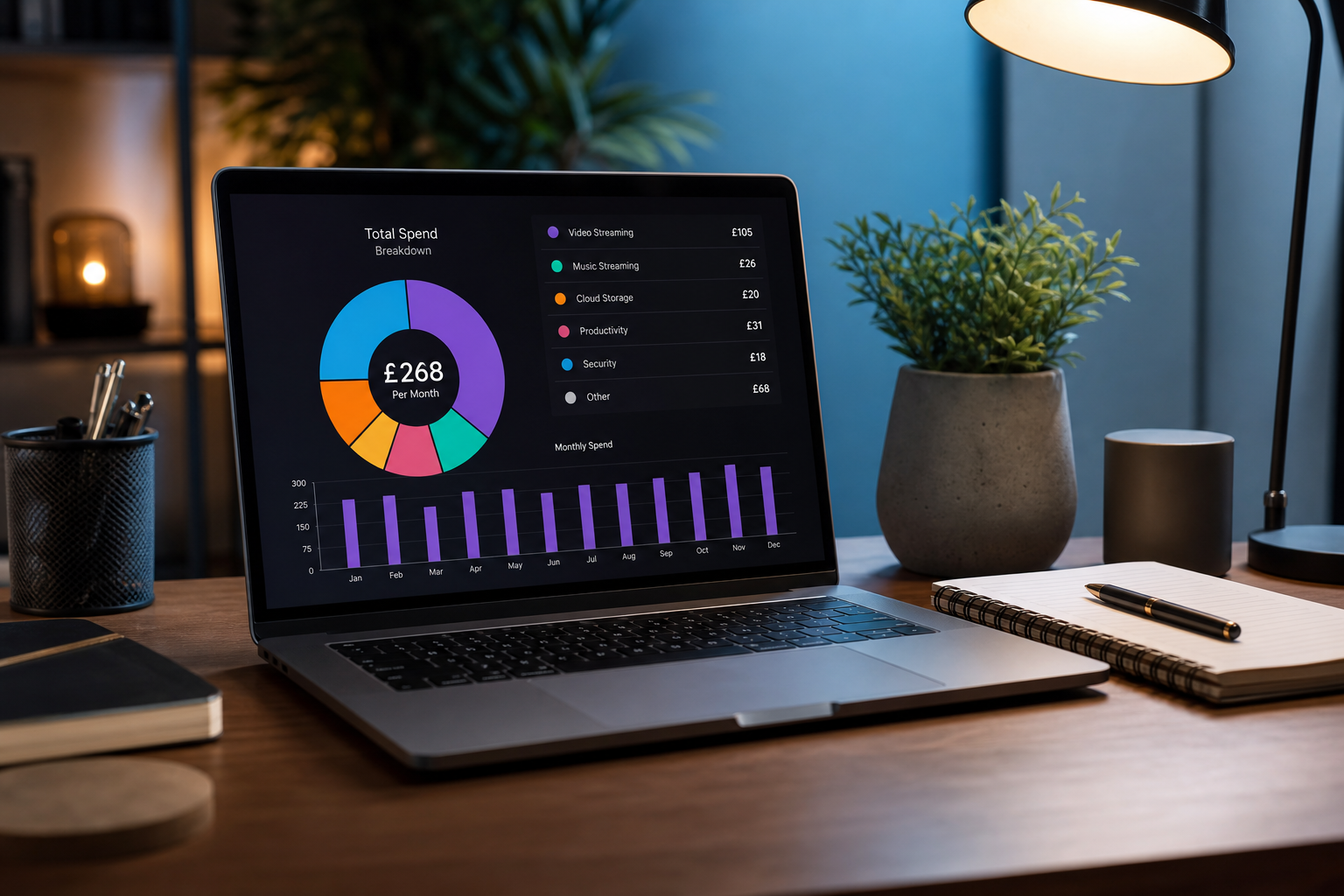
Somewhere between signing up for a free trial of something my youngest wanted to watch and adding a third music streaming service nobody asked for, our household subscriptions quietly got out of hand. I knew it was happening. I just didn’t know how badly.
That’s the insidious thing about subscription creep. It doesn’t arrive all at once. It sneaks in a fiver at a time, buries itself in your bank statement between the council tax and the car insurance, and compounds over months until you’re paying for things you’ve completely forgotten exist. According to a 2025 survey by Aqua Card, the average UK adult spends around £65.50 a month on subscriptions, which sounds manageable until you realise that adds up to nearly £800 a year. And that figure doesn’t account for the people who, like me, are probably above average when it comes to signing up for things.
I built the Family Subscription Cost Tracker over at techdadslife.com specifically because I wanted something practical I could actually sit down with and run properly. Not a vague budgeting app asking me to connect my bank account. Just a clean, honest tool that asks what you’re paying for and tells you the real annual cost. So I figured it was only fair to run it on my own household first and share what I actually found.
The Categories That Catch Most Families Out
The tracker breaks things into the areas where families typically accumulate subscriptions without realising it: streaming video, music, gaming, software, cloud storage, shopping, and miscellaneous services. When I laid it all out, category by category, a few things became obvious immediately.
Streaming video is where most families feel the most pain. We’ve got Sky TV, Netflix, Amazon Prime, Disney+, and a Now TV pass that I was fairly sure we’d cancelled months ago. Spoiler: we hadn’t. The Sky subscription covers a lot of what we actually watch, but the streaming services stack up fast. When you add Prime’s ad-free option on top of the standard subscription cost, you’re looking at a noticeable chunk per month just for one service. Disney+ raised its prices in late 2025, and Spotify has had three price increases in just over two years, with the family plan now sitting at £21.99 a month.
Music and audio is where things get genuinely embarrassing. I’m on Spotify Family, which makes sense given the whole household uses it. But I found a standalone Spotify trial I’d started for a project and never cancelled. That’s £12.99 a month I was paying for an account nobody was using. I cancelled it on the spot, while quietly hoping nobody else in the house was doing the same thing.
What I Actually Found in My Own Household
Running everything through the tracker, here’s what the honest tally looked like:
| Subscription | Monthly Cost | Annual Cost | Verdict |
|---|---|---|---|
| Sky TV | £65.00 | £780 | Keeping, core TV |
| Netflix | Check current price | Check current price | Keeping, family staple |
| Amazon Prime (inc. ad-free) | £11.98 | £143 | Keeping, delivery too useful |
| Disney+ (Standard with Ads) | £5.99 | £71 | Keeping, kids still use it |
| Spotify Family | £21.99 | £263 | Keeping, whole family |
| Spotify Individual (forgotten) | £12.99 | £155 | Cancelled immediately |
| Now TV (thought cancelled) | £9.99 | £119 | Cancelled immediately |
| Apple iCloud storage (2 accounts) | £5.98 | £71 | Reviewing |
| Plex Pass | £3.99 | £47 | Keeping, runs our media server |
| Adobe Creative Cloud | £54.98 | £659 | Keeping, needed for work |
| Microsoft 365 Family | £9.99 | £119 | Keeping, essential |
| Amazon Prime Video standalone (old account) | £7.99 | £95 | Cancelled |
That’s before I even got to the smaller stuff. There were two cloud storage accounts I’d completely forgotten about, a trial for a photo editing app I’d used once, and a “free” membership that turned out to have converted to paid without me noticing. Classic.
The total before I started cancelling things was sitting comfortably above £220 a month. That’s not a disaster by any stretch, and some of it, like Adobe and Microsoft, is genuinely business-critical for what I do. But I was paying for nearly £270 a year in subscriptions I either didn’t use or didn’t know were still active. That stings.
The Forgotten Subscription Problem Is Bigger Than You Think
This is not just a me problem. Across the UK, there are an estimated 10 million unwanted active subscriptions, costing consumers around £1.6 billion a year. Back in 2019 that figure was around £800 million. It has doubled as subscription services have multiplied and auto-renewals have become the default for almost everything.
The most common culprits are auto-renewals that trigger without any real notification, and free trials that quietly convert to paid plans. Over 13 million UK adults accidentally signed up to a subscription in the last year alone, most of them because they simply forgot to cancel before a trial ended.
There is some regulatory movement on this front. The Digital Markets, Competition and Consumers Act 2024 introduces new protections for subscription customers, including 14-day cooling-off periods on annual renewals and clearer cancellation processes. When those rules fully come into effect, businesses will have to make it genuinely easy to cancel. Not just technically possible after navigating three menus and a guilt trip. It won’t solve the problem overnight, but it’s a step in the right direction.
In the meantime, the only real solution is doing what I did: actually sitting down and accounting for everything.
Running It Yourself Takes About Ten Minutes
I want to be straight with you about this. The Family Subscription Cost Tracker is not going to change your life. It’s a tool. But it does the one thing most families never actually do, which is force you to list everything out honestly, see the real annual figures, and make a decision about each one.
The annual cost column is the bit that tends to get people. We’re wired to think in monthly terms because that’s how we’re billed. But when you see that a streaming service you barely watch is costing you £95 a year, or that a forgotten trial has quietly taken £155 from you, it hits differently.
Run it now, before you talk yourself out of it. You can find it right here: techdadslife.com/tools/family-subscription-cost-tracker . It takes about ten minutes if you have your bank statement or subscriptions list handy, and I genuinely think most families will find at least one thing they’d forgotten about.
Hype Cycle Check
LIKELY TO LAST: Subscription services as a model are not going anywhere. Streaming, cloud storage, software as a service. These are the norm now, and the number of active subscriptions per household will keep growing. Building a habit of reviewing them regularly is just good financial hygiene.
WATCH CLOSELY: Regulatory changes under the DMCCA 2024. If businesses are genuinely required to send renewal reminders and simplify cancellations, that could meaningfully reduce the forgotten subscription problem. The timeline for full implementation is still settling, so it’s worth following.
VAPOURWARE RISK: The idea that streaming services will consolidate and simplify comes up every year. In reality, more services keep launching. HBO Max joined the UK market in March 2025, and the trend shows no sign of reversing. Anyone waiting for the subscription landscape to get simpler on its own is going to be waiting a long time.
What to Expect at CES 2027
Subscription management is quietly becoming a hardware and software conversation. At CES 2026, several smart home and personal finance platforms were starting to integrate passive subscription tracking into their dashboards. By 2027, I’d expect to see:
- AI-powered personal finance tools that flag recurring payments automatically and suggest cancellations based on usage data
- Smart banking integrations that categorise and surface subscriptions without requiring manual input
- Broader smart home platforms adding subscription spend as part of household cost dashboards
The problem is well understood. The tooling is catching up slowly, but CES 2027 will likely show us the next generation of solutions.
What to Watch
- DMCCA 2024 implementation timeline. The rules are passed but the enforcement regime is still rolling out. Keep an eye on when cooling-off periods and cancellation simplification become mandatory.
- Streaming price increases. Spotify has raised UK prices three times in roughly two years. Netflix, Disney+, and Amazon have all moved upward too. Budget for further increases in late 2026.
- HBO Max UK growth. A relatively new major streaming service in the UK market means more competition and potentially more tempting trials that turn into forgotten subscriptions.
- Banking app subscription features. Several UK banks are building smarter subscription tracking into their apps. Worth checking whether yours already has it buried in the settings.
If you’ve done this exercise and found something surprising, I genuinely want to hear about it. Come and share your results over on the newsletter. I’ll be collecting the best findings and sharing them with the community.
Join the Tech Dads Life newsletter at techdadslife.beehiiv.com for the weekly roundup of tools, honest reviews, and the kind of practical tech stuff that actually matters when you’ve got a family to run and a budget to keep.