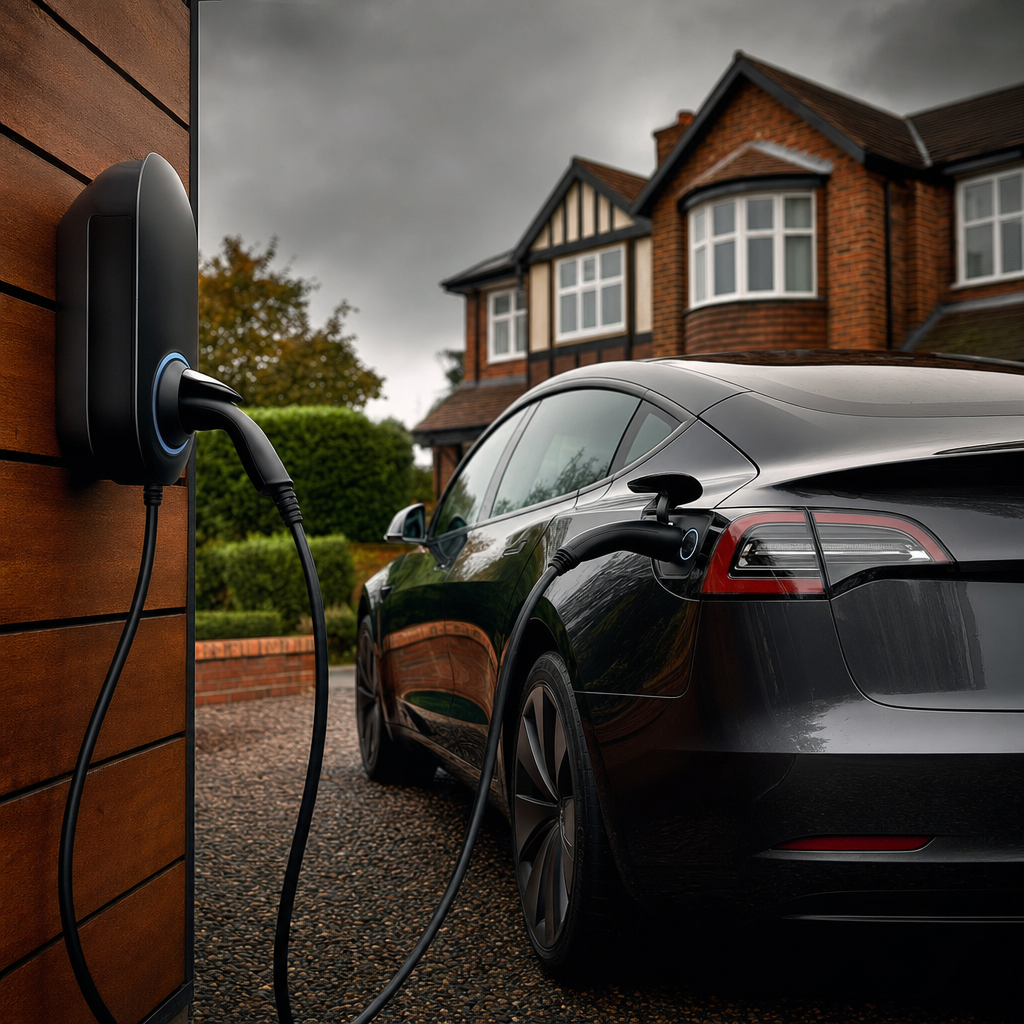
Buying a car is always a big decision. Buying an electric car in the UK right now feels like trying to solve a puzzle where someone keeps moving the pieces. The rules have changed, the prices have shifted, and half the stuff you read online is already out of date. I drive a Tesla Model 3 Long Range and charge it at home with a wall charger, so I get asked about this constantly. Is it actually worth it? Honest answer: it depends. But let me give you the real numbers, because a lot of what’s floating around out there is either outdated or comes from someone trying to sell you something.
For a working family in the UK, this is not a trivial purchase. We’re not talking about picking a new kettle. We’re talking about potentially tens of thousands of pounds, new charging habits, and a fair amount of uncertainty around government policy. So let me break it down properly.
What’s the actual purchase price looking like?
The headline figure you’ll see quoted is an average price of around £46,000 for a new EV in the UK. Don’t let that number put you off immediately, because it’s heavily skewed by luxury models at the top end. Rolls-Royce territory, basically.
The more useful truth is that new EVs now start under £16,000. The Leapmotor T03 is currently the most affordable at £14,495, with a 0% APR PCP deal at £169 per month with a £169 deposit. The Dacia Spring is close behind at £14,995, also on 0% PCP. These aren’t premium machines, but they’re real cars for real families doing real journeys.
If new feels like too much of a stretch, the used market has become genuinely interesting. Used EV prices dropped around 7 to 9% year-on-year through 2025, with the average used EV now sitting at roughly £24,000 according to Autotrader’s Retail Price Index. Other market data puts the average for the most-searched EV models closer to £16,826. There’s also an influx of ex-lease and ex-fleet vehicles hitting the market right now, because cars registered in 2022 and 2023 at the height of fleet EV adoption are completing their three-year cycles. That’s good news for buyers. Older models like the Nissan Leaf and Renault Zoe can be found under £10,000 for earlier examples.
What grants and incentives actually exist right now?
This is where a lot of articles are genuinely misleading, so pay attention. The Electric Car Grant was relaunched in July 2025 as a £650 million scheme and is still running. If you read anything saying the government scrapped the EV grant, that information is out of date.
The grant supports new EVs priced at £37,000 or under, and comes in two levels. The top tier, known as Band 1, offers £3,750 off eligible models that meet the highest sustainability standards. Band 2 offers £1,500 for cars that meet some but not all of those criteria. Models currently qualifying for the full £3,750 grant include the Renault 5, Renault 4, Nissan Leaf, Ford Puma Gen-E, and MINI Countryman Electric, among others. The grant runs until 31 March 2030.
To qualify, a car must be zero-emission, have a WLTP electric range of at least 100 miles, and come with at least a 3-year/60,000-mile warranty plus an 8-year/100,000-mile battery warranty.
On home charging, there is a grant covering up to 75% of installation costs, capped at £350 including VAT. But here’s the bit that catches people out. As of now, this grant is only available for rental and leasehold properties. If you own your home and have a driveway, you no longer qualify. A lot of people still think they can claim it, and they can’t. Worth knowing before you budget.
If you’re in Scotland, it’s also worth looking into the interest-free Electric Vehicle Loan from Transport Scotland, which currently offers loans of up to £35,000 towards the cost of a new pure electric or plug-in hybrid car.
What does road tax actually cost now?
Another area where outdated information causes real confusion. The free road tax for EVs ended on 1 April 2025. Full stop. If anyone tells you EVs are still road-tax exempt, they’re wrong.
New zero-emission cars registered from 1 April 2025 pay a £10 first-year rate, then move to the standard rate of £190 per year from year two. That’s the same as a conventional petrol or diesel car. Annoying, but not a dealbreaker.
If your EV is listed at £50,000 or more, there’s also the Expensive Car Supplement to consider. That adds £425 per year on top of standard VED for years two through six. The threshold for this was raised to £50,000 for electric cars in November 2025, which does give a bit more breathing room. My own Tesla sits above that line, so this is not academic for me.
Looking further ahead, the government has announced a pay-per-mile tax for EVs from April 2028, charged at 3p per mile. Plug-in hybrids would pay 1.5p per mile. It’s worth factoring that into any long-term cost thinking, even if the full detail of how it will work in practice isn’t confirmed yet.
Does charging at home actually save you money?
This is where EVs can still make a genuinely strong case for themselves, particularly for families who do most of their driving locally. I charge my Tesla overnight on an off-peak tariff, and the difference compared to filling a petrol tank is still significant. The maths won’t be identical for everyone. It depends heavily on your energy tariff and how much you drive. But home charging during off-peak hours consistently works out cheaper per mile than petrol.
The trickier calculation is for people without off-street parking, who rely entirely on public charging. Public rapid chargers are more expensive than home charging, and the pricing is inconsistent. It’s improving, but it’s still the weakest part of the EV ownership experience in the UK right now.
Range anxiety is real for some people and not for others. It largely comes down to your regular routes. If most of your driving is the school run, weekend trips, and the occasional run to IKEA, almost any modern EV will handle it without drama. Long motorway runs still require more planning than petrol, and that’s just honest.
Quick Comparison: Is an EV Worth It for Your Family?
| Scenario | Likely Verdict |
|---|---|
| Own your home, have a driveway, drive under 150 miles/day | Strong yes |
| Renting, no driveway, rely on public charging | More difficult |
| Can stretch to a used EV under £20,000 | Good value case |
| Want a new EV under £37,000 | Grant brings costs down significantly |
| High-end EV over £50,000 | VED surcharge bites, check your sums |
Bottom Line
For most working families in the UK who own their home, have somewhere to charge overnight, and do predictable daily mileage, buying an EV still makes real sense. The grant is back, the used market is well-stocked, and running costs for home chargers are genuinely lower than petrol. The tax landscape has got less generous since April 2025 and will change again in 2028, but those costs are manageable when you look at the full picture.
If budget is the priority, the used EV market right now is the sweet spot. If you want new, look hard at sub-£37,000 models where the Electric Car Grant genuinely helps. If you’re on the fence, I’d say do the maths on your own driving, don’t trust articles that are more than a year old (including some of mine), and don’t let outdated information make the decision for you.
It’s not perfect. But it’s a lot better than it used to be, and it’s where things are heading whether we like it or not.
If you found this useful, come and join the Tech Dads Life newsletter. I cover tech, family life, and the bits that actually matter for people like us. No waffle, no hype, just straight talk.
Sign up here: techdadslife.beehiiv.com