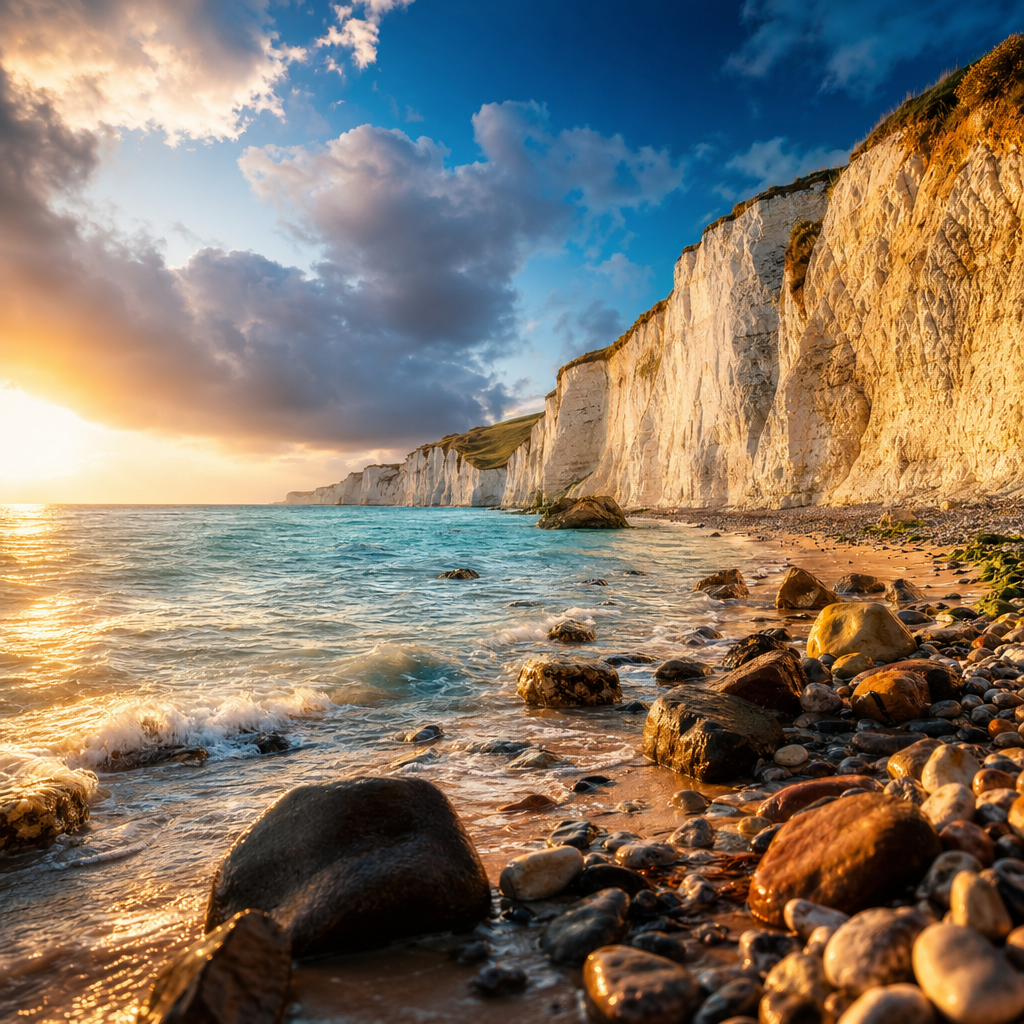
Living in Hampshire, we’re spoilt for choice when it comes to beaches. Within an hour or so of home, there’s everything from bustling seaside towns with pier attractions to completely unspoiled stretches of sand backed by dunes and heathland. Over the years, I’ve dragged the kids, the cool bags, the windbreaks, and far too many bodyboards to most of them.
This is my honest rundown of our favourite south coast beaches. Not every beach, just the ones we keep going back to. I’ll cover parking (because let’s be honest, that’s half the battle), facilities, dog rules, and the stuff you only learn after a few visits.
Bournemouth Beach
Bournemouth is the one everyone knows, and for good reason. Seven miles of award-winning beach, a pier, and enough going on to keep the whole family occupied. It’s also home to over 250 beach huts available for hire, which is a nice touch. Fun fact: Bournemouth was the first place in the UK to have purpose-built beach huts. The very first one was built in 1909, and there’s a Blue Plaque near the Bournemouth Seafront Office marking the spot.
Parking
Let’s get the big one out of the way. Bournemouth parking in summer can be genuinely stressful. There’s no Park & Ride scheme, so you’re relying on town centre or seafront car parks, and they fill up fast on sunny days. The seafront car park has 355 spaces (including 23 disabled bays) and sits right on the promenade, which is brilliant if you’re lugging a trolley full of beach gear. You’re just steps from the sand.
One thing to know: during the school summer holidays in July and August, access to the seafront car park is controlled by an attendant at a ticket booth. During this period, you can’t pay by the hour, so plan accordingly. Payment is available by cash, phone, or apps like JustPark, RingGo, or PayByPhone.
My Tip
Head to Branksome Chine. If you can bag a spot at the front of the car park there, you’re literally about 20 feet from the sand. There are benches, toilets, and both a restaurant and café nearby. It’s our go-to when we want a slightly quieter experience without driving much further.
Facilities
Toilets, cafés, seasonal lifeguards, and Bournemouth Pier with PierZip if anyone fancies it. The Oceanarium is nearby too, which is a solid backup plan if the weather turns. On a hot Bank Holiday weekend, though, my advice is to arrive before 9am or accept your fate. We learned that one the hard way.
Sandbanks Beach
Sandbanks is special. It’s consistently ranked among the best beaches in the UK and has held the Blue Flag award for cleanliness and water quality for over 35 consecutive years, which is longer than any other beach in the country. When you visit, you can see why. The water is genuinely clear, the sand is fine, and the whole setting feels a step above.
Parking
There’s a large pay-and-display car park just off Banks Road, right next to the beach. It holds around 550 spaces, with approximately 10 dedicated disabled bays for Blue Badge holders. On sunny weekends and school holidays, it can fill up by late morning. Once it’s full, finding on-street parking nearby is next to impossible, so early arrival is key.
If you’d rather skip the car altogether, the Harbour Breezer 60 runs from Poole and the Purbeck Breezer 50 comes from Bournemouth, both stopping close to the beach. Services run more frequently in summer.
Dog Rules
There’s a designated dog-friendly section at the western side of the beach, near the Sandbanks ferry, which is available all year round. Dogs are not allowed on the main beach area from 1 May to 30 September, and they need to be kept on a lead along the promenade.
Facilities
Sandbanks has proper facilities. Toilets with disabled access, showers, kiosks, and a beach café. There’s also mini golf, beach volleyball, and slacklining, so older kids can keep themselves entertained without a screen in sight. For wheelchair users, a beach-accessible wheelchair is available from the Sandbanks beach office from May to September on a first-come, first-served basis between 9:30am and 4:30pm. You’ll need to pay a fully refundable £50 cash deposit.
Studland Bay
If Bournemouth and Sandbanks are the polished options, Studland Bay is the wild one. Managed by the National Trust, it’s four miles of unspoiled sandy beach with sheltered, gently shelving water that’s ideal for younger children. Behind the beach, you’ve got dunes, low cliffs, and protected lowland heath that’s home to all six native British reptile species, along with rare birds and plants.
The peninsula is split into four distinct beaches: Shell Bay, Knoll Beach, Middle Beach, and South Beach. Each has a slightly different character. We tend to head for Knoll Beach because it has the best facilities, but Middle Beach is quieter if that’s what you’re after.
Parking
Pay and display car parks are available at all four beaches. If you’re a National Trust member, parking is free. Just scan your membership card at the pay and display machine. Overnight parking and camping are not permitted.
Dog Rules
This is worth reading carefully, because the rules have been updated recently. Under the legally enforceable dog public space protection order, dogs must be kept on a short lead on the beaches between 1 May and 30 September. From 1 October to 30 April, dogs can be off lead on the beaches.
Along Ferry Road and in the car parks at Knoll Beach and Shell Bay, dogs must be on a short lead all year round. On the dunes and heathland, the National Trust introduced a new measure in March 2025 asking owners to keep dogs on a short lead from March to July. This is specifically to protect ground-nesting birds and is separate from the legally enforceable beach rules.
Facilities
Knoll Beach is the hub. You’ll find the National Trust shop, a café, the beach office, toilets, an outdoor shower, and taps for washing off sand. The visitor welcome team can help with beach hut bookings and borrowing beach wheelchairs. Around 30 beach huts are available for rent at Knoll Beach, with a small number at South Beach, and you can book daily, weekly, or for three seasons.
One important thing to note: there are no lifeguards at any of the Studland beaches. If you’ve got young children, keep that in mind.
It’s also worth knowing that a section of Studland Beach is a well-known designated naturist area. It’s clearly signposted, but worth being aware of if you’re visiting with kids so you can choose your spot accordingly.
What I Always Pack
After years of beach trips with three kids, I’ve got the packing list down to a science. A few things that have genuinely made our trips better:
- A beach trolley or cart. Carrying everything across a car park and down to the sand with kids in tow is no fun. A decent trolley saves your back and your patience.
- A good windbreak. Even on a warm day, the south coast can get breezy. It also helps stake out your territory, which matters when it’s busy.
- A portable phone charger. Phones get hammered on beach days between maps, parking apps, photos, and the inevitable “can I watch something” requests.
- Dry bags. Keeps phones, wallets, and car keys safe from sand and water. I learned this one after a Samsung met an unexpected wave.
Final Thoughts
You don’t need to fly somewhere exotic to have a brilliant beach day. Some of our best family days out have been on these beaches, armed with nothing more than sandwiches, a flask, and a vague plan to build something ambitious out of sand.
If you’re in Hampshire or anywhere nearby, all three of these beaches are within easy reach. Bournemouth for buzz and convenience, Sandbanks for quality and that Blue Flag water, Studland for space and wildness. Each one has earned its place on our regular rotation.
Just check the parking situation before you go. Seriously. Check the parking.