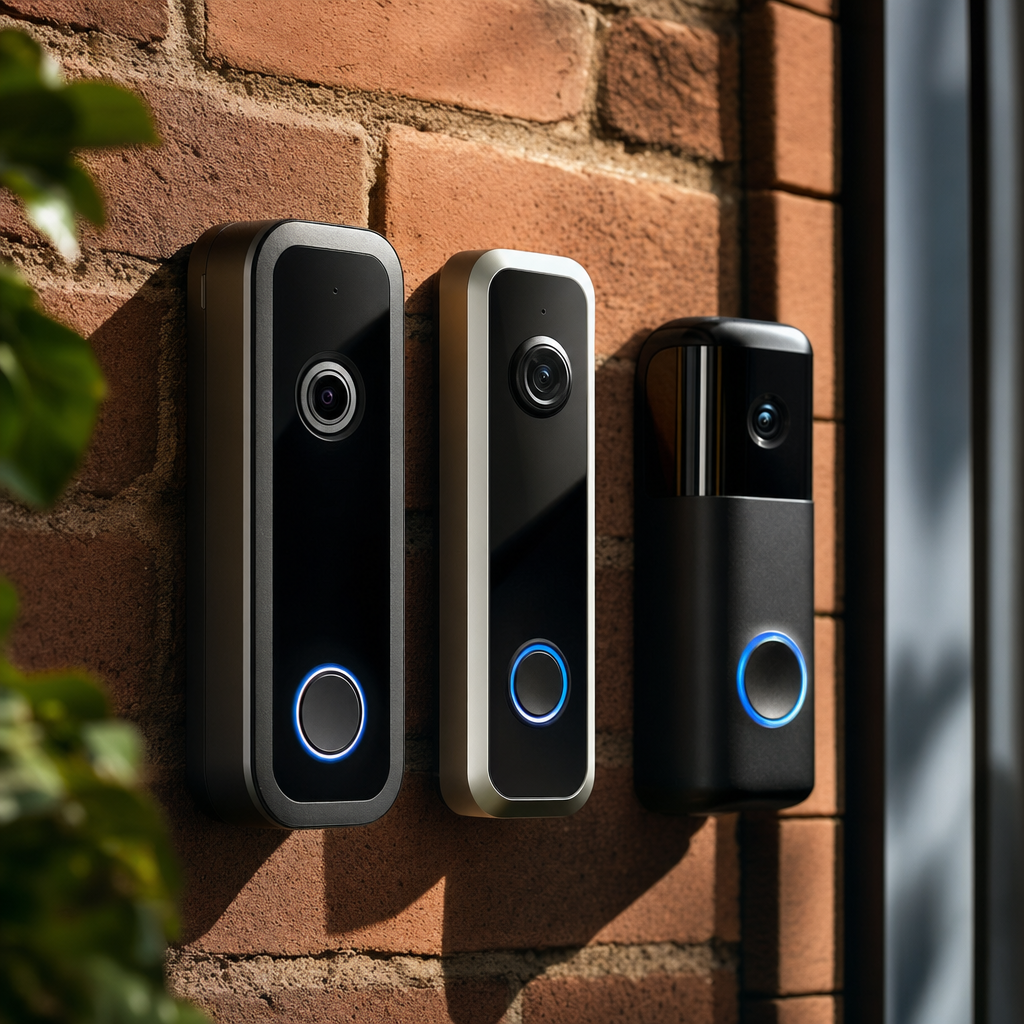
Buying a smart doorbell should be simple. You want to see who’s at the door, get an alert on your phone, maybe shout at a delivery driver through it. Job done. But in 2026, the smart doorbell market has turned into a proper minefield of subscription tiers, cloud storage policies, resolution upgrades, and ecosystem lock-in. I spent a good chunk of time going down this rabbit hole so you don’t have to, and I’ll be honest with you: there are some important things most buying guides gloss over, especially if you’re in the UK.
The three names that come up every time are Ring, Google Nest , and Arlo. All solid brands. All very different when you dig into the detail. With Ring launching a completely new lineup in early 2026 (including their first-ever 4K battery doorbell), and Google rebranding their Nest Aware subscriptions under the Google Home Premium umbrella in late 2025, the landscape has shifted enough that older advice no longer holds. Let’s work through what actually matters.
Video Quality: Does Resolution Actually Matter at Your Front Door?
The short answer is yes, but not always in the way you’d expect. Higher resolution helps most when you need to zoom in on detail, whether that’s reading a number plate, identifying a face, or checking whether that suspicious package is actually yours.
Ring’s big news for 2026 is genuine 4K on their Battery Video Doorbell Pro (2nd Gen), with up to 10x enhanced zoom. Below that sits a trio of new 2K models. It’s a significant upgrade from the 1080p to 1536p range Ring was offering until recently. Google’s new Nest Doorbell (3rd Gen, wired) also shoots 2K HDR and uses a 1:1 square aspect ratio with a 166-degree diagonal view, meaning you see packages on the ground as well as faces straight ahead. That square frame is genuinely useful and one of Nest’s most practical design decisions. However, and this is important for UK buyers, the 3rd Gen wired Nest Doorbell is currently only available in the US and Canada. As of early 2026, it has not launched in the UK. Arlo’s Ultra 2 model shoots 4K as well, with HDR and a colour night vision system that performs well in low light. For most front doors in the UK, 2K is plenty. 4K is nice to have, but the storage and bandwidth demands are real.
Subscriptions and Storage: The Cost That Never Stops
This is where smart doorbells can quietly drain your wallet, and it’s the thing most people don’t factor in when they’re comparing upfront prices. Every one of these systems works better, and sometimes only fully works, when you’re paying a monthly fee.
Ring has restructured its plans for 2026 into Basic, Standard, and Premium tiers. Third-party UK sources quote these at around £4.99, £7.99, and £15.99 per month respectively, though I’d strongly recommend checking the current prices directly on ring.com/pages/plans before you buy, as these have shifted around a fair bit. On any Ring subscription, recorded footage is stored in the cloud for up to 180 days. Without a plan, you get live view only. No recordings saved at all.
Google restructured their offering in October 2025, rebranding Nest Aware as Google Home Premium. The Standard plan is confirmed at £8 per month or £80 per year in the UK. An Advanced tier exists but confirmed GBP pricing for that wasn’t available at time of writing, so check store.google.com/gb for the latest. Arlo’s subscription is similarly tiered, with plans required for full cloud access and AI-powered features.
One critical point: Ring has no local storage option whatsoever. Everything goes to Amazon’s cloud (AWS). If that bothers you from a privacy standpoint, it’s worth knowing. Amazon has faced scrutiny in the past over Ring data practices, including questions around sharing footage with US law enforcement. Policy changes were made in 2023, but the architecture remains entirely cloud-dependent. Arlo supports local storage on some models via a USB drive or their SmartHub, which is a genuine differentiator if you’d rather keep footage at home.
Smart Home Integration: Alexa, Google, or Both?
This one is a dealbreaker for a lot of households, and it deserves a straight answer rather than being buried in a spec table.
Ring is owned by Amazon. It works brilliantly with Alexa. If you have Echo Show devices around the house, you can pull up the live doorbell feed just by asking, and get motion announcements through your speakers. It does not work with Google Home at all. If your house runs on Nest speakers and Google displays, Ring is simply not compatible.
Google Nest doorbells, predictably, integrate deeply with Google Home and Google displays. They also work with Amazon Alexa, which gives Nest a slight edge in flexibility. Arlo works with both Alexa and Google Home, making it the most ecosystem-agnostic of the three. For a house like mine where I’ve got Alexa devices throughout, Ring’s integration is genuinely seamless. But if you’re on the Google side, Nest or Arlo are your options.
Battery Life in the UK: Real-World Expectations
Don’t let any manufacturer’s claimed battery life make you overly optimistic. Ring quotes 6 to 12 months on their battery models. In real UK conditions through a British winter, with typical front-door activity of around 15 to 25 motion events per day, you’re realistically looking at 3 to 4 months between charges. Cold snaps below 5°C hit lithium batteries noticeably. Ring’s new solar accessories help extend this, and the new Battery Doorbell Plus (2nd Gen) has a removable quick-release battery pack, which is a much more practical option if your doorbell is awkward to reach. If you have existing doorbell wiring, going wired entirely removes this headache. The standard Battery Doorbell (2nd Gen) uses a built-in battery with USB-C charging, so you’ll need to take the whole unit down to recharge it.
The Picks
Ring Battery Video Doorbell Pro (2nd Gen) - £219.99
Ring’s new flagship battery model brings 4K video and 10x enhanced zoom to a wireless doorbell for the first time. The Alexa integration is the best in class, and the new AI features (available with a Ring AI Pro subscription) let you search footage by description rather than scrubbing through clips. The lack of local storage and Google Home incompatibility remain genuine downsides. A free 30-day trial comes with setup.
Pros: 4K quality, excellent Alexa integration, strong app experience. Cons: No local storage, no Google Home support, subscription required for recordings.
Ring Battery Video Doorbell (2nd Gen) - £79.99
The budget entry point in Ring’s new 2026 lineup. You get 2K video, USB-C charging, and all the Alexa goodness of the more expensive models. The built-in (non-removable) battery is a minor inconvenience, but at this price it’s one of the best value smart doorbells available in the UK right now.
Pros: Great value, 2K upgrade from previous gen, easy setup. Cons: Non-removable battery, no local storage, subscription needed for full functionality.
Google Nest Doorbell (2nd Gen, Wired)
For Google Home households, this is the logical choice. The 2K HDR image quality is excellent, and it works with both Google Home and Alexa. The Google Home Premium subscription at £8 per month or £80 per year is reasonably priced. Note that the newer 3rd Gen wired model is not available in the UK at time of writing, so UK buyers should stick with the 2nd Gen for now.
Pros: Good ecosystem flexibility, works with Alexa and Google, solid image quality. Cons: Requires wiring, latest gen not available in UK, subscription needed for full history.
Arlo Essential Video Doorbell Wire-Free
Arlo sits in a slightly different space. It’s the only option here with local storage support (via USB on compatible hubs), and it works with both Alexa and Google Home without any fuss. Video quality is solid and the motion detection is reliable. The local storage option genuinely sets it apart if privacy is a priority for you.
Pros: Local storage option, works with both Alexa and Google, no ecosystem lock-in. Cons: Subscription still needed for full cloud features, hardware can feel less premium than Ring or Nest.
Quick Comparison
| Model | Price (GBP) | Best For | Verdict |
|---|---|---|---|
| Ring Battery Doorbell Pro (2nd Gen) | £219.99 | Alexa homes, power users | Best 4K battery option in 2026 |
| Ring Battery Doorbell (2nd Gen) | £79.99 | Budget, Alexa homes | Best value Ring right now |
| Google Nest Doorbell Wired (2nd Gen) | Check latest | Google Home households | Best for Google ecosystem |
| Arlo Essential Wire-Free | Check latest | Privacy-conscious, mixed ecosystems | Most flexible, local storage option |
Bottom Line
If your home runs on Alexa (like mine), Ring is the easy call. The new Battery Doorbell (2nd Gen) at £79.99 hits a sweet spot for most families, and if you want that 4K upgrade, the Pro at £219.99 delivers it properly. For Google Home households, the Nest Doorbell Wired is the right choice. And if local storage and ecosystem flexibility matter more than anything else, Arlo is the grown-up option that doesn’t force you to pick a side. Just factor in the subscription cost of any of these before you commit. The hardware price is only the beginning.
If you found this useful, I write about this kind of thing every week over at the Tech Dads Life newsletter. Real-world tech advice for families who want to make better decisions without wading through the marketing fluff. Come and join us at techdadslife.beehiiv.com .