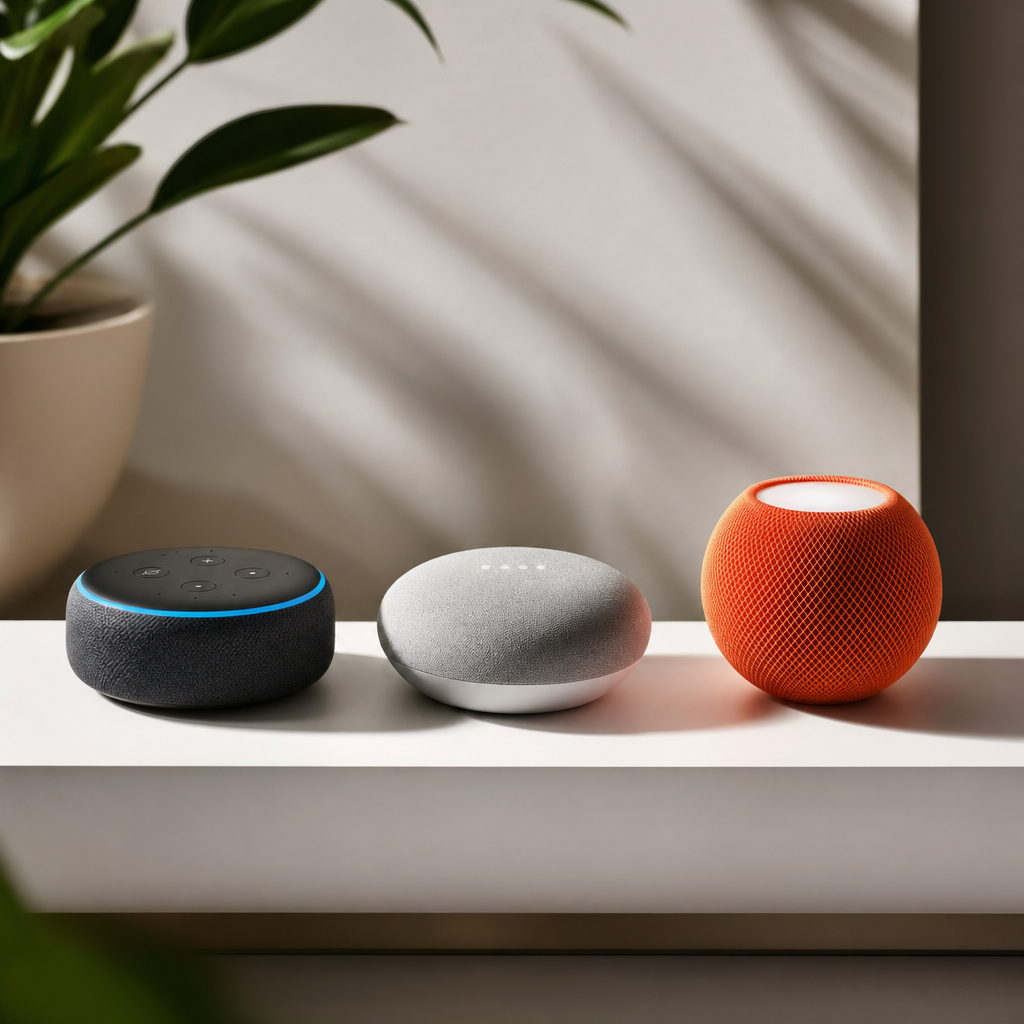
We have had an Amazon Echo in the kitchen for about four years. It answers questions, sets timers, plays music, and has told a frankly alarming number of bad jokes at my kids’ request. It does its job. But when the time came to add a speaker to the living room, I ended up down a rabbit hole comparing all three main ecosystems properly for the first time - and the landscape in 2026 is more interesting than I expected.
If you are buying a smart speaker for the first time, or upgrading an existing one, this guide should give you a clear view of what each ecosystem actually delivers for a family household.
The Three Ecosystems in Brief
Amazon Alexa (Echo range) is the most widely used smart home platform in UK homes. It excels at smart home control, shopping integrations, and has the widest range of compatible third-party devices. Alexa as an AI assistant has been significantly upgraded with generative AI capabilities since 2024.
Google Assistant (Nest range) is strongest for information retrieval and integrates most seamlessly with Android phones, Gmail, Google Calendar, and Google’s wider suite. If your family lives in Google’s ecosystem, Nest speakers feel the most natural.
Apple Siri (HomePod) is the pick for households that are all-in on Apple - iPhone, iPad, MacBook, Apple TV. Sound quality on the HomePod is genuinely exceptional. Siri as an assistant is the weakest of the three for general knowledge queries but is tightly integrated with Apple’s privacy-focused approach.
Amazon Echo: Still the Smart Home Hub Champion
The current Echo lineup starts with the Echo Dot at around £55 ($70) and goes up to the Echo (4th Gen) at around £100 ($125) and the Echo Studio at around £190 ($240) for audiophiles.
For smart home control, Amazon still leads. The breadth of compatible devices - lights, plugs, thermostats, doorbells, locks, cameras - is unmatched. If you have a mix of smart home kit from different brands, Alexa is the most likely to work with all of it without complication.
Alexa’s upgraded conversational AI means it handles more complex questions and follow-ups better than it used to. It is not at the level of a dedicated AI chatbot for complex reasoning, but for the questions a family asks a kitchen speaker - timers, conversions, weather, general knowledge, shopping lists, setting reminders - it is fast and accurate.
The Echo’s sound quality at the mid-range is decent but not exceptional. The Echo Studio is a genuine step up. For a kitchen or bedroom, the standard Echo is fine. For a living room where you care about music quality, it is worth spending more.
Privacy note: Amazon processes most Alexa commands in the cloud. You can review and delete your voice history in the Alexa app.
Google Nest: The Information Answer Machine
The Google Nest Mini starts at around £50 ($60) and the Nest Audio at around £90 ($110). The Nest Hub and Nest Hub Max add a screen to the mix, which opens up some useful possibilities for kitchens - video calls, recipe viewing, home camera feeds.
Google’s strength is web knowledge. Ask it a nuanced question, a comparison, or anything that benefits from pulling live information, and Google Assistant consistently outperforms Alexa. For older kids doing homework questions, this is genuinely noticeable.
If your family uses Google Workspace or Gmail for school and work, Nest speakers integrate directly. “Hey Google, what’s on my calendar today?” is actually useful if your Google Calendar is well maintained. Alexa can do this too but the Google implementation is tighter.
The Nest range is also well designed - the fabric-wrapped Audio in particular looks good in a living room. Build quality is solid.
Google’s smart home support has improved considerably but still trails Amazon slightly for breadth of compatible devices. For modern smart home kit bought in the last two years, compatibility is rarely an issue.
Apple HomePod: Best Sound, Apple Households Only
The HomePod (2nd Gen) costs around £300 ($300) and the HomePod mini around £100 ($100). These are premium prices.
The full HomePod sounds extraordinary for a speaker of its size. If music is a priority and your household is Apple-based, there is no better option at this price. The spatial audio processing is genuinely impressive.
The HomePod integrates seamlessly with iPhone, iPad, and Apple TV. Handoff - where you can toss audio from your phone to the HomePod as you walk into the room - works brilliantly in practice. Apple’s HomeKit smart home platform is well supported and privacy-focused, processing more on-device rather than in the cloud.
Siri’s limitations are real, though. For general knowledge questions, recipe help, or anything requiring pulling live web information, Siri lags behind Google Assistant noticeably. If you are primarily using a smart speaker for music, timers, and smart home control, this matters less. If your household asks it questions constantly, it becomes frustrating.
The HomePod is only worth buying if you are deep in the Apple ecosystem. If you use Android phones or a mix of devices, it will frustrate more than it helps.
How They Compare Side by Side
| Feature | Amazon Echo | Google Nest | Apple HomePod |
|---|---|---|---|
| Price range | £55 to £190 | £50 to £230 | £100 to £300 |
| Smart home compatibility | Excellent | Very Good | Good (HomeKit) |
| Voice assistant quality | Good | Excellent | Fair |
| Music quality | Good to Very Good | Good | Excellent |
| Privacy approach | Cloud-based | Cloud-based | More on-device |
| Best for | Mixed Android/iPhone homes | Google ecosystem users | All-Apple homes |
What to Actually Buy in 2026
For most UK families with a mix of Android and iPhone users: Amazon Echo (4th Gen). The smart home compatibility, the decent sound, and the breadth of Alexa skills make it the safe, reliable all-rounder.
For Google-first families (Android phones, Chromebooks, Gmail): Google Nest Audio. The tighter integration with your existing services makes it the practical choice.
For Apple households where music quality matters: Apple HomePod mini as a starting point. If you love it, the full HomePod is worth the upgrade.
Do not buy the cheapest Echo Dot or Nest Mini as your main living room speaker expecting good music. They are fine for kitchens and bedrooms where audio quality matters less. In a living room, the step up to the next model is worth the money.
The Family Angle
In practice, smart speakers in a family home work hardest in the kitchen - timers, shopping lists, music while cooking, quick questions during homework. For this use case any of the three ecosystems serve well.
The difference shows up in the smart home layer. If you are planning to expand into smart bulbs, plugs, and security cameras, Amazon’s wider compatibility gives you more flexibility. If you are buying everything new and want an integrated setup, Apple HomeKit or Google Home both work very well with current-generation devices.
My 13-year-old uses our kitchen Echo primarily for music and terrible jokes. My wife uses it for shopping lists and reminders. Neither use case demands the premium HomePod. But in a household where everyone uses iPhones and MacBooks, the seamless Apple integration would probably win over the slightly better Alexa smart home support.
For more smart home guides and tech picks for families, join the Tech Dads Life newsletter at Tech Dads Life on Beehiiv .
What We Have at Home and What Actually Gets Used
We run a mixed household which, in smart speaker terms, means we have experienced the friction that comes from not picking a lane.
There is an Echo Show 10 in the kitchen - inherited from an Amazon period where everything went through Alexa - and a HomePod mini in the living room that arrived after we went deeper into Apple devices. They do not talk to each other, they have different wake words, and asking one to control something that is paired to the other results in the kind of blank response that makes you question all your life choices.
The practical lesson: pick one ecosystem and commit. The smart speaker wars have been running long enough that all three platforms are capable and well-supported. The mistake is not choosing the wrong one. It is trying to run two simultaneously.
What actually gets used most: The Echo Show 10 in the kitchen is the one that earns its place every day. Timers while cooking. The shopping list that updates on my phone. Video calls with family using the rotating camera. Dropping in on the kids when they are not answering their phones. These are the features that have survived genuine daily use rather than the enthusiastic first-week exploration. The screen matters more than I expected - being able to glance at the weather or a recipe without touching anything is the use case that justifies the larger format.
The HomePod mini in the living room is primarily a music speaker that occasionally fields Siri requests. It sounds better than its size suggests, Siri has improved but still loses on general knowledge questions, and it integrates with the rest of the Apple devices seamlessly. It earns its place for music and nothing else.
For a family buying their first smart speaker in 2026: Do not overthink the platform choice. If you are already buying things from Amazon and use Alexa elsewhere, get an Echo. If you are iPhone and Mac-only, the HomePod mini is the cleaner choice. If your family asks questions constantly and values the best answers over the best music, lean Google. The biggest mistake is not choosing wrong - it is choosing nothing and going back to looking everything up on your phone.