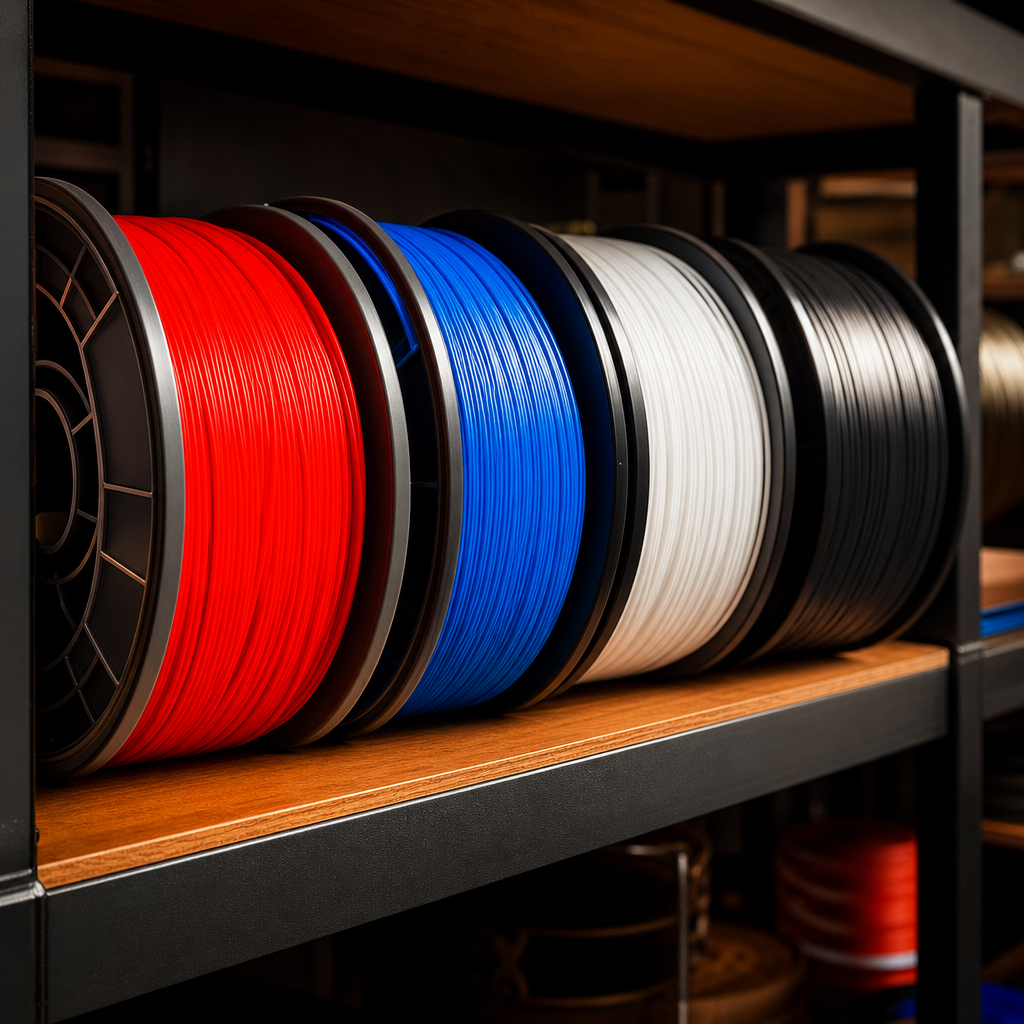
If you’ve recently picked up a 3D printer, or you’ve had one for a while and you’re still grabbing whatever filament is cheapest on Amazon, you’re probably at the point where you’re wondering whether it actually matters what you buy. The short answer is yes, it does. The longer answer involves three letters that get thrown around constantly in 3D printing circles. PLA , PETG, and TPU. If nobody has explained what they actually mean in plain English, it can feel like everyone else is speaking a different language.
I’ve been printing for years now, mostly on my Bambu Lab P2S, and I’ve burned through more spools than I care to count. Some of it was trial and error, some of it was reading too many forum posts at midnight. This guide is what I wish someone had handed me at the start. Whether you’re printing cable tidies, replacement brackets, toys for the kids, or something that needs to live outside, here’s how to pick the right filament for the job.
Know Your Temperature Limits Before You Buy
This is probably the most overlooked buying criterion, and it matters more than anything else on the spec sheet. PLA starts to soften around 55 to 60°C, which sounds fine until you leave a printed part on a car dashboard in summer, or fit it near a boiler, or just put it somewhere that gets direct afternoon sun. It’ll warp and deform surprisingly quickly.
PETG handles 75 to 85°C before it starts giving up, which makes a meaningful practical difference for anything in the kitchen, the garage, or outdoors. If your print is going near heat, skip PLA entirely and go straight to PETG. It’s that simple.
Understand What “Flexible” Actually Means
TPU is a fundamentally different beast from PLA or PETG. It’s not just a bit bendy. It can stretch anywhere from 300% to 600% before it breaks, which makes it genuinely rubber-like. That makes it brilliant for phone cases, cable protectors, feet for furniture or equipment, and anything that needs to absorb impact or flex repeatedly without snapping.
But TPU is genuinely tricky to print. It’s soft, which means it can buckle inside the extruder if your printer uses a Bowden-style setup (where the extruder motor is mounted away from the hotend). You really want a direct drive printer for TPU. My P2S handles it, but you print it slowly, around 20 to 35mm/s, and you don’t rush it. For beginners, a 95A Shore hardness TPU is the most sensible starting point.
PLA+ Is Almost Always the Better Default
Standard PLA is the most popular filament in the world, and it’s great for decorative prints, prototypes, and low-stress household parts. But here’s something that often gets buried: PLA+ exists, costs only marginally more, and is less brittle, more impact-resistant, and often easier to print. For 95% of home use cases, PLA+ is simply the better choice.
Don’t let the “plus” make you think it’s some exotic upgrade. It still prints at the same temperatures (185 to 220°C), still works with all the standard slicer profiles, and it won’t cost you much extra per spool. If you’re buying PLA for anything functional, buy PLA+ instead.
Dry Your Filament, Especially PETG
PETG is hygroscopic, which is a fancy way of saying it absorbs moisture from the air. If it sits in an open box for a few days (or weeks), you’ll get stringing, popping, and failed prints, and you’ll wonder what went wrong. The answer is almost always moisture.
A decent filament dryer is one of the best investments you can make if you’re printing PETG regularly. PLA is more forgiving, but even that benefits from being stored properly. I keep mine in sealed bags or dried boxes between sessions. It sounds fussy, but it makes a real difference to print quality.
The Picks
Bambu Lab PLA Basic
Bambu’s own PLA is tuned specifically for their printers and the profiles are already baked into Bambu Studio. If you’re printing on a Bambu machine, it’s hard to argue with the convenience. It’s consistent, reliable, and produces clean results without needing to fiddle with settings.
Pro: Plug-and-play performance on Bambu printers. Con: Pricier per spool than generic alternatives.
eSUN PLA+ 1.75mm
eSUN is one of the most trusted budget-friendly brands in the UK 3D printing community, and their PLA+ is a genuine workhorse. Consistent diameter, good colour range, and widely available. This is what I’d recommend to anyone who wants solid results without spending a fortune.
Pro: Excellent value and highly consistent across spools. Con: Colour accuracy can vary slightly between batches.
Polymaker PolyLite PETG
Polymaker consistently produces some of the cleanest PETG I’ve used. PolyLite PETG strings less than many competitors, dries well, and delivers solid layer adhesion. For anything that needs to handle heat or live outdoors, this is my go-to recommendation.
Pro: Low stringing for a PETG, good heat resistance. Con: Needs a heated bed and proper drying. Don’t skip that step.
Filamentive rPLA+ (UK-Made Recycled)
Filamentive is a UK-based manufacturer making filament from recycled plastic waste, and their rPLA+ punches well above its weight. If you care about not adding more virgin plastic to the world and you want something made domestically, this is the one. It’s used by schools, maker spaces, and plenty of home users across the UK.
Pro: UK-made, genuinely recycled, great environmental credentials. Con: Slightly narrower colour range than mainstream brands.
Polymaker PolyFlex TPU95
For flexible prints, Polymaker’s TPU95 is well-regarded for being one of the more printable TPUs available. The 95A hardness rating hits that sweet spot between flexibility and ease. It won’t cause chaos in your extruder the way softer grades can. Print slowly, use direct drive, and you’ll get great results.
Pro: One of the most printable TPUs available at this hardness. Con: Not compatible with AMS-style multi-material systems. You’ll need to load it manually.
Quick Comparison Table
| Model | Price (GBP) | Best For | Verdict |
|---|---|---|---|
| Bambu Lab PLA Basic | ~£20/kg | Bambu printer users | Best plug-and-play option |
| eSUN PLA+ | ~£14/kg | Everyday home prints | Best value for most users |
| Polymaker PolyLite PETG | ~£18/kg | Heat-exposed or outdoor parts | Best PETG for home use |
| Filamentive rPLA+ | ~£18/kg | Eco-conscious UK buyers | Best sustainable choice |
| Polymaker PolyFlex TPU95 | ~£22/kg | Flexible or shock-absorbing parts | Best flexible filament |
Prices are approximate and may vary by retailer.
Bottom Line
For most families printing everyday home projects, eSUN PLA+ is where I’d start. It’s affordable, consistent, and covers the vast majority of what you’ll want to print around the house. If you’re printing anything that lives near heat, gets direct sun, or needs to be outside, move to Polymaker PolyLite PETG instead. And if you need something that bends, squishes, or absorbs impact, whether that’s phone cases, cable guards, or bumpers, Polymaker PolyFlex TPU95 is the clear answer, as long as your printer has a direct drive extruder.
If you’re on a Bambu machine and you just want everything to work without thinking about it, Bambu’s own filament is worth the small premium for the seamless slicer integration. And if you want to print knowing your filament is made in the UK from recycled material, Filamentive rPLA+ is genuinely impressive.
Pick the right material for the job, keep your filament dry, and you’ll be amazed at how much easier 3D printing gets.
Want more practical 3D printing guides, family tech reviews, and no-nonsense buying advice delivered straight to your inbox? Sign up for the Tech Dads Life newsletter at techdadslife.beehiiv.com . No spam, just useful stuff.