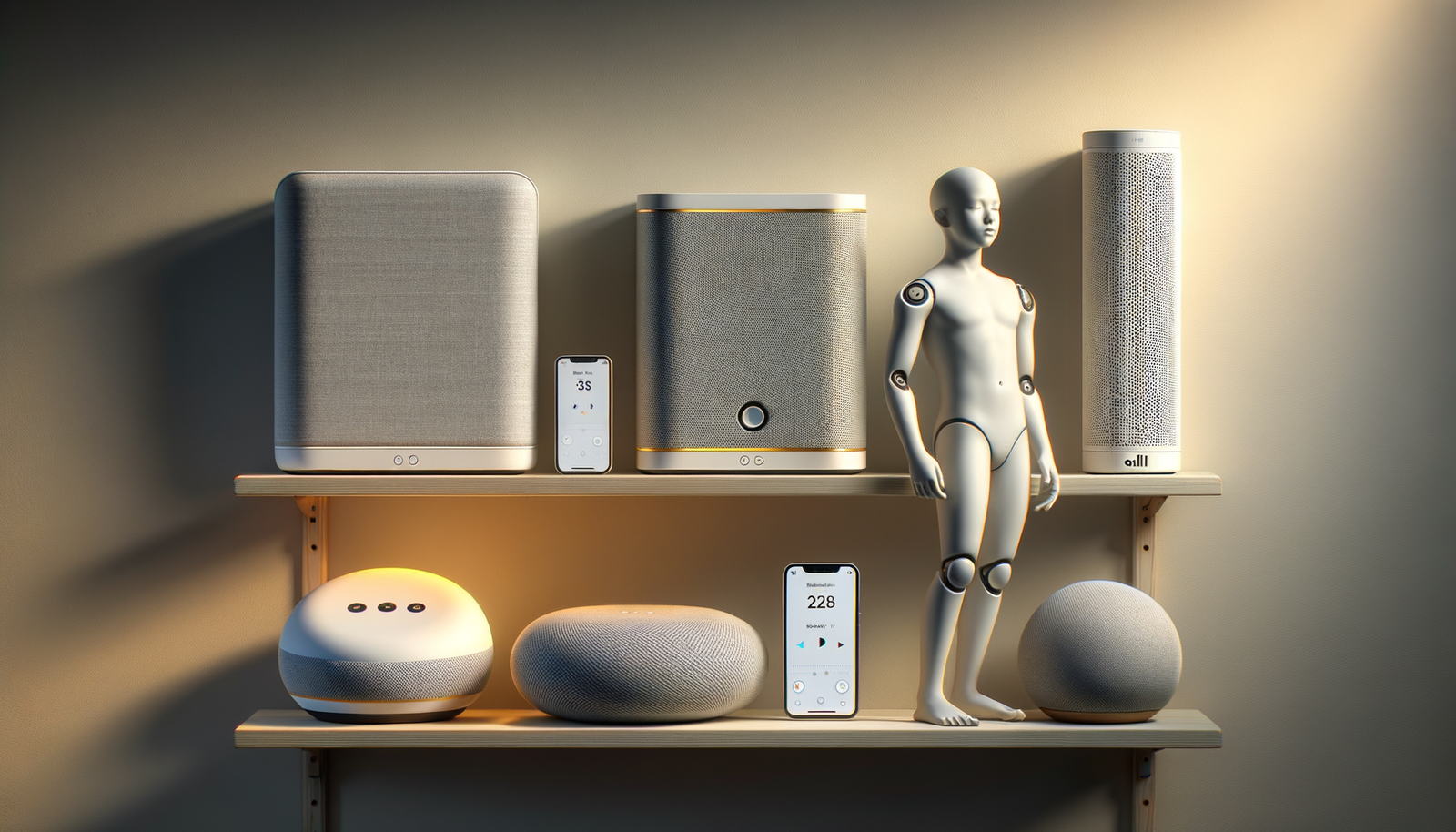
I’ve had Alexa devices dotted around this house for years. There’s one in the kitchen, one in the lounge, a couple of Echo Dots upstairs, and at some point one ended up in the garage next to the 3D printer. So when people ask me which voice assistant is best for family life in 2026, I don’t have to guess. I live with this stuff every single day.
But here’s the thing. The landscape has shifted dramatically in the last twelve months. It’s no longer just a straight fight between Alexa, Google, and Siri. ChatGPT’s voice mode has muscled its way into the conversation, Google is in the middle of replacing Google Assistant with Gemini across its entire product range, and Amazon has finally launched Alexa+ in the UK. That’s a genuinely upgraded version of the assistant we’ve all been shouting at since forever. There’s a lot to unpack, so let me do the honest dad breakdown you actually need.
Alexa in 2026: Finally Growing Up?
For years, Alexa was the smart home champion and a conversational disappointment. Great at turning lights off, terrible at anything that required actual thinking. Alexa+ changes that, at least on paper.
The UK rollout of Alexa+ started in March 2026 as an Early Access programme. Once that period ends, it’ll be included free with an Amazon Prime membership, which is honestly pretty good value given how many households already pay for Prime. If you don’t have Prime, it’ll cost you £19.99 per month, which is harder to justify unless you’re getting real, daily use out of it.
What’s actually different with Alexa+? The big shift is conversational continuity. You no longer need to repeat the wake word between every sentence. It holds context across topics, and you can pick up a conversation started on your Echo in the lounge and continue it later in the Alexa app on your phone. For someone who’s often mid-thought when walking out the door, that’s genuinely useful. The UK version has also been localised properly, connecting to British news sources including the BBC and The Guardian, and it’s apparently better with regional accents. I’ll believe the accents part when I see it, but the intent is right.
There is a catch. Alexa+ only works on the most recent generation of Echo devices, plus a handful from previous generations. If you’ve got older hardware sitting around, you’ll need to check whether it’s compatible before getting excited. And if you do have a compatible device that you already own, you’ll need to register online to receive the update, as it won’t automatically appear for everyone straight away. Worth knowing before you assume your existing kit is sorted.
For smart home control, Alexa is still the strongest option in this comparison. The third-party device support is vast, and the ability to build multi-step routines across a mixed ecosystem of smart gear is something the others still haven’t matched. If your house is full of a mix of bulbs, plugs, thermostats, and cameras from different brands, Alexa is usually the glue that holds it all together.
If you’ve got younger kids in the house, the Echo Dot Kids is worth a look. You could repurpose a spare Echo Dot as a kid-friendly device, but the dedicated Kids edition comes with a cute design, a two-year guarantee, and a year of Amazon Kids+ included. At £29.99, it’s a solid little package.
Google Gemini: The Assistant That Got a Brain Transplant
Google is doing something bold. It’s replacing Google Assistant with Gemini across its smart home product line. That’s not a small tweak. That’s pulling out the engine mid-flight and fitting a new one. Whether it lands smoothly depends on how well the transition is managed, and right now it’s somewhere between “genuinely impressive” and “still finding its feet.”
Gemini Live is where the real upgrade shows. Natural, flowing conversation. Mid-topic changes handled without getting confused. Deep integration with Google’s own ecosystem. If your family runs on Google Calendar, Gmail, and Google Maps, Gemini is the assistant that will feel most joined up. It knows your schedule, it can pull context from your inbox, and it gives you answers that feel connected to your actual life rather than generic web results.
The new Google Home Speaker is set to launch in the UK in spring 2026, priced at £99. It’s been built specifically around Gemini, with custom processing designed to handle the AI’s demands for faster responses. That’s the right approach. Retrofitting powerful AI onto old hardware never quite works, and Google seems to have learned that lesson.
One caveat on pricing: while basic Gemini on a Home Speaker is free, the more advanced features like Gemini Live, Sound Detection, and Daily Summaries are locked behind Google Home Premium, which runs at £8 or £16 per month depending on the tier. That subscription layer is worth factoring in if you want the full experience.
For Android households, Gemini is likely your best all-rounder. Multilingual support is strong, reasoning is solid, and the Google ecosystem integration is unbeaten. For Apple households, it’s more of a nice-to-have than a natural fit.
Siri and ChatGPT: The Wild Cards
Siri remains stubbornly useful for Apple households and stubbornly frustrating for everything else. On iPhones and iPads it’s fast for quick commands, timer setting, and hands-free calls. But it still struggles with anything that requires real reasoning or nuanced answers. Its smart home integration is solid within the HomeKit world, yet it doesn’t match Alexa’s sheer breadth of third-party support. If your whole family is on iPhones and you’ve built your smart home around HomeKit, Siri does a decent enough job. If you’re running a mixed ecosystem, it starts to show its limits quickly.
ChatGPT’s voice mode is the wildcard that’s genuinely changed my thinking on all of this. Powered by GPT-5, it’s the most fluent, most capable conversational AI in this group. For complex questions, helping a teenager work through an essay structure, or getting a genuinely thoughtful answer to something unusual, nothing else comes close. In my experience, it gives far more useful answers than either Alexa or Google for homework questions and general curiosity, and I suspect plenty of families are discovering the same thing.
The trade-off is that ChatGPT isn’t a smart home controller. It’s not woven into your calendar, and using it as a voice assistant requires a bit more intentionality than just shouting at an Echo. It’s brilliant at conversation and reasoning. It’s not going to turn your kitchen lights off.
Head-to-Head Comparison
| Feature | Alexa+ | Google Gemini | Siri | ChatGPT Voice |
|---|---|---|---|---|
| Smart home control | Excellent | Good | Good (HomeKit) | None |
| Conversational fluency | Much improved | Excellent | Weak | Best in class |
| Calendar and scheduling | Basic | Excellent | Good (Apple) | Limited |
| Kids’ questions | Good | Good | OK | Excellent |
| UK pricing | Free with Prime | Free (premium £8–16/mo) | Free (Apple device) | Free / Plus available |
| Hardware lock-in | Echo ecosystem | Google ecosystem | Apple ecosystem | App-based |
| Context memory | Now supported | Excellent | Weak | Excellent |
Hype Cycle Check
LIKELY TO LAST: Alexa’s smart home dominance is real and earned. The sheer number of compatible third-party devices means it’s embedded in too many homes to disappear. ChatGPT as a reasoning assistant is also here to stay. GPT-5 is genuinely ahead of the pack on complex queries, and that gap isn’t closing quickly.
WATCH CLOSELY: Google Gemini’s transition from Google Assistant is the most interesting story in this space. If the integration holds together, and the new Home Speaker lands well, Gemini could leapfrog Alexa as the best all-rounder for households already in the Google ecosystem. The spring 2026 UK launch will be telling.
VAPOURWARE RISK: Alexa+ promises a lot, and some of it is impressive. But the limitation to newer Echo hardware only, combined with a rolling Early Access rollout, means real-world performance at scale is still unproven. The “it remembers your conversation” feature sounds great in a press release. Whether it actually holds up across a busy family household with multiple voices and chaotic daily routines is a different question entirely.
What This Means for CES 2027
CES 2026 made it clear that every major tech company is racing to make AI feel native rather than bolted on. By CES 2027, I’d expect the conversation to have shifted from “which assistant is smartest” to “which assistant is most embedded in your daily workflow.” The companies that crack ambient, always-on AI that genuinely learns your household, without needing to be explicitly prompted, will dominate. Amazon, Google, and Apple are all circling that goal. Who gets there first will define the next five years of smart home tech.
What to Watch
- Alexa+ real-world rollout: Once Early Access ends and it becomes standard with Prime, the real test begins. Watch for whether context memory holds up in noisy, multi-person households.
- Google Home Speaker UK launch: Spring 2026 is imminent. Early reviews will tell us whether Gemini-native hardware actually delivers meaningfully better performance.
- ChatGPT smart home integration: OpenAI has shown no signs of building device control into Voice Mode, but that gap is too obvious to ignore forever. Any announcement here would be seismic.
- Siri’s next move: Apple has been relatively quiet on Siri upgrades compared to its rivals. Whether WWDC 2026 brings a meaningful AI overhaul will determine whether it remains relevant or becomes the assistant you use only because it’s already there.
If you want honest, no-nonsense tech takes for family life without the marketing fluff, come and join the Tech Dads Life newsletter. I write about the stuff that actually matters for real households, not just the shiny launches. Sign up at techdadslife.beehiiv.com and I’ll see you in your inbox.