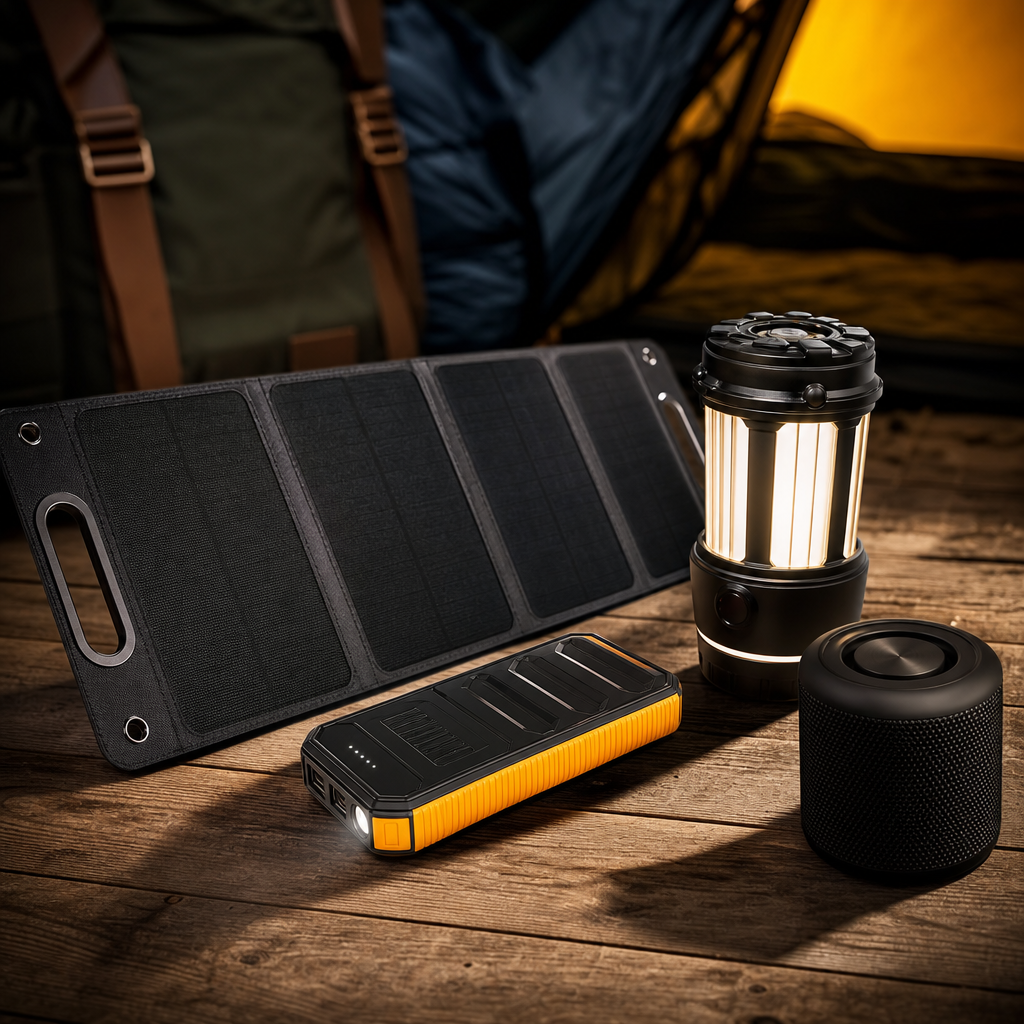
Let me be honest with you. When we go camping, my instinct is to leave as much of the modern world behind as possible. No notifications, no smart home nonsense, no scrolling. Just fresh air, a fire, and the kids actually talking to each other. In practice though, there are a few things I genuinely cannot do without, and I suspect you’re in the same boat. A warm beer on a hot afternoon is basically a crime against nature. Cold milk for your morning coffee matters more than people admit. And a decent Bluetooth speaker? Non-negotiable. The trick isn’t going full Luddite or wiring up the campsite like a tech convention. It’s working out which bits of kit actually earn their place in the tent.
The problem is that camping tech has exploded as a category. Walk into any outdoor shop or browse Amazon and you’ll find solar panels, power stations, and portable projectors all promising to transform your trip. Some of it is brilliant. Some of it is overpriced gadgetry that’ll spend the weekend in the car. This guide cuts through it and focuses on the stuff that genuinely makes a camping trip better for a family, without turning it into a busman’s holiday from the house.
How Much Power Do You Actually Need?
Before you buy anything, work out what you’re actually trying to run. If it’s just phones, a speaker, and the occasional camera top-up, you’re not looking at massive capacity. A 300–500Wh portable power station will handle that comfortably across a weekend. If you want to run a cool box, charge a laptop, and keep everything else ticking over for several days, you’ll want to step up toward 1000Wh or more.
The other thing to get straight is the difference between a solar panel and a portable power station. A solar panel generates power when the sun is out. A power station stores it, and you draw from it whenever you need. Ideally you want both, with the panel topping up the station during the day. For UK camping, this matters more than it does in sunnier climates. British weather being what it is, you cannot rely on the sun being cooperative, so always arrive with your power station fully charged and treat any solar generation as a bonus top-up rather than your primary plan.
Solar Panels: Useful, but Know Their Limits
Portable solar panels have genuinely improved over the past few years, and they’re worth having, just with realistic expectations. The BigBlue 28W USB Solar Charger consistently comes out near the top of independent testing. It pushes close to 950mAh per hour in direct sunlight, has dual USB ports, and weighs just under 600g. For charging phones and speakers throughout the day, it does the job well.
The Goal Zero Nomad 20 is a stronger choice if you’re car camping with a family and running more devices. At 20 watts it’s a step up in output, and it’s built to handle the knocks that come with family trips.
One thing worth flagging: those photos of solar panels strapped to the outside of a moving rucksack are basically marketing fiction. They work best sitting stationary, angled toward the sun, at camp. Also, those all-in-one battery banks with a tiny solar panel on the back are really just battery banks. The solar element on a brick-sized unit is far too small to do meaningful charging. Don’t buy one expecting solar performance.
Portable Power Stations: The One Bit of Kit Worth Splashing On
If I were going to spend money on one camping tech purchase, it would be a decent portable power station. This is the hub that everything else runs off.
The EcoFlow brand dominates this space for good reason. The EcoFlow River 3 sits at the lighter end of their range, at around 3.55kg, and is genuinely compact enough to take anywhere without it becoming a chore. It’ll handle phones, speakers, and a small cool box without breaking a sweat. If you want more headroom, the EcoFlow Delta 3 Plus carries a 1024Wh battery and is built for harder use. It charges quickly, has a solid range of ports, and has been rated as an excellent all-rounder by independent reviewers.
Jackery is the other brand worth knowing. The Jackery Explorer 1000 V2 is regularly cited as one of the best camping-specific options. It’s portable, quiet, and dependable. If you’re glamping or planning longer trips, the extra capacity is worth the extra cost.
Newer models from both brands are moving to LiFePO4 battery chemistry, which means better safety, longer lifespan, and more charge cycles before the battery degrades. It’s worth checking which chemistry a unit uses before you buy.
Keeping Things Cold: More Important Than Any Gadget
I cannot stress this enough. A proper cool box is not optional. Warm beer is miserable. Warm Coke Zero is arguably worse. And if you’ve got kids, you need cold milk, cold snacks, and probably some kind of dairy for the morning coffee. A good electric cool box, powered off your portable power station, is the difference between a camping trip and a very expensive picnic.
Electric cool boxes run off 12V or mains connections and can keep contents genuinely cold rather than just “slightly less warm than ambient temperature” like a cheap foam box. Running one off an EcoFlow Delta-class station for a weekend is absolutely doable, particularly if you’re topping up with solar during the day.
Bluetooth Speakers: Lightweight Joy
I’ve got two speakers that rotate depending on which one I can actually find before a trip: the JBL Charge and the soundcore by Anker Select 2S. Both are robust, both handle the outdoors well, and both run off USB charging, which makes them easy to keep topped up from your power station or a solar panel during the day. The JBL Charge has better output for the money. The soundcore is smaller and easier to pack if space is tight. Either will do the job around a campfire.
The Picks
EcoFlow River 3 Lightweight, capable, and genuinely portable. This is the starter power station I’d recommend for families doing weekend camping with moderate power needs.
Pro: Compact and fast-charging. Con: Smaller capacity means longer trips need a step-up.
EcoFlow Delta 3 Plus The serious family option. 1024Wh means you can run a cool box, charge everything, and not spend the trip rationing power.
Pro: High capacity and rapid charging. Con: Heavier and pricier than entry-level options.
BigBlue 28W USB Solar Charger Consistently rated at or near the top in independent testing. Light, foldable, and puts out meaningful power in decent sunlight.
Pro: Best-in-class output for its size. Con: UK cloud cover means performance varies.
Goal Zero Nomad 20 Solar Panel The better pick for car camping families running more devices. More wattage, more versatility, and pairs well with any power station.
Pro: Reliable and well-built. Con: Slightly bulkier than smaller panels.
soundcore by Anker Select 2S Bluetooth Speaker Tough, waterproof, and small enough to fit anywhere. A brilliant travel speaker for camping where you don’t want to risk the nicer gear.
Pro: Lightweight and genuinely rugged. Con: Lower output than larger speakers.
Quick Comparison
| Model | Price (GBP) | Best For | Verdict |
|---|---|---|---|
| EcoFlow River 3 | ~£249 | Weekend camping, light use | Best compact starter station |
| EcoFlow Delta 3 Plus | ~£699 | Families, longer trips | Best all-round family power hub |
| BigBlue 28W Solar | ~£55 | Phone and speaker top-ups | Best portable solar panel |
| Goal Zero Nomad 20 | ~£120 | Car camping families | Best for higher power demands |
| soundcore Select 2S | ~£45 | Campfire listening | Best budget outdoor speaker |
Bottom Line
For most families, the EcoFlow River 3 paired with the BigBlue 28W solar panel covers the weekend camping brief perfectly. Add an electric cool box and a Bluetooth speaker and you’ve got everything you actually need. If you’re planning longer trips, going glamping, or you know you’ll want to run a cool box alongside everything else, step up to the EcoFlow Delta 3 Plus and the Goal Zero Nomad 20. The goal isn’t to recreate your living room in a field. It’s to take the small number of things that genuinely improve the experience and leave everything else at home.
Want more honest tech picks for family life? Subscribe to the Tech Dads Life newsletter for practical guides, no fluff, delivered straight to your inbox. Sign up at techdadslife.beehiiv.com .