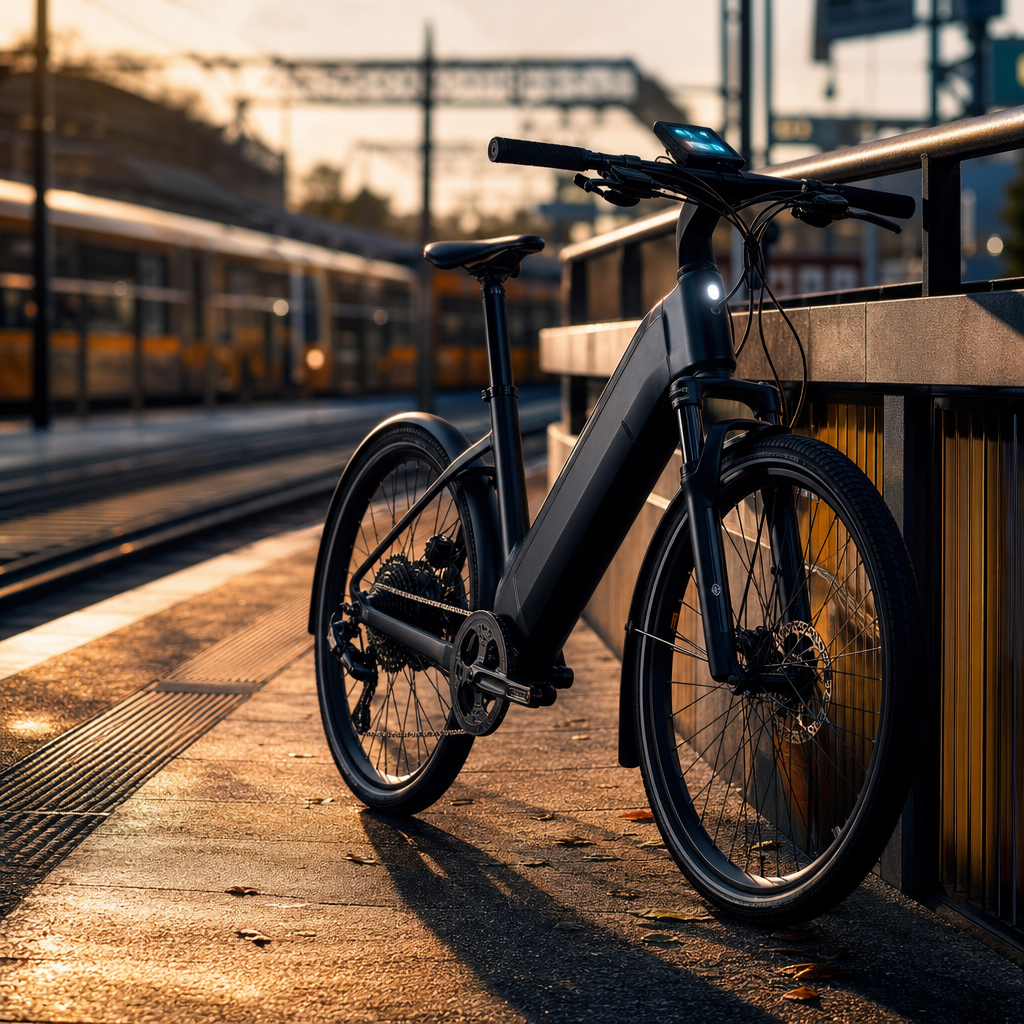
Picking an electric bike for commuting in 2026 should be straightforward. Clip on a helmet, swing a leg over, and glide past the traffic queue with a smug grin. In practice, though, the market is an absolute minefield. You’ve got folding bikes, cargo bikes, road-style bikes, throttle bikes, and a whole lot of manufacturers making claims about range that belong more in the fiction section than the spec sheet. Add in some genuinely important UK legal rules, ones that tripped up a lot of buyers when the 500W proposals were floating around, and it’s easy to see why people end up paralysed at the checkout.
I’ve been deep in this for a while, partly because I’m always looking at ways to cut the commute cost, and partly because this stuff genuinely interests me. So let me save you the hours of forum-diving and give you the straight version: what to look for, what the law actually says, and which bikes are worth your money in 2026.
Get the Legal Stuff Right First
Before you spend a penny, understand the UK rules. A road-legal electric bike in the UK is called an Electrically Assisted Pedal Cycle, or EAPC. To qualify, the motor must have a continuous rated power of no more than 250 watts, and the motor assistance must cut out at 15.5mph. It needs working pedals, and the rider must be 14 or older.
That’s it. No licence. No insurance required. No road tax. If the bike meets those rules, it’s treated in law exactly like a regular bicycle.
One thing that trips people up is the difference between peak power and continuous power. A motor like the Shimano EP8 can hit 500 watts in short bursts, and that’s perfectly legal, because it can’t sustain that output for the period required to calculate continuous rated power. The 250W limit is about continuous output, not momentary spikes.
Here’s something else worth knowing. There was a lengthy government consultation in 2024 about raising the limit to 500W and allowing full-speed throttles. A lot of online articles still talk about this as if it’s coming. It’s not. The government formally rejected those proposals in January 2025, following 2,121 responses to the consultation, with a significant majority of key stakeholders, including police forces, local authorities, and active travel groups, opposing the changes. The 250W/15.5mph rules are staying put. Don’t buy a 750W “e-bike” and assume the law will catch up before the police do.
It’s also worth noting that the government has confirmed it has no intention of requiring cyclists, including EAPC riders, to display number plates or carry insurance. So that’s one less thing to worry about.
On throttles: bikes can have one, but under post-2015 rules, a throttle can only assist you up to 3.7mph without pedalling. Above that, you need to be pedalling. Any bike with a full twist-and-go throttle up to 15.5mph is outside the EAPC category and needs type approval to be legal on UK roads.
And what happens if you ride a non-compliant bike on public roads? The consequences are real. Riders face fines of up to £1,000, potential penalty points on their driving licence, and the bike can be seized by police. Riding without insurance carries a £300 fixed penalty and six points as a minimum. It’s really not worth the risk.
Folding or Full-Size: London Changes Everything
If you commute into London and use any TfL service, including the Tube, Overground, Elizabeth line, DLR, buses, or trams, you need to know about a rule change from March 2025. Non-folding e-bikes are now banned from all TfL services. Folding e-bikes are still allowed when folded before boarding. This followed a rise in lithium battery fire incidents on the network.
As someone who regularly takes the train into Waterloo, this kind of policy shift is hard to ignore. If your commute is London-centric and multi-modal, a folding e-bike isn’t just convenient. It’s essentially the only viable option. For everyone else, it depends on storage, distance, and what kind of roads you’re covering.
Don’t Trust the Claimed Range
Manufacturers’ range figures are optimistic at best. A quoted 60-mile range likely assumes a lighter rider, flat terrain, minimal wind, mild temperature, and the lowest assist setting. Real-world range is typically 40 to 60 percent of the headline figure in UK conditions, especially in winter when battery performance drops further.
Look at battery capacity in watt-hours (Wh) rather than the headline range figure. As a rough guide, 300 to 400Wh will cover a typical 10 to 15-mile daily commute comfortably. For longer distances or hillier routes, aim for 500Wh or more. Removable batteries are worth the premium if you need to charge at a desk or don’t have easy access to a power point at the bike store.
My range calculation is deliberately pessimistic: take the claimed range, halve it, then ask whether that still covers the journey with a margin. If the answer is yes, you are probably fine. If the answer is only yes on paper, winter headwinds and a tired battery will eventually make the commute stressful.
Value for Money Isn’t Just the Sticker Price
A cheap e-bike can cost more in the long run. Motor quality, battery cell quality, and drivetrain components all affect how long the bike lasts and how much you’ll spend on repairs. Shimano-geared bikes, for instance, tend to have better parts availability than cheaper alternatives with generic components.
Also factor in the Cycle to Work scheme. Most employers can offer it, and it effectively gives you tax relief on the purchase, which can knock a meaningful amount off a higher-end bike. Worth checking before you buy.
I would also budget for the unglamorous stuff at the same time: a Sold Secure-rated lock, lights if they are not built in, mudguards, a pannier or backpack setup, a helmet, waterproof trousers, and somewhere sensible to charge the battery. The bike is the big purchase, but the commute only works if the small details are sorted.
The Commute Test
Before choosing a bike, map the actual commute rather than the optimistic one. Are there safe cycle lanes? Where are the hills? Is there secure parking? Can you charge at work? Do you need to carry a laptop, gym kit, or child seat? Would you still ride it in rain, or is this realistically a fair-weather plan?
Our family-life version of this test is even harsher: can the bike handle the school run, a supermarket stop, and a laptop bag without turning every journey into a balancing act? I would always rather buy the bike that makes our real Tuesday easier than the one that looks fastest in a launch photo. That is where cargo bikes and practical hybrids start to make more sense than sleek bikes that look wonderful in photos and annoying in daily life.
The Picks
Brompton Electric C Line
The Brompton Electric is the gold standard for London commuters who need to fold and board. It’s compact, genuinely well-built, and folds to a remarkably small package in about 20 seconds. The motor is a proprietary front-hub system, fully EAPC compliant, and while the range won’t blow you away (expect 25 to 40 miles realistically), it suits shorter urban hops where you’re mixing cycling with public transport. The build quality is proper, and Brompton’s UK service network is solid.
Pro: Best fold in the business, TfL-friendly, excellent resale value. Con: Expensive, smaller wheels feel skittish at speed.
Ribble Hybrid AL e
Ribble is a Preston-based brand that has been making bikes since 1897, and their hybrid e-bike represents outstanding value for a proper road commuter. It uses a Shimano STEPS motor with a 418Wh battery, offering a real-world range of around 40 to 55 miles depending on conditions, and comes with a decent spec straight out of the box. It’s a full-size bike, so not suitable for TfL travel, but for anyone commuting on roads or mixed paths without needing to board a train, it’s a compelling package.
Pro: Strong value, quality Shimano motor and drivetrain, UK-based brand with good support. Con: Full-size means no TfL travel, no cargo capacity.
Tern GSD S10
If you’ve got kids, shopping, or kit to carry, the Tern GSD changes the game. It’s a compact cargo e-bike that carries up to 200kg total load, fits two child seats or a full cargo deck on the rear, and folds smaller than most non-folding cargo bikes. The Bosch Performance Line motor is a proper unit, the 500Wh battery gives real-world range of 40 to 60 miles, and the frame geometry is stable even when loaded. It’s not cheap, but as a car-replacement tool for the school run and commute combined, the maths can genuinely work.
Pro: Incredible carrying capacity, Bosch motor, surprisingly compact for a cargo bike. Con: Heavy, expensive, not suitable for TfL travel.
Lectric XP 3.0 (UK Import)
For buyers on a tighter budget who don’t need to fold for TfL, the Lectric XP 3.0 is a fat-tyre folding e-bike that punches well above its price point. It’s not a British brand, so check UK-specific compliance carefully before purchasing, but the folding form factor, step-through frame option, and chunky tyres make it appealing for mixed-surface commuters. Expect realistic range of around 25 to 45 miles. Carry a spare inner tube.
Pro: Impressive value, fat tyres handle rough surfaces well, folds for storage. Con: Import support can be patchy, heavier than it looks, verify EAPC compliance before buying.
Raleigh Motus Grand Tour
Raleigh is about as British as it gets, and the Motus Grand Tour is their long-distance commuter flagship. It uses a Bosch Active Line Plus motor paired with a 500Wh battery, and on flatter UK roads you’re looking at a realistic 50 to 70 miles per charge. It’s comfortable, comes with mudguards, rack mounts, and lights as standard, and the overall package feels considered rather than assembled from a parts bin. A sensible choice for anyone doing serious daily mileage.
Pro: Proper range, well-equipped out of the box, trusted UK brand. Con: Not foldable, heavier than a pure road bike, not the sharpest handling.
Quick Comparison Table
| Model | Price (GBP approx.) | Best For | Verdict |
|---|---|---|---|
| Brompton Electric C Line | £2,995+ | London multi-modal commuters | Best fold, premium price |
| Ribble Hybrid AL e | £1,499 | Road commuters, value buyers | Best bang per pound |
| Tern GSD S10 | £4,500+ | Cargo and family carry duties | Best car-replacement option |
| Lectric XP 3.0 | £900 approx. | Budget buyers, mixed surfaces | Best budget pick, check compliance |
| Raleigh Motus Grand Tour | £2,500 approx. | Long-distance daily commuters | Best for mileage and comfort |
Prices are approximate and will vary by retailer. Always check current listings.
Bottom Line
If you’re commuting into London and using the Tube or any TfL service, the Brompton Electric is the one. The post-March 2025 ban on non-folding e-bikes on TfL services effectively makes it the only sensible choice for multi-modal travel, and it’s genuinely brilliant at what it does.
For commuters outside London who want the best value on a proper, reliable daily rider, the Ribble Hybrid AL e is hard to beat. If you’re doing the school run and the commute on one bike and want to ditch the second car, look seriously at the Tern GSD. And if budget is tight and you’re not fussed about brand heritage, the Lectric XP 3.0 is worth investigating. Just verify compliance before you ride it on the road.
Whatever you choose, wear a helmet. Yes, it’s not legally required on an EAPC in the UK, but it really should be. And make sure your lights are fitted and working before you head out after dark. That’s a legal requirement between sunset and sunrise, not just good practice.
The right e-bike should make boring journeys easier, not turn commuting into another hobby you have to maintain. If I can store it securely, charge it easily, and ride the route without feeling like I am gambling with traffic, that is when I start to see it as one of the few tech purchases that genuinely changes the week.
Enjoyed this? More honest tech buying guides land in the Tech Dads Life newsletter every week. No fluff, no filler, just the stuff that’s actually useful.