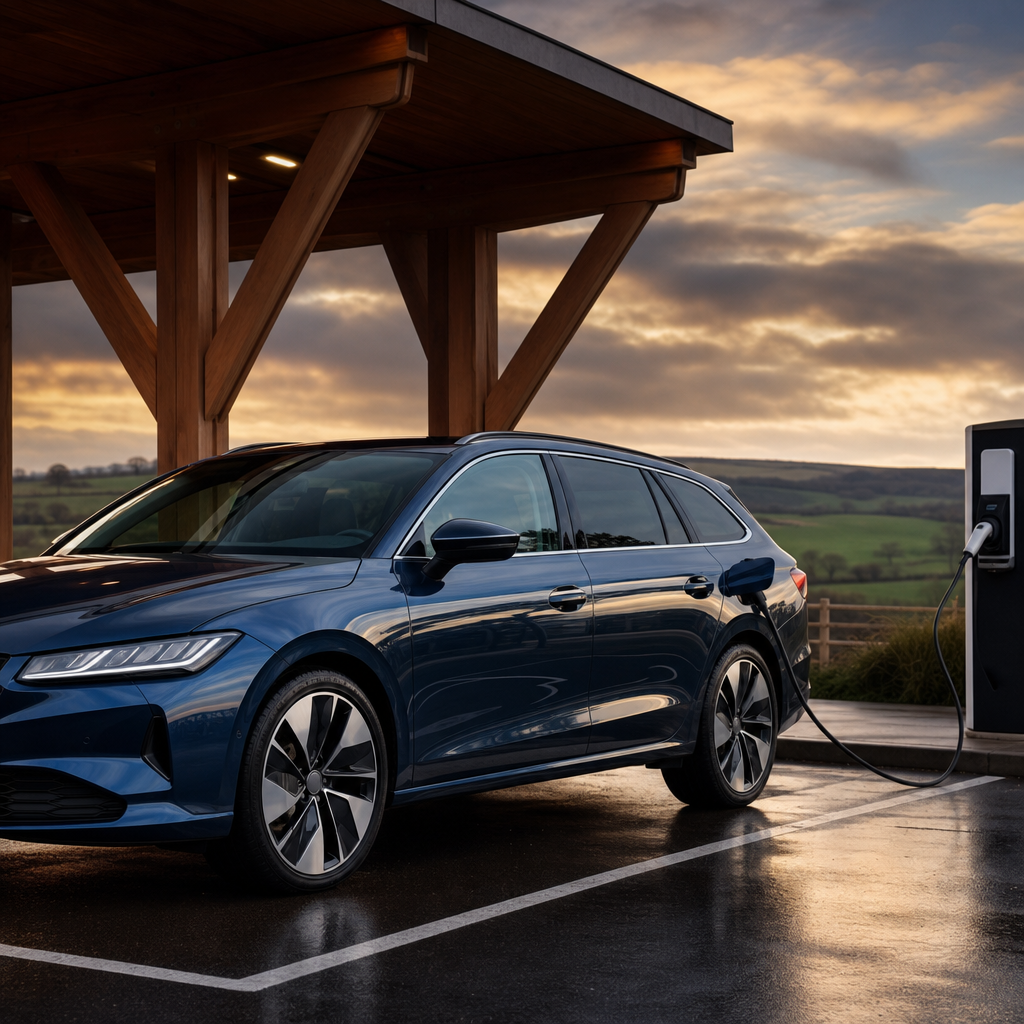
Buying a family car is stressful enough. Buying an electric family car in 2026 feels like trying to pick a Netflix series on a Friday night. There are over 160 models available in the UK right now, everyone has an opinion, and you’re still not entirely sure you’re making the right call. Prices are all over the place, the range figures on the brochure bear only a passing resemblance to what you’ll actually see on the motorway, and “family friendly” seems to mean something different depending on who’s writing the review.
As someone who drives a Tesla Model 3 Long Range and charges at home every night, I’ve got a fairly realistic view of what living with an EV is actually like as a family. It’s brilliant when it works well, and genuinely annoying when it doesn’t. So let me save you some of the legwork.
Real-World Range Actually Matters More Than the Brochure Number
Every manufacturer quotes WLTP range figures, and every driver learns pretty quickly that those numbers are optimistic. The average new electric car in 2026 has an official range of around 300 miles, which in the real world, in British weather, with the heating on full and everyone fidgeting in the back, is probably closer to 220 to 250 miles. That’s still plenty for most families most of the time, but for longer trips you need to plan around charging. My rule of thumb: take the official range figure and knock off about 20 to 25 percent, then check whether that works for your regular routes. If your longest frequent journey is under 150 miles each way, most of these cars are fine. If you regularly do longer runs, you need both range and fast charging speed in your corner.
Charging Speed Is the Difference Between a Coffee Stop and a Full Lunch Break
Not all EVs charge at the same speed, and it really does matter. Some cars are limited to around 100kW DC charging, which means a 20-to-80 percent charge might take 40 minutes or more. Others, like the Hyundai Ioniq 5, use an 800V architecture that supports ultra-rapid charging at up to 350kW, meaning a 10-to-80 percent top-up can take as little as 18 minutes. That’s a completely different experience on a long family drive. The good news is that ultra-rapid chargers (150kW and above) have grown 40 percent year-on-year across the UK, so the infrastructure is finally catching up. If you have home charging, you’ll rarely need public charging for daily use. But for family road trips, faster is always better.
Boot Space and Seating: Know What You Actually Need
This is where most family car buyers go wrong. They buy a five-seater because it covers most journeys, then spend the next three years complaining there’s nowhere to put the buggy, the camping gear, or the three kids’ overnight bags. If your family regularly travels with more than two children, or you do any kind of serious trip, be honest with yourself about whether five seats is enough. The Tesla Model Y’s 854-litre boot, for example, puts most rivals to shame, but it’s still a five-seater. If you need six or seven seats, the shortlist shrinks considerably, and you start making compromises on design and efficiency to get the practicality.
Price vs Value: The Market Is Finally Moving in Your Favour
With the ZEV mandate pushing manufacturers to hit a 33 percent electric sales target in 2026, brands are under real commercial pressure to move cars. UK manufacturers collectively discounted BEV sales by over £5 billion in 2025, averaging around £11,000 off per electric car registered. That pressure hasn’t disappeared. The average new EV still costs around £46,000, but there are genuinely good options now under £35,000, and deals are available if you’re prepared to shop around and consider newer brands. Budget always matters in this house, so price-to-value is baked into every one of these picks.
The Picks
1. Tesla Model Y, The One I’d Actually Buy
The Model Y is my top pick, and I’m not just saying that because I already own a Tesla. It’s earned it. The 854-litre boot is genuinely extraordinary for a mid-sized SUV. The range sits at 314 miles on the Standard trim (with a 63kWh battery and a 25-minute 20-to-80 percent DC charge at up to 175kW), the interior is clean and practical, and the Supercharger network is still the most reliable charging experience in the UK by a decent margin. The software is constantly updated over the air, the build quality has improved significantly, and it’s one of the quickest mid-size family cars on the road if you want it to be.
The honest caveat: it’s a five-seater, full stop. If your family needs more than five seats, move along. And if you don’t have home charging, public charging costs can add up fast. But for the family with a driveway and three kids who fit in the back, this is hard to beat.
Pro: Massive boot, best charging network, regular OTA updates Con: Five seats only; public-only charging can get expensive
2. Jaecoo J5 Electric, The Price Will Surprise You
I’ll be straight: the Jaecoo J5 EV is on this list because the price-to-look ratio is genuinely difficult to ignore. It looks properly good, in a way you wouldn’t expect from a budget-friendly Chinese brand, and the value proposition is one of the strongest in the current market. If you’re a family that doesn’t need seven seats, doesn’t do massive mileage, and wants something modern-looking without spending £45,000, this deserves a serious look. Range and charging figures are more modest than the premium options, but for school runs, commutes, and weekend trips, it’s more than capable.
Pro: Striking looks, strong value for money, accessible price point Con: Charging network not as mature as Tesla; brand familiarity still building in the UK
3. Kia EV9, The Sensible Seven-Seater
Once you accept that you need more than five seats, the shortlist gets a lot shorter. The Kia EV9 is my third pick and probably the most genuinely usable large electric family car available in the UK right now. It offers up to 349 miles of official range, which in real-world terms is probably around 280 miles, and it shares Kia’s proven platform and reliability reputation. Seven seats, decent boot even with all of them in use, and a spacious cabin that doesn’t feel like you’ve compromised everything for practicality. It’s not cheap, but for a seven-seater EV it’s among the better value options.
Pro: Seven seats, solid real-world range, well-built interior Con: Large and heavy; you’ll feel it on price and efficiency
4. Hyundai Ioniq 9, The Premium Seven-Seater
The Ioniq 9 sits just behind the EV9 on my list, not because it’s a worse car, but because the EV9 is slightly more accessible. The Ioniq 9 is the bigger, more premium sibling, and it shows. The flat-floor cabin, the 800V charging architecture (shared with the Ioniq 5), and the amount of interior space on offer are genuinely impressive. If you’re stepping up to a large family electric car and want the most refined experience, the Ioniq 9 makes a strong case. Real-world range figures are competitive, and the ultra-rapid charging capability means stops don’t have to be long ones.
Pro: Ultra-rapid 800V charging, premium feel, genuine seven-seat space Con: Expensive; large footprint makes it a handful in car parks
5. Volkswagen ID. Buzz LWB, The Head-Turner You Might Not Buy
Look, I understand the appeal of the ID. Buzz. The retro styling, the personality, the way it makes people smile at traffic lights. The long-wheelbase version gives you seven seats and a genuinely distinctive thing to park on the school run. But I’ll be honest: I could never quite bring myself to buy one. I’d rather have the classic VW Bus it’s clearly trying to reference than this modern interpretation. That’s a personal thing, and plenty of people will disagree strongly. If the retro-electric-van thing speaks to you, the LWB version is a genuinely practical seven-seater with decent range and solid VW reliability behind it. Just make sure you’re buying it because you love it, not because it photographs well.
Pro: Brilliant design appeal, seven seats, strong VW group reliability Con: Expensive for what you get technically; styling is very much a personal call
Quick Comparison
| Model | Price (GBP) | Best For | Verdict |
|---|---|---|---|
| Tesla Model Y | From ~£42,000 | Five-seat family with home charging | Top all-rounder |
| Jaecoo J5 EV | From ~£28,000 | Budget-conscious families | Best value pick |
| Kia EV9 | From ~£62,000 | Families needing 7 seats | Best practical large EV |
| Hyundai Ioniq 9 | From ~£65,000 | Premium 7-seat buyers | Best premium option |
| VW ID. Buzz LWB | From ~£59,000 | Style-first seven-seat families | For those who love the look |
Prices approximate. Check manufacturer websites for current UK pricing and available deals.
Bottom Line
If you’re a family of four or five with home charging, the Tesla Model Y is the one. Brilliant boot, reliable network, and it just works day in, day out. If the budget is tighter, give the Jaecoo J5 a proper look before dismissing it.
If you genuinely need more than five seats, the Kia EV9 is the most sensible choice right now. It’s not the most exciting thing on the road, but it’ll carry everyone, charge quickly enough, and won’t leave you stranded at a motorway services wondering why you didn’t just buy a diesel MPV. The Ioniq 9 is the premium step up, and the ID. Buzz is there if the styling is the thing that gets you out of bed in the morning.
Electric family cars in 2026 are genuinely good. The range anxiety of a few years ago is largely gone if you plan sensibly. The charging network is improving every month. And with manufacturers under real commercial pressure to shift EVs, the deals are better than they’ve been in years. It’s actually a decent time to buy.
Want more honest, family-first tech and car coverage without the jargon? Subscribe to the Tech Dads Life newsletter at techdadslife.beehiiv.com and I’ll land it straight in your inbox.