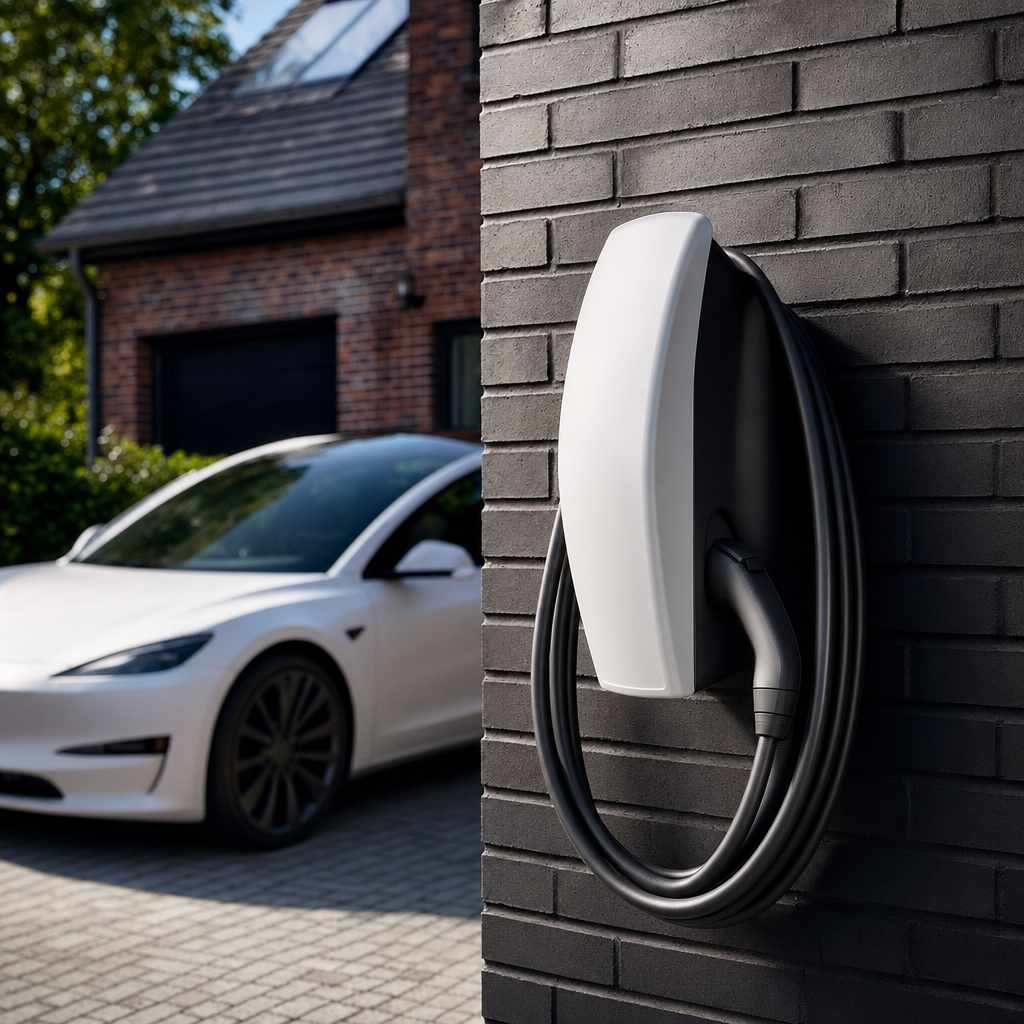
Buying a home EV charger should be straightforward. Plug it in, charge the car, done. Except it is never quite that simple, is it? Between choosing a tethered or untethered unit, working out whether your consumer unit needs upgrading, figuring out which smart tariffs are supported, and remembering there is some kind of government grant involved, the whole thing starts to feel like homework. I went through all of this when I installed a home charger for my Tesla Model 3, and I can tell you the research phase alone took longer than the actual installation. If you are in the same boat right now, this guide is for you.
The good news is that the UK home EV charger market in 2026 is genuinely excellent. The race between the main players has pushed software quality up and prices into a range that actually makes sense. A 7kW smart charger is the standard unit for a UK home install, giving you roughly 20 to 30 miles of range per hour. For most families, that means a comfortably full battery every single morning if you plug in overnight. The three names you will keep coming back to are Ohme, Zappi, and Pod Point, and each one suits a different kind of household. Let me walk you through what actually matters before I get into the picks.
How Smart Is “Smart” Enough?
This is where home EV chargers have genuinely changed the game in the last couple of years. A basic charger just pushes electricity into your car. A smart charger talks to your energy tariff and figures out the cheapest possible time to do it. If you are on Octopus Intelligent Go, for example, you can get electricity for a fraction of the standard rate during off-peak overnight hours. The difference between a charger that does this automatically and one that requires you to fiddle with a schedule manually is real money over the course of a year. Look for chargers with direct API integration to your specific tariff, not just generic scheduling. Ohme is the standout here, but Zappi holds its own with Octopus Go support.
Solar Integration: Worth Thinking About Even If You Do Not Have Panels Yet
If you have solar panels , or you are even vaguely considering them in the next few years, this one matters. Some chargers can divert surplus solar generation directly into your car rather than exporting it back to the grid for a fraction of its value. The Zappi is built specifically around this idea. If you have no solar and no plans for it, this is less of a priority, but it is worth factoring in as a future-proofing consideration before you bolt a charger to your wall permanently.
Installation Cost and What Drives It Up
A fully installed 7kW smart home charger typically costs around £800 to £1,200, with the charger unit itself usually running £400 to £700 and installation labour adding £300 to £500. Simple installations with short cable runs and no consumer unit work stay towards the lower end. Longer cable runs, a detached garage, or a fuse box that needs upgrading can push you toward £1,400 to £1,600 or beyond. Earth rods add £75 to £150, groundworks for a garage can add £200 to £500, and consumer unit upgrades start at around £350. Get a firm quote before you commit to any specific unit, because the charger price is only part of the story.
OZEV Grant Eligibility
The OZEV grant currently gives eligible homeowners a discount on a home charger installation. To qualify, the charger must be on the approved product list, installed by an OZEV-registered installer, and your home needs to have off-street parking. All three brands covered here have models on the approved list, but always double-check eligibility for the specific unit and your specific property type before you commit, as grant terms and amounts can change. One piece of genuine good news: as of May 2025, planning permission is no longer required for home EV charger installations on private driveways, thanks to updated Permitted Development Rights. That removes a significant headache and speeds up the whole process considerably.
The Picks
Ohme Home Pro
The Ohme Home Pro is the one I would point most families towards first. It is a tethered 7.4kW charger with a colour screen on the unit itself, which is more useful than it sounds when you just want a quick glance at your charging status without pulling your phone out. The standout feature is its direct API integration with energy tariffs including Octopus Intelligent Go, Octopus Go, Octopus Agile, Octopus Cosy, British Gas EV Power+, and E.ON Next Drive. Rather than setting a start time and hoping for the best, you tell it what percentage charge you want and by what time, and it sorts out the optimal schedule automatically. It also uses a built-in 4G SIM rather than relying on your home Wi-Fi, which is a genuinely clever design choice that removes one potential point of failure. The 4G connectivity is free for the first three years. Pricing starts from £999 including standard installation and a 3-year warranty.
One caveat worth knowing: the Ohme’s clever features require an API connection to your vehicle to work at their best. Most mainstream EVs support this, but it is worth checking your specific car before you buy. It is also worth noting that the Home Pro is not currently solar compatible, and OVO Charge Anytime support ended in July 2025, so OVO customers should verify current compatibility before purchasing.
Pro: Best-in-class smart tariff integration with automatic scheduling. Con: Not solar compatible, and vehicle API support varies by car.
Ohme ePod
If the Home Pro feels like more charger than you need, the ePod is worth a look. It starts from £949 including standard installation, or £575 without installation if you want to supply it separately. It carries the same excellent tariff integration as the Home Pro in a cleaner, more compact package. It includes built-in PEN fault detection with no earth rod required, which simplifies installation and can bring costs down slightly. It is a strong option for anyone who wants the Ohme software smarts without the colour screen and slightly premium price tag of the Home Pro.
Pro: Compact design, PEN fault protection built in, strong tariff integration. Con: No screen on the unit, so monitoring requires the app.
myenergi Zappi GLO
The Zappi GLO is the 2025 successor to the very popular Zappi 2.1, and it is the one to buy if you have solar panels or are planning to get them. It offers three charging modes: Fast (full grid power), Eco (a blend of solar and grid), and Eco+ (pure surplus solar only, meaning free charging on a sunny day when your panels are generating more than the house needs). The integration with the wider myenergi ecosystem, including the Eddi diverter and Harvi monitoring unit, is excellent. The app gives you clear visibility of exactly where your electricity is coming from at any given moment.
For smart tariff users, it supports Octopus Intelligent Go and Octopus Go scheduling, though it is worth being clear that the scheduling here is manual rather than the fully automatic API-driven approach the Ohme uses. The GLO starts from £599 plus installation of £400 to £600, making the total installed cost typically £1,000 to £1,200. Note that the Zappi does not include a built-in RCD or SPD, so these will need to be added at the consumer unit. Your installer should handle this as part of the job. For solar diversion to work, the installer also needs to fit a myenergi CT clamp to your electricity meter tails, which is standard practice for any myenergi-accredited installer.
Pro: Outstanding solar diversion, strong myenergi ecosystem, genuine Eco+ free charging on sunny days. Con: Tariff scheduling is manual rather than automatic, and no built-in screen on the GLO.
Pod Point Solo 3
Pod Point, now also trading simply as Pod, has built its reputation on being the no-nonsense reliable option. The Solo 3 is a clean, straightforward 7kW smart charger that gets the job done without fuss. It is widely installed across the UK, Pod Point has a large network of approved installers, and the app handles scheduling reliably. It is a solid choice for anyone who wants a well-supported, widely understood product from a brand that has been doing this longer than most. It is not the most feature-rich option on this list, but sometimes reliability and widespread installer availability matter more than extra bells and whistles.
Pro: Widely supported, large installer network, clean and reliable. Con: Smart tariff integration is less advanced than Ohme’s direct API approach.
Quick Comparison
| Model | Price (GBP) | Best For | Verdict |
|---|---|---|---|
| Ohme Home Pro | From £999 incl. install | Smart tariff users, Tesla and mainstream EV owners | Best all-rounder for smart charging |
| Ohme ePod | From £949 incl. install | Smart tariff users wanting a compact unit | Great value version of the Home Pro |
| myenergi Zappi GLO | From £599 + install | Solar panel households | Best pick if you have or plan to get solar |
| Pod Point Solo 3 | Varies by installer | Straightforward installs, wide installer coverage | Reliable and well-supported, less feature-rich |
Bottom Line
For most families, the Ohme Home Pro is the one to go for. The automatic smart tariff scheduling is genuinely useful, the 4G connectivity removes the Wi-Fi dependency issue, and the colour screen is a small but welcome touch. If budget is tighter, the Ohme ePod gives you the same core software in a more compact and slightly cheaper package.
If you have solar panels, stop reading and go straight to the Zappi GLO. Nothing else on this list comes close for solar diversion, and the Eco+ mode is the kind of feature that pays for itself over time.
If you just want a reliable charger installed with minimum drama and a large pool of local installers to choose from, Pod Point remains a safe and sensible choice.
Whichever you go for, make sure you are using an OZEV-registered installer, and get at least two quotes. The hardware cost is only half the picture.
If you found this useful, I round up guides like this regularly over at the Tech Dads Life newsletter. It is free, it is practical, and I promise it will never try to sell you a gadget you do not need. Sign up here.