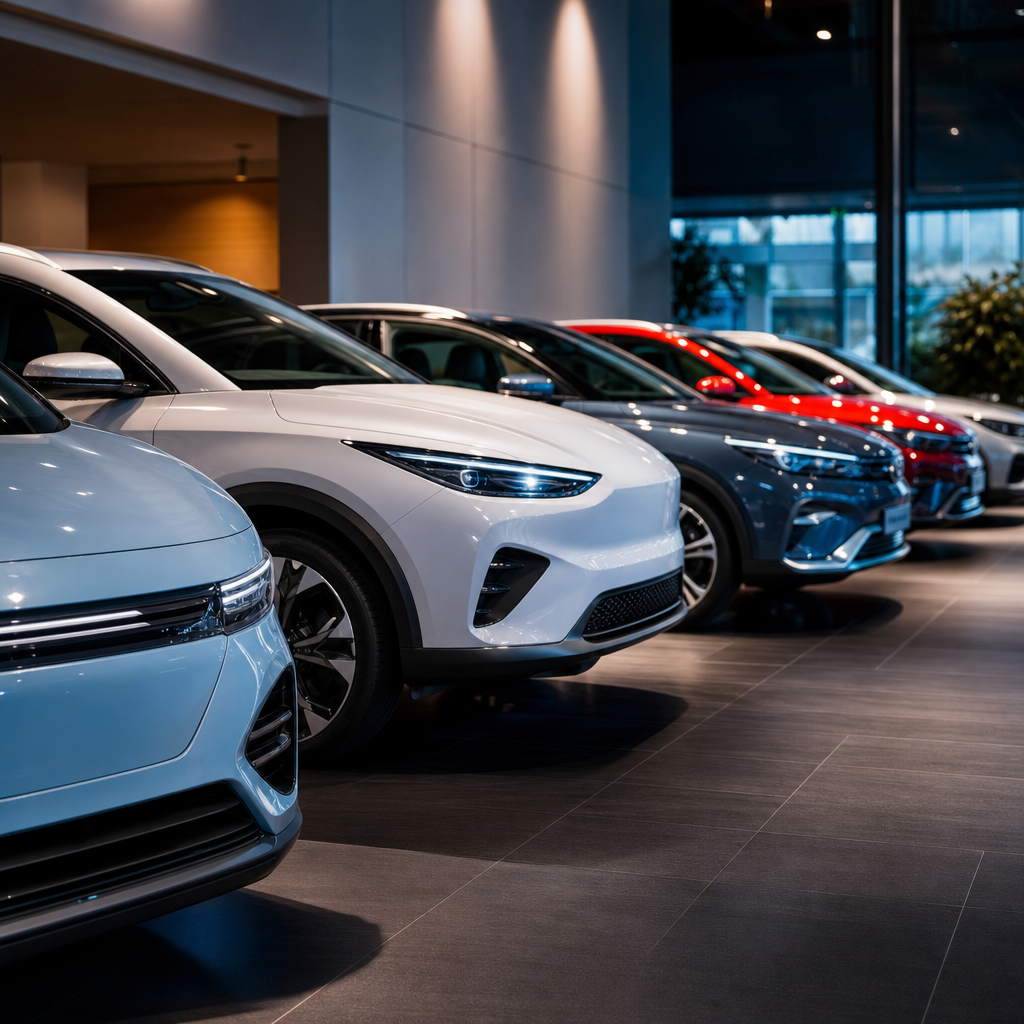
My Tesla has spoiled me, and I know it. Every time I sit in someone else’s car, whether it’s a mate’s perfectly decent petrol hatchback or a hire car at Heathrow, I spend the first five minutes prodding a dashboard that doesn’t respond to a swipe and wondering where the sat nav lives. My kids have grown up thinking over-the-air software updates and one-pedal driving are just how cars work. They are in for a rude awakening if we ever have to downgrade.
But that’s the thing. The shift happening in the car industry right now is enormous, and most families are only just beginning to feel the edges of it. The FT Future of the Car Summit, now in its 12th year, kicked off this week on 12 May 2026 at Convene Sancroft in Paternoster Square, London. It’s a three-day gathering of car makers, policymakers, tech suppliers, and senior industry leaders all wrestling with the same central question: how do you electrify a mass market when the economics are still genuinely difficult?
If you’re a parent thinking about your next family car purchase in the next two to five years, the conversations happening at this summit matter more than you might think. Let me break down the biggest themes and what they actually mean for you.

The Electric Revolution Is Real, But the Numbers Don’t Lie About the Gaps
The headline figures are impressive. The UK registered 473,348 new battery-electric vehicles in 2025, reaching a 23.4% market share of new car sales. March 2026 set a new monthly record. 86,120 new electric cars registered in a single month, up 24.2% on the same period the year before. April followed with BEV sales jumping nearly 60% year-on-year. As of this month, there are over two million fully electric cars on UK roads. That is a genuine milestone.
Average range has climbed to around 300 miles, up from 235 miles in 2024, and there are now over 150 electric models to choose from. That spans everything from the Dacia Spring at a genuinely remarkable £12,240 all the way up to luxury SUVs. The charging network has grown too, with 92,141 chargers in operation across 46,107 locations as of March 2026.
But here’s where the FT Summit conversations get interesting, and where the industry is being genuinely honest about the challenges. Battery costs have risen by more than 30% compared to earlier projections. Public charging costs have surged, now more than 140% above where they were five years ago. Car manufacturers discounted BEV sales by over £5 billion in 2025, which works out at roughly £11,000 of discount per electric vehicle registered. That is not a sustainable position for anyone.
The average price of a new electric car in the UK sits at around £46,000. For most families, and I absolutely include myself in this, that is a serious stretch, even with the growing choice of cheaper options. The industry knows this, and the pressure to bring prices down without bleeding cash is one of the core tensions being debated this week in London.
The ZEV Mandate Standoff: Policy Meets Reality
This is the story that dominated the SMMT Electrified event earlier this year and has followed the industry straight into the FT Summit. The Zero Emission Vehicle Mandate requires 33% of all new car sales to be electric in 2026. Year-to-date, the market is sitting at 23.1% share. That is a significant gap, and the fines for falling short are steep. £15,000 per non-compliant car sold.
The trajectory only gets steeper. The target rises to 38% in 2027, then 52% in 2028, 66% in 2029, and 80% by 2030. The full ban on new petrol and diesel car sales lands in 2030. Transport Secretary Heidi Alexander has confirmed that date holds, and a consultation on supporting the industry to meet it has been launched.
But the UK government has also announced a formal ZEV mandate review, triggered by industry warnings of up to £10 billion in potential fines and concerns about declining car production. This is a live story. The 2030 end date is not moving, but the annual staircase of targets getting there could change, which would give manufacturers more breathing room to price EVs more competitively and bring more affordable options to market faster.
For families, this policy debate is not abstract. If the mandate eases, car makers may not rush to discount EVs as aggressively, but they also may not be penalised for keeping petrol options available longer. If it stays strict, expect more manufacturer incentives on electric cars in the short term as they scramble to hit quotas. Either way, the next two to three years will be genuinely volatile for car pricing and choice.
Connected Cars, Software, and the Tech Creep Into Your Family Vehicle
Beyond the electrification debate, the FT Summit examines where the car is heading as a piece of technology. The shift towards software-defined vehicles, cars that are essentially computers on wheels, updated remotely and increasingly personalised, is accelerating. Think of it as your car getting the same relationship to software that your phone has. Features can be added, changed, or removed after you drive it off the forecourt.
Autonomous and driver-assistance features are advancing quickly, though full self-driving on UK roads remains some years away in any meaningful public sense. What is arriving faster is the connected infrastructure around the car. Vehicle-to-grid technology, where your EV battery can feed electricity back to your home or the grid. Integration with smart home systems. Increasingly intelligent navigation and predictive maintenance that knows your car needs a service before you do.
For families, the practical wins here are real. Predictive charging schedules that take advantage of cheap overnight tariffs, pre-conditioning that warms the car while it’s still plugged in on a cold morning, and journey planning that factors in school runs and grocery stops alongside charging stops. These are not science fiction features. Some are available now. More are arriving in the next product cycle.
What the Comparison Table Looks Like Right Now
| Factor | 2024 Position | 2026 Position | 2028 Outlook |
|---|---|---|---|
| Average EV range | 235 miles | ~300 miles | 350+ miles likely |
| New EV models available (UK) | ~100 | 150+ | 175+ expected |
| UK EV market share | ~18% | ~22-23% | 38% ZEV target |
| Cheapest new EV (UK) | ~£18,000 | £12,240 (Dacia Spring) | Sub-£10,000 possible |
| Public chargers (UK) | ~65,000 | 92,141 | 150,000+ planned |
| Average new EV price | ~£50,000 | ~£46,000 | Falling, but slowly |
Hype Cycle Check
LIKELY TO LAST: The fundamental shift to electric is locked in. Over two million EVs are already on UK roads, the 2030 petrol and diesel ban is confirmed, and the charging network, while imperfect, is growing. Families buying a new car today will almost certainly own at least one EV before the end of the decade.
WATCH CLOSELY: The ZEV mandate review and its outcome. If targets are softened in the near term, the economics of the transition could shift noticeably, for manufacturers, for pricing, and for the secondhand market. Vehicle-to-grid technology is also one to follow closely. The potential for your car to cut your energy bills is real, but the hardware and tariff infrastructure to support it at scale is still catching up.
VAPOURWARE RISK: Autonomous driving timelines. Every summit since about 2018 has featured serious-sounding projections about self-driving cars arriving on public roads within a few years. For UK families, genuinely hands-free driving on normal roads remains a distant prospect. The technology is progressing, but regulation, liability frameworks, and public trust are all moving more slowly than the demos suggest.
What This Means for CES 2027
The car has been one of the dominant stories at CES for years now, and having attended many times, I can tell you the automotive halls have got bigger and more crowded with each visit. What the FT Summit is surfacing in May 2026 will feed directly into what car makers and tech suppliers announce in Las Vegas in January 2027.
Expect CES 2027 to be heavy on software-defined vehicle platforms, vehicle-to-grid partnerships between car brands and energy companies, and, almost certainly, at least one major Chinese EV brand making a bold play for Western market attention. The affordability angle will be front and centre. If someone can credibly sell a well-specced family EV for under £20,000, that announcement will dominate the show floor.
What to Watch
The ZEV mandate review outcome. The government’s formal review could reshape manufacturer strategies and family car pricing significantly over the next 12 to 18 months. Keep an eye on SMMT announcements and the Department for Transport consultation.
Affordable EV launches under £20,000. The Dacia Spring has proved there is genuine demand at the budget end. Watch for more manufacturers moving into that space, particularly brands arriving from markets where volume and value are the priority.
Public charging costs. Currently over 140% higher than five years ago, public charging is the single biggest friction point for families without a driveway. Government and energy regulator attention to this issue is growing, and any meaningful intervention could change the calculation for millions of households.
Vehicle-to-grid rollout. Several energy suppliers and car makers are piloting V2G schemes in the UK right now. If these reach proper commercial scale before 2028, the economics of owning an EV, especially for families who can charge at home, improve substantially.
The car industry is going through the most significant transformation since the internal combustion engine replaced the horse. For families, that means more choice, more complexity, and more decisions to make without a clear rulebook. But it also means that the family car of 2028 or 2029 is going to be genuinely better. Smarter, cleaner, cheaper to run, and more connected to the rest of your home than anything we’re driving today.
I will be watching the rest of the FT Summit closely this week, and if anything significant lands from the sessions, I’ll follow up. In the meantime, if you are thinking about your next family car, the honest advice is this: the technology is ready enough, the infrastructure is growing fast enough, and the prices are coming down steadily enough that going electric at your next change is almost certainly the right call. Just maybe not the £46,000 average. Let’s keep it sensible.
Want more like this, without having to hunt for it? I send a weekly roundup of the tech stories that actually matter for families, no filler, no hype, just the useful stuff. Sign up at techdadslife.beehiiv.com and I’ll land in your inbox every week.
Products worth looking at if you’re researching EVs: