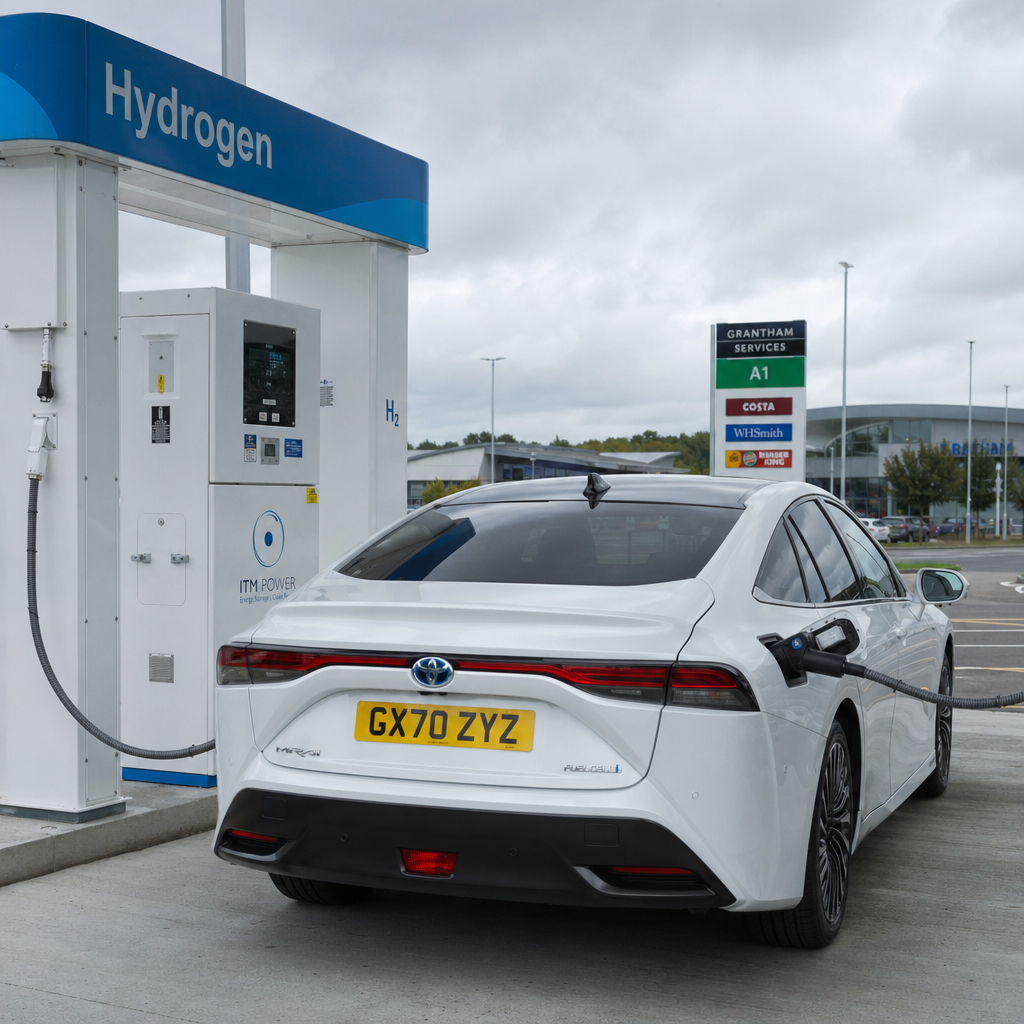
I’ll be honest with you: when someone first told me that you could fill a car up with hydrogen in about the same time it takes to grab a coffee, and the only thing that comes out of the exhaust is water, I thought it sounded like something from a science fiction film. And yet here we are in 2026, and you genuinely can buy a hydrogen car in the UK right now. Two of them, in fact. Whether you should is a very different question, and one I’ve been digging into properly over the past few weeks.
Part of what got me thinking about this is the perpetual conversation I have with myself every time someone mentions electric vehicles. I drive a Tesla Model 3, I’ve had the home charger installed, and I’ve made my peace with the EV lifestyle. But plenty of people haven’t, and they keep asking me whether hydrogen might be the easier answer. Faster to fill up, no range anxiety, no overnight charging faff. On paper, it sounds like it could genuinely compete. Let’s find out if the reality matches the promise.
What Hydrogen Cars Actually Are (And How They Work)
Before we get into the numbers, it’s worth quickly explaining what a hydrogen fuel cell vehicle actually is, because there’s a fair bit of confusion out there. A hydrogen car isn’t the same as a petrol car with hydrogen burned in the engine. Instead, a fuel cell beneath the bonnet converts compressed hydrogen into electricity through a chemical reaction with oxygen. That electricity then powers an electric motor. The only by-product of the whole process is water vapour. So mechanically, driving a hydrogen car feels exactly like driving an EV, because in every practical sense it is one.
The key difference from a battery EV is where the energy is stored and how you replenish it. Instead of plugging into a charger for thirty minutes or more, you pull into a hydrogen station and fill up in three to five minutes, much like you would at a normal petrol forecourt. That’s a genuine, meaningful advantage. No waiting around, no planning charge stops across the motorway network, no arguing over whether the rapid charger is going to work when you get there.
In the UK right now, there are only two hydrogen passenger cars you can actually buy or lease: the Toyota Mirai and the Hyundai Nexo. The Mirai offers an official range of 357 to 402 miles from a full tank and does 0 to 62mph in 7.8 seconds. The Nexo pushes slightly further with a 414-mile range. Both are impressive numbers on paper. Both are also considerably more expensive than most family cars, which brings us neatly to the bit that stings.
The Cost Reality: Buying and Running a Hydrogen Car in the UK
Let me put the prices plainly. The Toyota Mirai currently sits somewhere in the region of £64,000 to £72,000 on the road, depending on the version. The Hyundai Nexo comes in at close to £69,000. These are not family hatchback prices. These are executive saloon, well-specced SUV, or even entry-level Tesla Model S territory. For most working families, that’s simply not a realistic number.
Even if you could stretch to the purchase price, the running costs add another layer of difficulty. Hydrogen fuel at public refuelling stations currently costs somewhere between £10 and £15 per kilogram, with a national average of around £12 to £13 per kilogram in 2026. A Toyota Mirai’s tank holds roughly five to six kilograms, which means a full fill-up is going to cost you in the region of £70 to £85. For a car with a 400-mile range, that works out to somewhere around 18 to 21 pence per mile on fuel alone.
Compare that to a modern battery EV charged at home on a decent overnight tariff, and hydrogen is currently losing that argument fairly decisively. Home charging can bring your cost per mile down to as low as 3 to 5 pence in the right circumstances. Even at public rapid chargers, you’re typically looking at 8 to 15 pence per mile. Hydrogen is cleaner than petrol, yes, but it isn’t cheap to run.
The Elephant in the Room: Where Are the Filling Stations?
This is where the hydrogen dream runs into a very concrete wall. The UK’s hydrogen refuelling infrastructure for passenger cars is, to put it diplomatically, limited. Depending on which source you look at, there are somewhere between three and fifteen hydrogen stations in the country, but the honest number for private motorists is much closer to the lower end. The distinction matters: many of the sites that exist are private or fleet-only installations. The number of stations actually open to the public for a regular passenger car fill-up is thought to be around three to six, concentrated in London, Birmingham, Sheffield, Swindon, Aberdeen, and Port Talbot.
For most UK drivers, particularly anyone living outside those specific cities, a hydrogen car simply doesn’t work as a practical daily vehicle. If you live in Hampshire as I do, you’d be making a very significant detour to refuel. That’s not range anxiety in the traditional EV sense. That’s a genuine logistical problem.
The situation has arguably got worse recently, not better. Motive, one of the UK’s main hydrogen station operators, made the decision to close several of its small passenger-car sites. Their reasoning was blunt: they had been investing over £2 million per year to keep the small stations running and concluded it simply wasn’t sustainable. They’re refocusing on large commercial vehicle refuelling instead. That’s a significant step backwards for the passenger car hydrogen ecosystem.
The underlying problem is a classic chicken and egg situation. Car manufacturers won’t invest heavily in hydrogen vehicles without a refuelling network. Station operators won’t build the network without enough cars to make it financially viable. Both sides are waiting for the other to move first, and the result is gridlock that has persisted for years. Earlier industry forecasts projected around 65 refuelling stations across Britain by 2020. That target wasn’t remotely met.
Where Hydrogen Might Actually Win: Heavy Vehicles and the Long Game
Here’s where the picture gets more nuanced, and where I think the honest answer to “should UK drivers pay attention?” starts to emerge. Hydrogen might not be the right answer for passenger cars right now, but there are signs of genuine momentum in commercial transport, and that matters for the longer-term infrastructure story.
Aegis Energy has secured £100 million in funding to build a network of multi-energy refuelling hubs for commercial vehicles, with five sites expected to be operational by 2027 and a long-term target of 30 hubs by 2030. Element 2 has announced 15 new hydrogen stations targeting key motorway corridors including the M25, M1, M6, and M74, aimed primarily at HGVs and buses. In Bradford, N-Gen Energy Solutions and Hygen Energy signed a Low Carbon Hydrogen Agreement with the UK Government in July 2025 for a new production and refuelling facility that could produce enough hydrogen to power 800 buses by 2028.
The reason commercial vehicles make more sense is straightforwardly mathematical. A truck uses around 50kg of hydrogen per day, a bus roughly 20kg, and a passenger car just 1kg. Station operators can build a viable business around a fleet of lorries or buses far more easily than they can around a handful of private motorists. The economics work completely differently.
Head to Head: Hydrogen vs Electric in 2026
| Factor | Toyota Mirai (Hydrogen) | Typical Battery EV |
|---|---|---|
| Purchase price | £64,000–£72,000 | £25,000–£55,000+ |
| Range | 357–402 miles | 200–350 miles (typical) |
| Refuel/recharge time | 3–5 minutes | 20–45 mins (rapid) |
| Home refuelling | Not possible | Yes, with home charger |
| UK public stations | 3–6 (passenger) | 60,000+ charge points |
| Fuel cost per fill | £70–£85 approx | £10–£25 (home charge) |
| Tailpipe emissions | Zero (water only) | Zero |
| Boot space compromise | Yes (significant) | Varies by model |
Hype Cycle Check
LIKELY TO LAST: Hydrogen in heavy commercial transport. The economics are solid, the investment is following, and trucks and buses are where this technology genuinely makes sense right now. If you’re in logistics or fleet management, pay close attention.
WATCH CLOSELY: The new motorway corridor hydrogen stations being planned for 2025 to 2027. If Element 2 and others actually deliver on their announced networks, and if some of those hubs extend access to passenger cars, the picture could shift meaningfully within three to four years.
VAPOURWARE RISK: Hydrogen passenger cars becoming a realistic option for ordinary UK families in the near term. Without a dramatic infrastructure expansion and significant price reductions, hydrogen as a mass-market car fuel remains firmly in the “fascinating but impractical” category for most drivers. The Motive station closures are a warning sign, not a blip.
What This Means for CES 2027
CES 2027 will almost certainly feature hydrogen prominently in the commercial vehicle and mobility-as-a-service conversations. Expect concept vehicles, fuel cell technology showcases, and partnership announcements between energy firms and OEMs. What I’ll be watching for specifically is whether any mainstream passenger car manufacturer announces a genuine UK infrastructure commitment alongside a new model. Without that pairing, hydrogen concept cars at CES remain exactly that, concepts.
What to Watch
- Element 2’s motorway corridor rollout through 2026 and into 2027. If those 15 stations actually open and include passenger car access, that’s the most significant near-term infrastructure development to track.
- Toyota Mirai pricing and leasing deals. If Toyota starts pushing aggressive lease rates to build adoption, it changes the financial conversation considerably.
- UK Government’s 2030 hydrogen production targets. The £900 million commitment and the 5GW capacity goal are ambitious. Whether the policy holds and the funding flows through is worth monitoring carefully.
- Motive’s commercial pivot and any successor operators. Who fills the gap left by Motive’s passenger station closures will tell us a great deal about whether anyone sees a viable business case in this space.
If you want to stay across stories like this one, including the latest from the EV and hydrogen world that actually matters for UK families rather than just industry insiders, come and join the Tech Dads Life newsletter. It lands in your inbox every week. No fluff, no filler, just tech news you can actually use.
Sign up here: techdadslife.beehiiv.com