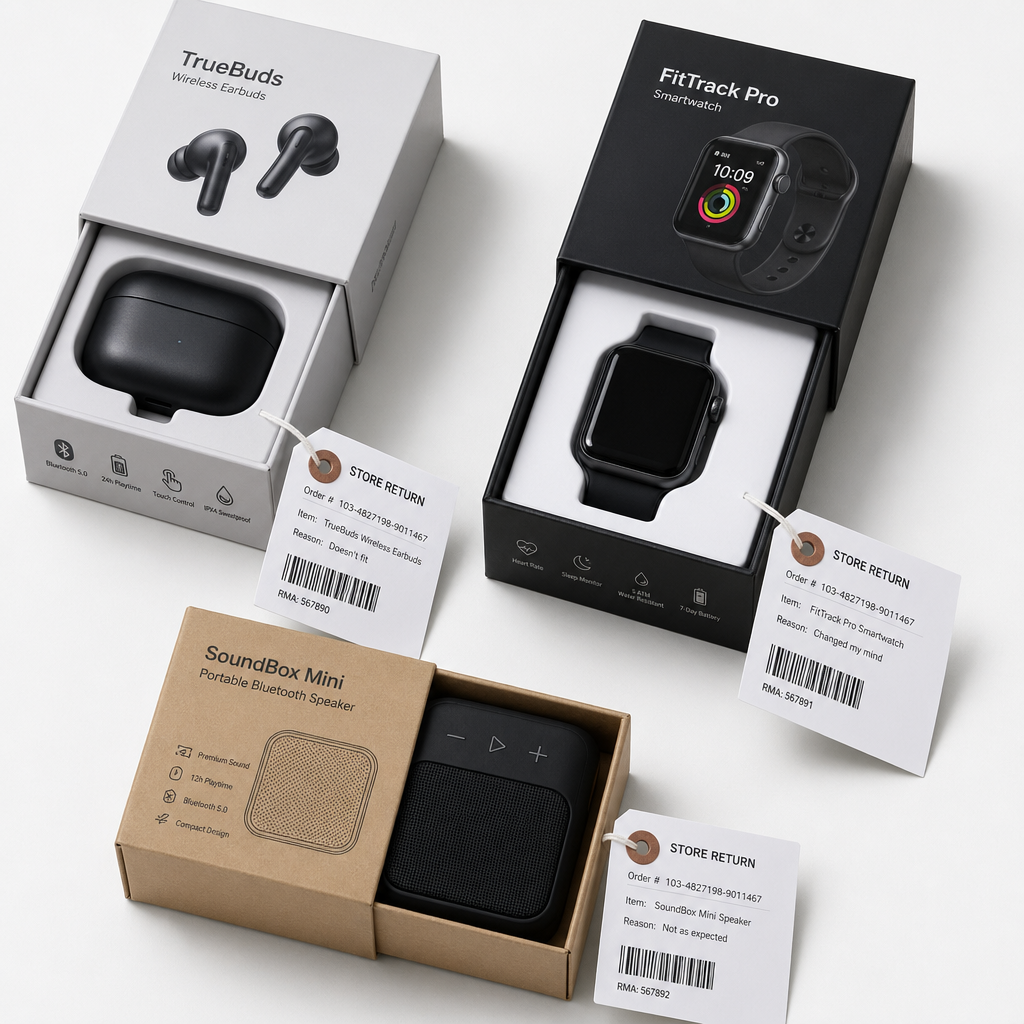
There’s a particular kind of buyer’s remorse that only tech people truly understand. It’s not just the money. It’s the embarrassment. You spent weeks convincing yourself this was a smart purchase, maybe even wrote a mental justification while standing in the queue at checkout, and then three weeks later the thing is sitting on a shelf gathering dust while you pretend it doesn’t exist. I’ve had a few of those moments in 2025 , and I figured rather than quietly move on, I’d do something actually useful: write the whole sorry story down so you can avoid making the same mistakes.
Because here’s the thing about tech regret. It almost never comes from buying something that was obviously rubbish. It comes from buying something that looked brilliant on paper, made total sense in the showroom or the YouTube review, and then fell apart the moment real life got involved. I am, by my own admission, an aspirational buyer. I envision all the ways I’ll use something, get genuinely excited, and sometimes let that excitement do the thinking. This year, it cost me more than once.
So consider this my honest post-mortem on 2025’s worst purchases. No softening the blow, no affiliate-link-driven cheerleading. Just what happened, why I bought it, and what I should have spotted before clicking “add to basket.”
The iPhone Air: Beautiful, Thin, and Thoroughly Anxious
I’m going to be careful here, because this one is genuinely nuanced. The iPhone 17 Air is not a bad phone. In fact, TechRadar gave it Phone of the Year 2025, and I understand why. It’s stunning to look at. It feels like something from ten years in the future. But “phone of the year” and “right phone for me” are two very different things.
My problem was battery life, and if you use your phone heavily, it will be yours too. Apple markets the Air as offering “all-day” endurance, and technically that’s not a lie. Light use, WiFi browsing, some music streaming, and you’ll probably be fine. But throw 5G web browsing at it for a few hours, or try to get through a proper working day with a commute thrown in, and the anxiety sets in. Compared to the 17 Pro, the battery difference is significant. One reviewer summed it up better than I can: they said they could live without the Pro’s telephoto lens, but the “occasional bouts of battery anxiety caused by the iPhone Air are harder to stomach.” That was my exact experience.
The irony is that Apple knows this. The MagSafe Battery accessory exists precisely to compensate for the trade-off they made chasing thinness. But that’s an extra cost on top of a phone that already costs upwards of £999 (roughly $1,250). You’re essentially buying a beautiful, impossibly thin phone and then strapping a chunky battery to the back of it. Apple has pulled this trick before, and the tech press has called them out on it before. The warning sign was right there in the design philosophy. I just chose not to listen.
The Smart Gadget That Needed a Subscription to Tell Me I Was Thirsty
This one is on me, and I’ll own it fully. I bought a smart water bottle in early 2025 during a moment of post-Christmas health motivation. It tracked hydration, synced with an app, sent me reminders, and looked genuinely futuristic on my desk. It also needed charging every night, which I discovered on day three when it died at 2pm and I was, briefly, unable to confirm whether I was thirsty.
But the real gut-punch came when I noticed the small print: a monthly subscription fee for the full feature set. Now, I know my body already has a built-in hydration notification system. It’s called thirst. It’s been around for quite some time, requires no app, no charging, no subscription, and has a remarkably good uptime record. The smart bottle is currently in a drawer. Lesson learned: any gadget that requires an ongoing subscription to deliver its core promise should be treated with extreme suspicion before you buy it. Always check for the subscription before you fall in love with the hardware.
Robot Vacuums: The Floor Preparation Nobody Warned Me About
I want to be fair to robot vacuums as a category, because the technology is genuinely impressive. My issue wasn’t with the vacuum itself. It was with the marketing, which had very carefully neglected to mention that robot vacuums work best on floors that are already mostly tidy. You need to pick up the socks. The cables. The kids’ charging wires. The random bits of plastic that appear on floors when you have a 13-year-old. You essentially need to do a sweep of the room before sending the robot in to do the sweep of the room.
What made this worse was that I had specifically looked at one of the flashier 2025 models, the Roborock Saros Z70, which features a mechanical arm capable of picking up small objects. I thought this solved the problem. In testing, though, reviewers found the arm clever but limited in real-world use, and the less glamorous models in the Roborock range were described as more genuinely useful day-to-day. I got seduced by the arm. It was a literal case of the flashiest feature in the marketing being the least useful thing in practice.
This is a pattern I see again and again with tech. The headline feature exists to sell the product. The useful features exist to justify keeping it.
The AI Hardware Graveyard
I’d be doing you a disservice if I didn’t mention the Humane AI Pin in this article, even though I didn’t personally buy one. It was the cautionary tale of 2025, and it’s worth knowing about because it encapsulates everything that can go wrong when hype dramatically outpaces product.
Humane raised over £300 million, gave a famous TED Talk that had the tech world buzzing, and positioned the AI Pin as the device that would replace your smartphone. By 2025, it was over. Reports of fire risks from the charging case, an AI that confidently gave wrong information, halted sales, and ultimately assets and staff moving to HP. The whole thing collapsed. This was a company with more investment than most countries’ tech budgets, and the product still didn’t work.
The lesson here isn’t that AI hardware is all bad. It’s that AI hardware at this stage of development is high-risk, and the risk rises exponentially the more a company relies on the AI itself being the product. Meta had their own awkward moment at their Connect 2025 event, where a live demo of the new Ray-Ban display glasses ended with a WhatsApp call producing an incessant ringtone on loop and a broken AI voice. On stage. With cameras rolling. These things are getting better, but they are not ready to be the centrepiece of your daily life just yet.
The Warning Signs I Should Have Spotted
Looking back at everything that went wrong this year, the patterns are obvious. They always are in hindsight.
| Warning Sign | Example | What I Should Have Done |
|---|---|---|
| Style-led design with known trade-offs | iPhone 17 Air (thinness vs battery) | Wait for Pro model reviews side by side |
| Hidden subscription costs | Smart water bottle | Check the small print before buying |
| Flashy feature leads marketing | Roborock Saros Z70 mechanical arm | Test the mundane features, not the headline ones |
| AI as the whole product | Humane AI Pin | Apply a “year two” rule for AI hardware |
| Live demo failures | Meta Ray-Ban glasses | Treat pre-release demos with healthy scepticism |
The “year two” rule is one I’m adopting going forward. If a product is built around AI being central to its value, wait a year. Let the early adopters find the problems. Let the company push the software updates. Then buy in when the reality matches the pitch.
Hype Cycle Check
LIKELY TO LAST: Robot vacuums as a category. The technology works, the convenience is real, the hardware is improving. Just manage your expectations about what “autonomous” actually means.
WATCH CLOSELY: AI wearables and smart glasses. The concept is compelling and Meta has the resources to iterate. But the gap between demo and daily reality is still wide. 2027 could look very different.
VAPOURWARE RISK: Any AI gadget from a startup with a TED Talk, a nine-figure funding round, and no shipping product. The Humane AI Pin should be the warning shot for every similar pitch going forward.
What This Means for CES 2027
CES 2026 was already packed with AI-first hardware announcements, and the momentum is clearly building towards CES 2027. Expect the show floor to feature a second generation of AI wearables from companies that survived the first wave, slimmer and lighter flagship phones from every major manufacturer, and robot home devices that lean harder into the “it does everything” pitch. The question to ask at every stand will be the same one I wish I’d asked in 2025: does the real-world version actually do what the demo version does? If the PR team hesitates, walk away.
What to Watch
- Apple’s MagSafe ecosystem is clearly being positioned as the fix for the Air’s battery shortfall. Watch whether they push accessories harder, or whether the iPhone 18 addresses battery life directly.
- Second-generation AI wearables from Meta and others. The hardware is maturing. The software still needs work. By late 2026 or early 2027, this could shift quickly.
- Robot vacuum software updates that genuinely improve object recognition. The mechanical arm approach underwhelmed in practice. Smarter vision-based avoidance is the real prize.
- Subscription gadget backlash. Consumers are getting wise to hardware-with-a-hidden-monthly-fee models. Watch for brands that ditch the subscription model as a competitive differentiator.
If this saved you from at least one bad purchase this year, then it was worth writing. I’d love to know what gadget let you down in 2025, because I’m fairly certain I’m not the only one with a dusty shelf of good intentions. Drop a comment below, and if you want more of this kind of honest tech coverage, including early eyes on what’s coming at CES 2027, get yourself on the newsletter. No hype, no fluff, just the stuff that actually matters for real families buying real tech.
👉 Sign up to the Tech Dads Life newsletter at techdadslife.beehiiv.com