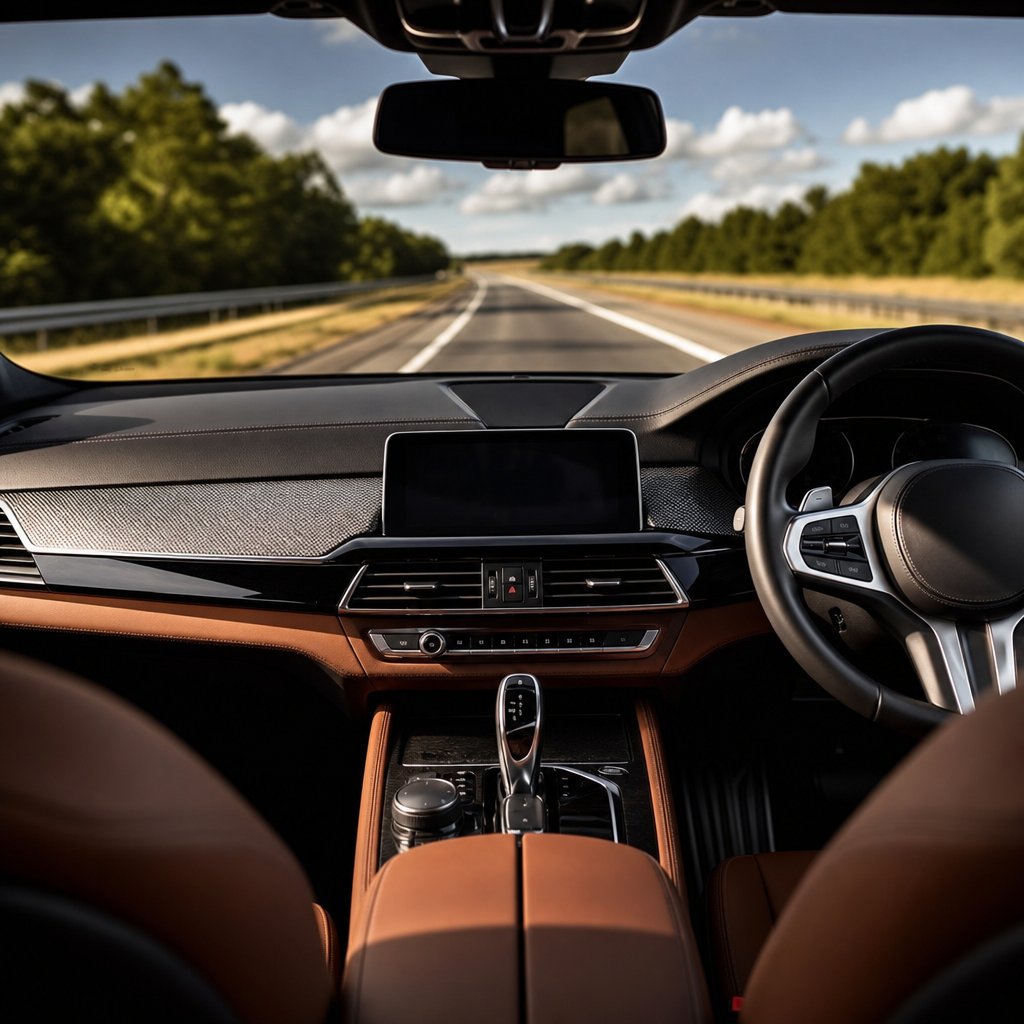
There is a particular kind of chaos that only parents of multiple children will truly understand, and it tends to peak about twenty minutes into any road trip of meaningful length. Someone needs a wee. Someone else is hungry despite having eaten a full meal seventeen minutes ago. And from the back seat, delivered with the calm certainty of a courtroom barrister, comes the question: “How long until we get there?”
We’ve done the long hauls. Down to Cornwall. Up to Scotland. Across to visit family with the Tesla packed so tightly you’d have thought we were emigrating. Over the years I’ve thrown every piece of technology at the problem. Tablets with suction mounts that never quite held. A TomTom that my youngest treated as an enemy. A portable battery pack the size of a house brick. We’ve tried it all.
Here’s the thing though: a lot of those problems have quietly solved themselves. The Tesla has USB-C ports, a massive screen, and navigation built right in. The kids can see the route, the ETA, what’s coming up on either side of the motorway. My youngest, who is thirteen, stopped asking “are we nearly there?” almost entirely. Now he checks before we leave the house, then spends the journey watching the car crawl along the map, spotting a landmark, then pressing his face to the window to find it in real life. It’s like augmented reality, except the screen is the car and the world outside is the game. I genuinely love it. But none of that is the gadget I want to talk about today.
The Gadget That Actually Changed Everything
The one piece of kit that transformed our road trips, and I mean this sincerely, is the dashcam. Specifically, the moment I hardwired one properly into the car and stopped thinking of it as optional.
I know. You were probably expecting something flashier. A connected device. A smart screen. An AI co-pilot. But stay with me, because the dashcam has done something none of those other gadgets managed: it made me a calmer, more confident driver. And when I’m calmer, the whole trip is better. The kids feel it. The atmosphere in the car shifts.
Before I had one, every near-miss, every idiot cutting me up on the M3, every moment where someone’s bumper got a little too friendly with mine in a car park. All of it lived entirely in my memory, which is not exactly court-admissible evidence. I had no proof of anything. I was just another driver with a version of events.
Now I have footage. Timestamped, GPS-tagged footage. That changes your relationship with driving in ways that are hard to explain until you’ve experienced it.
What a Dashcam Actually Does for a Family
Let me be practical here, because that’s the point of this piece. UK car insurance premiums have been brutal over the past couple of years, up by an average of 33% in 2024 according to Confused.com. That stings for anyone, but when you’re running a family car with kids on the policy heading towards driving age, you’re already watching that number nervously.
A decent dashcam helps in two ways. The direct way: some insurers will take a dashcam into account and the savings can range from 10% to 15% on your premium. On an average comprehensive policy running close to £1,000, that’s a real chunk back in your pocket. Nextbase, for instance, reported that their average customer would have saved around £113 in 2024 through their insurance partner.
The indirect way is actually more important. If you have a five-year No-Claims Bonus, that’s roughly 60% off your premium. One at-fault or split-liability claim can demolish years of that. If your dashcam footage proves the incident wasn’t your fault, which it very well might, you’ve potentially saved thousands of pounds over the next three to five years. The camera pays for itself many times over in that single scenario.
And then there’s fraud. Crash-for-cash scams are a real and documented problem on UK roads. The ABI detected over 51,000 fraudulent motor claims worth £576 million in 2024. These are situations where a driver deliberately causes a collision to make a fraudulent injury claim. Having a dashcam running means that footage exists, the scam collapses, and you’re not the one carrying the consequences.
Choosing the Right One (Without the Headache)
The market is huge and it doesn’t have to be confusing. Here’s how I’d break it down.
For most families, you don’t need to spend a fortune. Entry-level cameras start from around £30, but honestly, skip those. The footage quality at that price point is often poor enough to be useless in a dispute. Blurry plates, washed-out night vision, the exact situation where you’d need it most.
The sweet spot is somewhere in the £100 to £220 range. The Nextbase Piqo is a compact, well-regarded option. The 2K version offers solid quality, Wi-Fi, and GPS at around £115. At the higher end, the Viofo A229 Pro records in 4K at 60 frames per second, which is exceptional for plate clarity, and comes in at around £220. If you want something that covers all the bases without being extravagant, the Miofive S1 is worth a serious look. With a rear camera, hardwire kit, SD card, and polarising filter bundled, it represents outstanding value.
Speaking of hardwiring: I’d strongly recommend it. Plugging into the 12V socket works fine to start with, but hardwiring into the fuse box means no trailing wires, parking mode that works even when the car is off, and a much cleaner installation. Expect to pay £50 to £100 for a professional installation, or do it yourself if you’re comfortable around car electrics.
Key features to look for: at least 1080p resolution (2K or 4K preferred), a wide-angle lens in the 140° to 170° range, loop recording so old footage is overwritten automatically, and good low-light performance for night driving.
| Camera | Resolution | GPS | Wi-Fi | Approx Price (UK) | Best For |
|---|---|---|---|---|---|
| Nextbase Piqo | 1080p / 2K | Yes | Yes | ~£115 | Compact, budget-conscious |
| Miofive S1 | 4K front / 4K rear | Yes | Yes | Great bundle value | All-round family choice |
| Viofo A229 Pro | 4K @ 60fps | Yes | Yes | ~£220 | Best footage quality available |
| Budget generic | 1080p (variable) | Often no | Often no | ~£30 | Not recommended |
Hype Cycle Check
LIKELY TO LAST: The dashcam itself. The technology is mature, the use cases are proven, and UK insurance dynamics make ownership a financially sound decision. This isn’t going anywhere. It’s becoming standard kit, like a spare tyre.
WATCH CLOSELY: Insurance integration. A handful of insurers are starting to build proper dashcam partnerships with direct premium discounts and claim fast-tracking via app-connected footage. If this trend accelerates, the financial case for ownership becomes even stronger.
VAPOURWARE RISK: AI-powered “driver coaching” dashcams that promise to reduce your premium by analysing your driving behaviour in real time. The concept is interesting, but the data-privacy questions are significant and the discount evidence is thin. I’d wait before committing to anything in that space.
CES Angle: What This Means for CES 2027
I’ve been to CES in Las Vegas more times than I care to count, and the connected car space has been a fixture for years. At CES 2027, I’d expect dashcam technology to be firmly embedded within the wider vehicle intelligence conversation rather than standing alone as a gadget. We’re heading towards a world where your car’s cameras, inside and out, are part of a continuous safety and insurance ecosystem. Feeding data to your insurer, alerting you to driving patterns, and potentially linking directly with emergency services.
The transition from standalone dashcam to integrated vehicle sensor is already underway in premium cars. The question for CES 2027 will be how quickly that capability reaches the mid-range family car market, and whether the data ownership terms are ones any sensible family would actually agree to.
What to Watch
Direct dashcam insurance products in the UK. Nextbase’s own insurance policy is a signal of where this is heading. More dedicated products from mainstream insurers could follow in the next twelve to eighteen months.
Rear camera standards. Dual-camera setups are rapidly becoming the norm rather than a premium feature. Watch for rear cameras matching front-facing quality at mainstream price points.
Cloud storage and LTE connectivity. Some dashcams are beginning to offer SIM-card connectivity for live footage uploads. Useful for fleet, but family applications are coming.
Regulation around dashcam footage sharing. The National Dash Cam Safety Portal has received over 135,000 clips. As usage grows, expect clearer GDPR guidance and possibly mandatory reporting frameworks for dangerous driving incidents.
My Recommendation
If you’re doing family road trips and you don’t have a dashcam, this is the one thing I’d tell you to buy before your next long drive. Not the flashiest gadget. Not the most exciting. But the one that genuinely makes a difference when it matters.
I’d start with the Miofive S1 if you want the best value bundle, or step up to the Viofo A229 Pro if footage quality is your priority. Get it hardwired. Buy a decent microSD card while you’re at it.
The kids will still ask if we’re nearly there. But at least now I’m driving with a bit more confidence, and that makes the whole trip better for everyone.
If you want more honest, hands-on tech picks for family life, I send a weekly newsletter from Hampshire with no fluff and no sponsored cheerleading. Come and join us over at Tech Dads Life on Beehiiv . It’s free, and I promise it’s worth the two minutes it takes to read.