I’ll be straight with you: I was sceptical. Not about electric cars in general, but about whether the numbers would actually stack up for a family doing real-world miles in a realistic real-world way. Not some eco-blogger who cycles to the shops and tops up their car once a fortnight, but a proper family household burning through school runs, supermarket trips, and the occasional London commute. I’ve now had my Tesla Model 3 Long Range for a few years, and this year I finally sat down and pulled the actual figures from the Tesla app. What I found surprised even me.
Over the last 12 months I used 3,830kWh of electricity to charge the car. Total cost: £337. That figure comes from a blend of mostly off-peak home charging at around 7p per kWh, with a small chunk at the standard daytime rate of around 27p, and a couple of Supercharger sessions thrown in. The Tesla app reckons that’s a £1,803 saving compared to running a comparable petrol car over the same distance. I’m going to walk through the full picture here, because the real cost of EV ownership is not just the electricity bill. There’s a lot more to consider, and some of it is genuinely surprising.
Home Charging: What It Actually Costs to Get Set Up
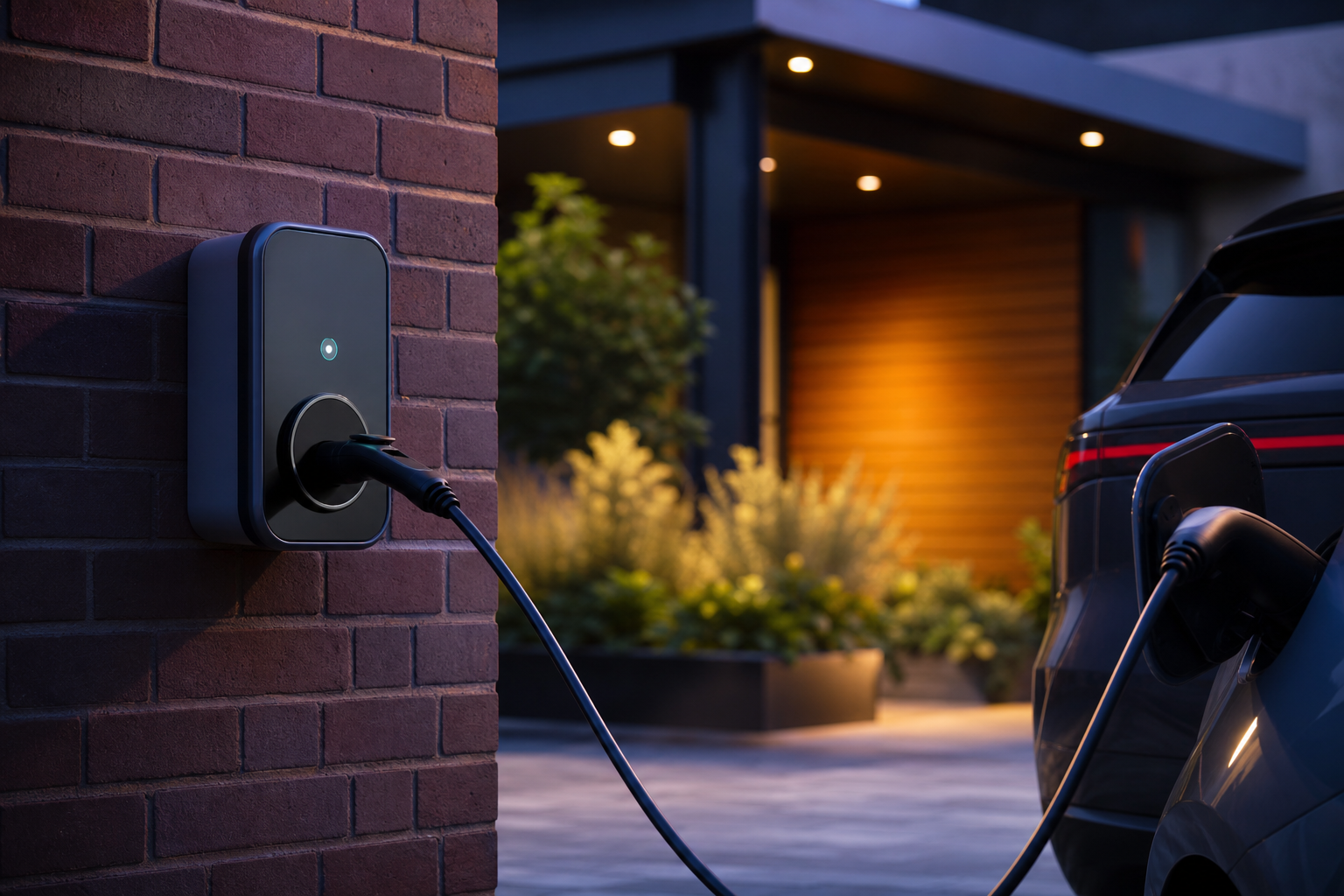
The first thing most people ask is what it costs to get a wallbox installed. The honest answer for a standard UK home in 2026 is somewhere between £800 and £1,200, all in. That covers a 7kW wallbox unit and a straightforward installation, meaning a modern consumer unit, a short cable run, and no major electrical work. If you’re further from the consumer unit, or you need earthing work or a consumer unit upgrade, expect that number to climb.
One thing worth flagging: a lot of articles are still telling people they can get a government grant to help with the cost. That hasn’t applied to homeowners with driveways since April 2022. The Electric Vehicle Homecharge Scheme closed for that group years ago. As of February 2026, there is a revamped grant of up to £500, but it is specifically for renters, flat owners, landlords, and households without driveways. If you own your home and have a driveway, you are paying the full installation cost. Nobody enjoys finding that out halfway through a quote.
I’m in the South-East, which adds a small premium on labour. If you’re using an energy supplier like Octopus or British Gas, typical quotes run £899 to £1,299. Specialist EV installers tend to come in around the same range, and a local electrician might quote a bit less, but make sure they hold the right credentials. The install legally needs to comply with BS 7671 wiring regulations and Part P of the Building Regulations. Do not attempt a DIY install. It won’t qualify for any grant, and it’s likely to invalidate your home insurance.
The Tariff Question: That 7p Rate Isn’t Quite What It Seems
This is where a lot of EV cost comparisons fall apart. People quote the headline off-peak rate and use it for every single mile. That’s not how it works.
An EV tariff is a time-of-use tariff. You get the cheap rate, typically 7p to 8p per kWh depending on the supplier, but only during a specific window. On OVO Charge Anytime it’s any time via smart scheduling. On Octopus Intelligent Go it’s 11:30pm to 5:30am. On British Gas’s EV tariff it’s an overnight window. Outside those windows, you’re on the standard rate, which under the Ofgem cap for April to June 2026 sits at 24.67p per kWh.
In practice, if you’re disciplined about scheduling overnight charging, you can push the vast majority of your kWhs into the cheap window. My 98% home charging figure reflects that. But if you need a top-up mid-afternoon, you’re paying the full rate. The honest number to use is a blended cost per kWh, not just the off-peak headline. My £337 annual total tells you everything you need to know about what the blended rate actually delivers at real-world volumes.
For context, at 7p per kWh, a 60kWh EV costs roughly £4 to £5 for a full charge. On standard rates that same charge costs closer to £15. That spread is the reason EV tariffs matter so much, and also why the standard rate comparison is not entirely fair to petrol. The right comparison uses realistic blended charging costs, which in my case worked out to a saving of over £1,800 in a year.
Public Charging: Still the Awkward Part of the Conversation
Home charging is where you win financially. Public charging is where you have to be careful.
As of April 2026, the average PAYG price on standard and fast public chargers is 54p per kWh. On rapid and ultra-rapid chargers, that jumps to 79p per kWh. Using Zapmap’s figures, that works out at around 16p per mile on standard chargers and 23p per mile on rapid chargers. Rapid charging regularly exceeds the cost per mile of a petrol car. That is not a typo.
The saving with an EV only works reliably if most of your charging is at home. A family living in a flat without a driveway, relying on public charging, is not saving money compared to petrol in 2026. Those prices have increased by roughly 4% since last year, and there is no sign of that trend reversing. My Supercharger sessions were a small percentage of my total charging, which is why they barely moved my annual cost. If that ratio were reversed, the numbers would look very different.
Servicing, Insurance, and the Full Total Cost Picture
| Cost Area | EV (Tesla Model 3 LR) | Petrol Equivalent | Notes |
|---|---|---|---|
| Annual fuel/charging cost | £337 | ~£2,140 | My real figures vs petrol app estimate |
| Home charger install | £800–£1,200 (one-off) | N/A | Amortised over 5 years: ~£200/yr |
| Annual service | £150–£250 (tyres, fluids) | £300–£600 | No oil, no exhaust, fewer brake jobs |
| Insurance | Variable, often higher | Variable baseline | EVs still cost more to insure on average |
| Depreciation | Steeper on older models | More stable | Newer models improving |
| Public charging risk | High if no home charger | N/A | Can erode all savings |
Servicing is genuinely cheaper. There’s no engine oil to change, no timing belt, no exhaust system, and regenerative braking means brake pads last much longer. A typical Tesla annual service involves a tyre check, cabin air filter, and a look at the brake fluid. I’d expect to pay somewhere around £150 to £250 per year for routine maintenance on an EV, compared to £300 to £600 for a petrol car with a full service schedule.
Where EVs still sting is insurance. Premiums remain higher on average because repair costs are elevated, particularly for battery-related work, and not every garage can handle them. This gap has been narrowing, but it is still real and worth factoring in.
Depreciation is a thornier subject. Older EVs, particularly those with smaller batteries, have depreciated sharply. Newer models are holding value better as the range anxiety conversation fades. The Model 3 Long Range sits in a relatively stable position, but anyone buying a used EV should check battery health carefully before committing.
Hype Cycle Check
LIKELY TO LAST: Home charging economics. The gap between a 7p off-peak kWh and 15p per mile for petrol is structural and substantial. If you own your home, have a driveway, and put most of your miles on at night, the savings are real and repeatable.
WATCH CLOSELY: Public charging pricing. At 79p per kWh on rapid chargers, the economic case for EV ownership gets fragile fast for drivers who cannot charge at home. Competition and regulation could push prices down, or network operators could keep pushing them up. Neither outcome is certain.
WORTH QUESTIONING: The idea that EVs are cheaper for everyone. They are not, and articles that flatten the nuance do real harm. Flat dwellers, renters without parking, and high-mileage drivers dependent on public infrastructure are not in the same position as homeowners with a driveway and a cheap overnight tariff. That narrative needs to be challenged, not amplified.
What This Means for CES 2027
Every year at CES, the EV and home energy integration announcements get bigger. Vehicle-to-home technology is moving from concept to reality, and bidirectional charging is starting to appear in mainstream product announcements. By CES 2027, I’d expect to see serious noise around EV batteries acting as home energy storage, smart tariff integration that optimises charging to the half-hour, and possibly some movement on the insurance pricing issue as more repair data accumulates. The cost picture for EV ownership as a family is already compelling if the conditions are right. The next wave of tech could make it compelling for a much wider group.
What to Watch
- OVO and Octopus tariff competition: Both are pushing off-peak rates harder than ever. A sub-6p per kWh window is not out of the question by the end of 2026.
- Vehicle-to-grid rollout: The technology to send power back from your car to the grid is arriving. That changes the financial model completely and makes the home charger an asset rather than a cost.
- Public charging PAYG regulation: The government has been discussing price transparency rules for public charge points. Mandatory PAYG price displays are already law. Whether pricing itself gets capped is the next question.
- EV insurance reform: A handful of insurers are starting to price EVs individually rather than treating them as a high-risk category by default. As repair networks mature, this gap should close.
If you want to stay across all of this as it develops, including more real-world numbers from our household rather than manufacturer estimates, come and join the Tech Dads Life newsletter. It goes out regularly and it is always useful, never spammy. You can sign up at techdadslife.beehiiv.com .