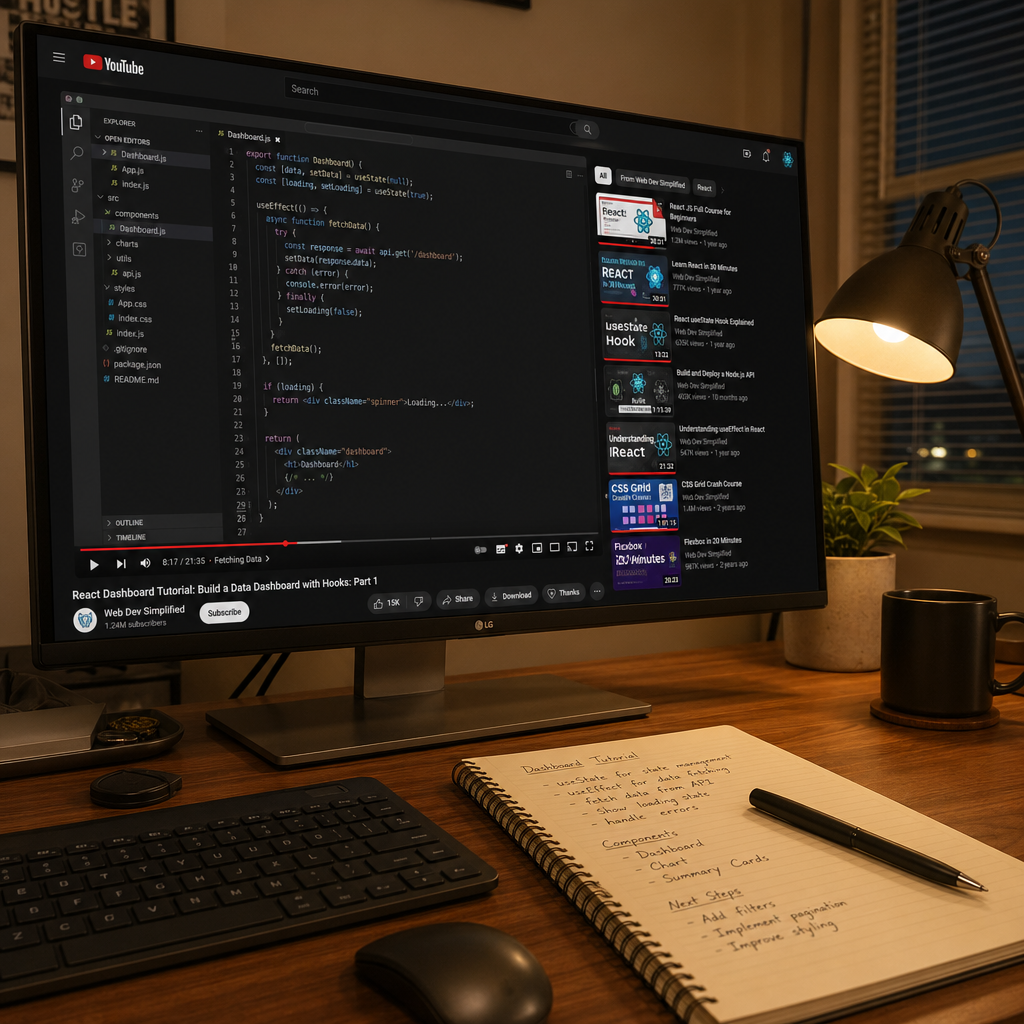
I’ll be honest, I spend a lot of time on YouTube. More than I should, probably. But I’ve made a kind of peace with that, because not all of it is wasted. Yes, there are evenings where I’ve somehow ended up forty minutes deep into a video about Soviet-era submarine engines. But there are also times when I close my laptop having genuinely learned something useful. Something that changes how I see a problem, or helps me explain a concept to the kids, or just makes me better at whatever I’m trying to build or fix.
The trouble is, YouTube is enormous. It logs over 122 million daily active users, and those users collectively watch more than a billion hours of content every single day. Finding the channels worth your time inside that firehose of content is its own skill. So I wanted to do something a bit different this month. Not review a gadget or dissect a press release, but share the channels I actually come back to. The ones that leave something behind after you’ve watched them.
These aren’t just entertaining. They’re genuinely educational. And given that a large proportion of YouTube users reportedly turn to the platform for learning purposes, I suspect I’m not the only one using it this way.
The Science and Big Ideas Channels
Let’s start here, because this is where YouTube has really surprised me over the years.
Veritasium, run by Derek Muller, who holds a PhD in Physics Education Research, is the gold standard for long-form science explanation. Each video now involves more than 30 people and can take anywhere from two to six months to produce. That kind of investment shows. The topics range across physics, maths, engineering, and some genuinely mind-bending philosophy-of-science territory. I will say there’s been some chatter online about whether the channel has shifted toward more commercially optimised content in recent years. My honest view is that it’s still excellent, but your mileage may vary depending on how deep into the academic side you want to go.
Kurzgesagt takes a different approach. One video per month, German animation studio, meticulous research, and stunning visuals. The name is German for “in a nutshell,” and they genuinely earn that. They make civilisation-scale topics like climate change, nuclear energy, and the Fermi paradox feel graspable rather than overwhelming. Fair warning, they do occasionally go full existential on you. I’ve watched a few of their videos about human extinction scenarios and then had to go make a cup of tea to recover. But they handle heavy subjects with proper gravity, and they always include sources in the video description, which I respect.
Vsauce, with its 22.7 million subscribers, is the one that got me properly hooked on educational YouTube in the first place. Michael Stevens takes a simple question, something like “What is the speed of dark?” or “How many things are there?”, and turns it into a 20-minute philosophical rabbit hole. It’s not for everyone, but if your brain likes that kind of workout, there’s nothing quite like it.
TED-Ed is worth a mention here too, particularly if you’ve got kids who are visual learners. Short animated videos, carefully structured, covering everything from science to literature to philosophy. It’s used in classrooms for a reason.
The DIY, Engineering, and Maker Channels
This is my personal sweet spot, and where I probably learn the most practically applicable stuff.
Mark Rober is the channel I point everyone towards when they say they want their kids to care about engineering. Before YouTube, Rober spent nine years at NASA, seven of which were on the Curiosity rover at JPL. He then worked at Apple’s Special Projects Group. Now he makes videos about science and gadgets that are so well-produced they feel like mini documentaries. He also runs CrunchLabs, an educational STEM subscription box company he launched in 2022, which gives you an idea of how seriously he takes the education angle. He’s not just a YouTuber. He’s genuinely building something.
Smarter Every Day is run by Destin Sandlin, an aerospace engineer, and the format is exactly what it sounds like: taking something you already know about and going deeper than you thought you needed to. Slow-motion cameras, hands-on experiments, and a genuine curiosity that doesn’t feel performed. The video about how helicopters fly is one of the best pieces of science communication I’ve ever watched.
Applied Science is the channel for when you really want to go deep. Ben Krasnow has been making videos since 2006 and has roughly 845,000 subscribers, which makes him a small channel by YouTube standards. But the content is extraordinary. He builds things like homemade electron microscopes and tests materials under extreme conditions. It’s not casual viewing, you need to pay attention, but it’s the kind of channel that reminds you what genuine engineering curiosity looks like.
I’ve been known to spend a weekend afternoon with a coffee, a notebook, and a Smarter Every Day or Applied Science video, just actually learning things. It’s probably a slightly odd way to spend a Saturday, but I regret nothing.
The Tech and Code Channels
MKBHD, Marques Brownlee, is the one most tech readers will already know. Twenty million subscribers, cinematic production quality, and reviews that manage to be thorough without being tedious. He covers smartphones, laptops, EVs, and whatever the tech world throws at him next. He’s not trying to teach you to build things, but he’ll help you make smarter buying decisions and understand why the hardware in your pocket works the way it does.
Linus Tech Tips is where the DIY spirit meets proper media infrastructure. Over 16 million subscribers, and Linus Sebastian has built it from a bedroom PC build channel into something resembling a full tech journalism operation. It’s where I go when I want to understand what’s actually going on inside a piece of hardware, or when I’m considering a build and want to see how someone else approached it.
Fireship is a gem if you have any interest in software development. Host Jeff Delaney does lightning-fast explainers and tutorials, with a format called “#100secondsofcode” that does what it says on the tin. It’s entertaining, genuinely informative, and a great way to keep up with what’s changing in the tech world without having to read a 4,000-word white paper at 11pm.
freeCodeCamp is worth singling out because it’s doing something slightly different: over 10 million subscribers, proper full-length coding courses taught by real instructors, no ads, no clickbait, completely free. If anyone in your family is trying to learn to code, start here.
Channel Comparison Snapshot
| Channel | Niche | Style | Best For | Family-Friendly |
|---|---|---|---|---|
| Veritasium | Science/Physics | Documentary | Deep thinkers | Yes (older kids) |
| Kurzgesagt | Big ideas | Animation | Visual learners | Yes (with parents) |
| Mark Rober | Engineering/STEM | Entertaining | Kids and adults | Yes |
| Smarter Every Day | Engineering | Curious/Slow-mo | Makers and builders | Yes |
| Applied Science | Advanced engineering | Detailed/Technical | Engineers and hobbyists | Yes (older) |
| Vsauce | Philosophy/Science | Rabbit hole | Curious minds | Yes (older kids) |
| MKBHD | Consumer tech | Cinematic review | Buyers and tech fans | Yes |
| Linus Tech Tips | PC/Hardware | Hands-on | DIYers and builders | Yes |
| Fireship | Coding/Dev | Fast-paced | Developers | Yes |
| freeCodeCamp | Coding | Course-format | Learners | Yes |
Hype Cycle Check
LIKELY TO LAST: Long-form educational content on YouTube is genuinely growing. Channels like Veritasium, Kurzgesagt, and Smarter Every Day have built real audiences on the quality of their work, not short-form trends. Educational watch time is rising, and creators who invest in production and accuracy are being rewarded for it. These channels aren’t going anywhere.
WATCH CLOSELY: Short-form educational content is the interesting battleground right now. Fireship’s rapid-fire format works brilliantly on YouTube, but platforms like TikTok and YouTube Shorts are also competing for the same quick-explanation niche. Whether depth wins over brevity is the question worth following.
VAPOURWARE RISK: The concern for all of these channels is algorithmic dependency. YouTube can reshape discovery overnight, and channels that rely on the platform’s recommendation engine rather than direct subscribers are always one algorithm shift away from a serious traffic drop. Build your own viewing list and subscribe directly rather than waiting for YouTube to serve content to you.
What This Means for CES 2027
Educational and creator tech is becoming a proper product category. At CES 2026, we already saw stronger AI integration into learning tools, and the line between “YouTube channel” and “structured learning platform” is blurring fast. By CES 2027, I’d expect to see more AI-assisted content creation tools aimed specifically at educational creators, better discovery mechanisms that prioritise depth and accuracy over pure engagement metrics, and hardware built around the “learn at home” use case. Channels like Crash Course and freeCodeCamp are showing what curriculum-level content looks like on YouTube, and the hardware and software industry will catch up.
What to Watch
- Mark Rober’s Netflix show in 2026, produced by Jimmy Kimmel and CrunchLabs. It will be worth watching as a signal of whether mainstream broadcast can capture what makes his YouTube work so good.
- Kurzgesagt’s Spanish and German channels. Global-language educational YouTube is growing fast. If you have kids learning languages, this is an underrated teaching tool.
- freeCodeCamp’s curriculum expansion. Free, structured coding education at scale is one of the most genuinely useful things on the internet. Worth keeping an eye on what they add.
- YouTube’s investment in educational content discovery. The platform knows it has a credibility problem around misinformation. Leaning into verified educational content is the obvious move. Watch how this develops.
If you found this useful and want more honest takes on tech, learning, and making the most of the tools we’ve all got at home, come and join the newsletter. No noise, no filler, just the stuff worth your time.
Sign up at techdadslife.beehiiv.com
Recommended gear for getting more out of educational content at home: