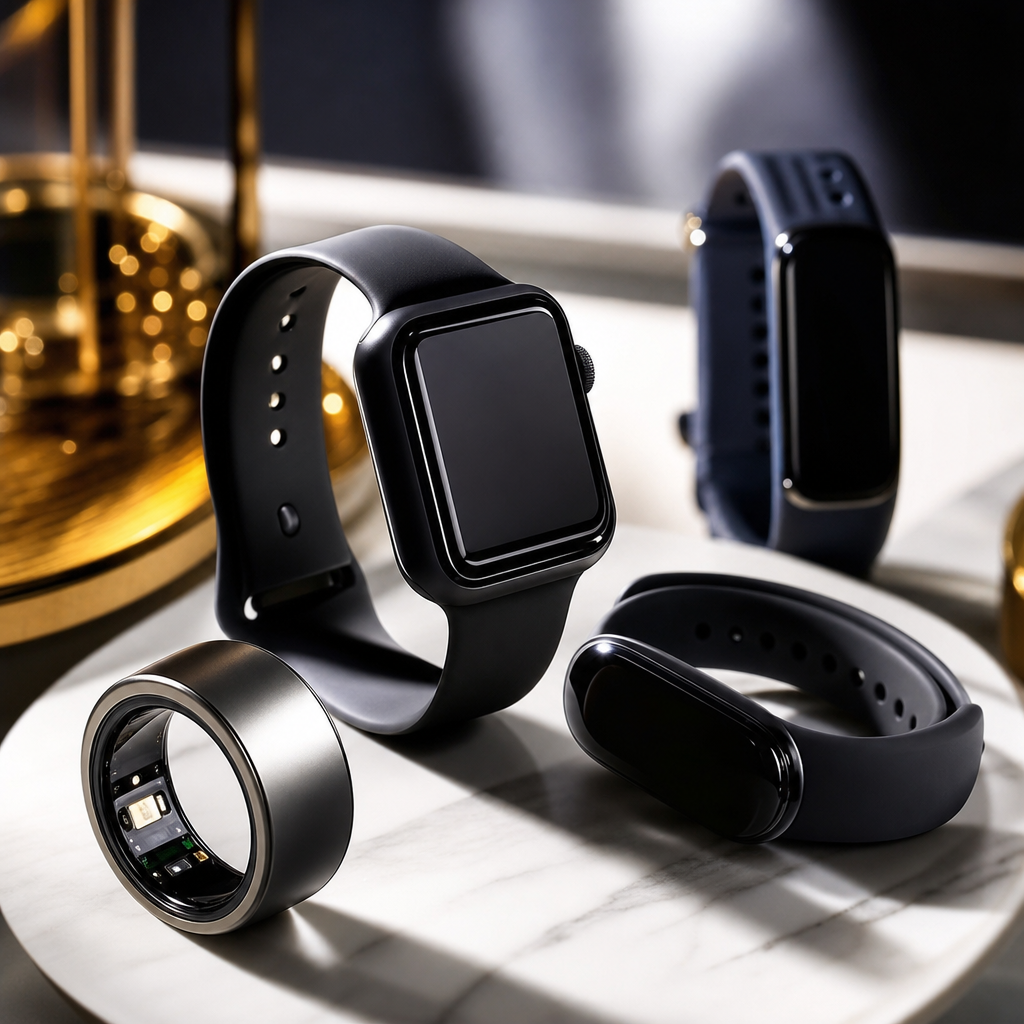
If you’d told me five years ago that I’d be seriously considering ditching my watch altogether in favour of a ring, I’d have laughed. Yet here we are in 2026, and that’s more or less exactly where I’ve landed. I’m currently waiting on my Ultrahuman smart ring to arrive, I’ve got a Fitbit on my wrist mainly because the battery life is bearable, and I’ve quietly ruled out both Garmin and Samsung after getting fed up with charging them every day or two. The wearable tech market has exploded, but more options doesn’t always mean more clarity. If anything, it’s got more confusing.
So let’s cut through it. This is a practical look at what’s actually worth strapping on, slipping on, or clipping to your ear in 2026, and what you can safely ignore.
Battery Life Is the Real Spec That Matters
I’ll say this clearly: a wearable you have to charge every night is a wearable you’ll stop wearing. That’s been my experience with both Garmin and Samsung. The hardware is genuinely impressive on both, but when you’re charging a watch more often than your phone, something has gone wrong in the design priorities.
The devices that have earned their place on my shortlist are the ones that last. Smart rings are leading the charge here (no pun intended), with most lasting five to seven days between charges. Budget smartwatches like the CMF Watch 3 Pro are hitting 13 days. Even hybrid watches like the Withings ScanWatch Light are stretching to 30 days. Battery life isn’t a luxury feature anymore. It should be the baseline expectation.
Health Tracking Has to Be Accurate, Not Just Impressive-Looking
There’s a big difference between a device that shows you a lot of data and one that shows you useful data. Heart rate, sleep stages, recovery scores, step counts. These only matter if the sensors behind them are reliable. I’ve worn trackers that told me I had a fantastic night’s sleep when I distinctly remember lying awake at 2am thinking about the school run. That’s not health tracking. That’s fiction.
Look for devices with proven sensor accuracy, especially for resting heart rate and sleep tracking. Smart rings tend to perform well here because the underside of the finger has excellent blood flow and consistent skin contact. Watches can struggle depending on how tightly you wear them. If tracking is your main reason for buying, prioritise sensor accuracy over the feature list.
Ecosystem Fit Matters More Than the Hardware
An Apple Watch is genuinely brilliant, if you have an iPhone. It’s completely useless if you don’t, full stop. A Samsung Galaxy Watch plays nicely with Android, especially Samsung phones. Garmin works across both but has its own app world. Whatever you buy, make sure it fits the phone in your pocket, not the phone you wish you had.
This is particularly relevant for families. If you’re buying a wearable for a teenager who’s on Android while you’re on iPhone, a £350 Apple Watch is going to be a very expensive doorstop.
Smart Rings Are the Dark Horse Worth Taking Seriously
The smart ring category has quietly grown up. I’m waiting on the Ultrahuman Ring, and the more I look at the space, the more I think this might be where serious health tracking lands for a lot of people. No screen, no notifications, no distractions. Just your data, quietly collected while you get on with your life.
The appeal is obvious: you can wear a classic watch you actually love on your wrist, and let the ring handle the tracking in the background. Steps, heart rate, sleep, recovery, all done without compromising on style or dealing with a dead watch battery by Thursday.
The Picks
Apple Watch SE 3 - Best for iPhone Families
If your household runs on iPhones, the SE 3 is the sweet spot. It starts at around £219, uses the same chipset as the flagship Series 11, and covers all the core health and fitness bases. You’re missing the ECG and blood oxygen tracking, along with some of the premium display brightness, but for a teenager, a partner, or yourself on a sensible budget, it’s the right call.
Pro: Great ecosystem integration, strong feature set for the price. Con: iPhone-only, and battery life is still just a day or two.
Withings ScanWatch Light - Best for Watch Lovers Who Hate Charging
This is the one I keep recommending to people who want to keep wearing a proper watch. It looks like a traditional timepiece, tracks heart rate and sleep accurately, and the battery lasts up to 30 days. It’s a hybrid, so you’re not getting a touchscreen or app notifications, but if that trade-off sounds good to you, it probably is.
Pro: Stunning battery life, looks like a real watch, accurate health tracking. Con: Limited smart features, not for people who want notifications on their wrist.
CMF Watch 3 Pro - Best Budget Smartwatch
Around £50 to £60 and genuinely one of the best budget smartwatches you can buy right now. Sharp AMOLED screen, 13-day battery life, and dual-band GPS that locks on quickly and tracks routes accurately. If you want to spend as little as possible without buying something that’ll frustrate you within a fortnight, this is the answer.
Pro: Outstanding value, excellent battery life, solid GPS. Con: Brand recognition is low, app ecosystem is basic.
Garmin Venu 4 - Best for Serious Fitness Tracking
I know I’ve had my issues with Garmin battery life, but I’ll be fair. If fitness is your primary focus and you’re training properly, nothing else touches Garmin for depth of data. VO2 max, Training Status, Body Battery, and up to 12 days in smartwatch mode. If you’re training for something and need the detail, this earns its price. Just budget for the charger being a regular fixture.
Pro: Best-in-class fitness metrics, strong battery for a feature-packed watch. Con: Expensive, and battery life still disappoints compared to rings or hybrids.
May the 4th Special: A Quick Nod
Alright, fine. May the 4th. I couldn’t let it pass without a nod. If anyone from Samsung is reading and wants to release a lightsaber-shaped smart ring, I’m absolutely buying one. May the 4th be with you.
Quick Comparison
| Model | Price (GBP) | Best For | Verdict |
|---|---|---|---|
| Apple Watch SE 3 | From £219 | iPhone families on a budget | Best all-rounder for Apple users |
| Withings ScanWatch Light | Around £150 | Watch lovers, light sleepers | Best hybrid by a mile |
| CMF Watch 3 Pro | Around £55 | Budget buyers who want GPS | Punches massively above its weight |
| Garmin Venu 4 | Around £350 | Dedicated fitness training | Best for athletes, not casual users |
Bottom Line
If you’re an iPhone family and want one device that does it all, start with the Apple Watch SE 3 and don’t overthink it. If you hate charging things and want to keep wearing a proper watch, the Withings ScanWatch Light is genuinely brilliant. On a tight budget, the CMF Watch 3 Pro will surprise you. And if you’re a serious runner or cyclist who needs proper metrics, the Garmin Venu 4 is the one.
Personally? I’m heading towards a traditional watch on the wrist and the Ultrahuman ring doing all the quiet, unglamorous work of actually tracking my health. No screen fatigue, no daily charging, just the data I need without the fuss. It might not be for everyone, but if you’re as tired of charging your watch as I am, it’s worth thinking about.
Enjoyed this? Sign up for the Tech Dads Life newsletter for weekly tech picks, honest reviews, and the kind of advice that actually makes sense for families. No spam, no waffle, just useful stuff. Join here.
Is It Time to Upgrade Your Current Wearable?
This is the question I get most often, and the answer is almost always the same: only if your current device is actively letting you down.
If your smartwatch battery is lasting a full day and you are happy with it, there is nothing on the market right now that justifies the upgrade cost. The wearable category has matured enough that last year’s good device is still this year’s good device - especially in health tracking, where sensor accuracy improvements are incremental rather than transformative.
The cases where upgrading makes sense are fairly specific. If you are charging your watch every night and it is disrupting your sleep tracking - which it almost certainly is, since most devices track sleep from when you put them on - then it is worth moving to something with longer battery life. If you are trying to track training seriously and your current device lacks things like VO2 max measurement or accurate GPS, the gap has grown wider. And if you are buying for a family member - a teenager who needs something durable and simple, or a partner who has never worn a smartwatch - the entry-level options are better value now than they have ever been.
For families specifically: The Apple Watch SE 3 at around £219 is the most sensible recommendation for an iPhone household buying a first smartwatch. The CMF Watch 3 Pro at around £55 is the answer if you are not sure they will stick with it or the budget is tight. Do not spend £350 on a first wearable for someone who has never worn one before.
The smart ring question: I am still waiting on my Ultrahuman, and the appeal keeps growing. There are no distracting notifications. No dead battery on a Tuesday. Just the data, quietly collected. For anyone who wants health tracking without the cognitive load of a screen on their wrist, it is genuinely worth considering - though at around £280 to £350 for the leading options, it is a considered purchase rather than an impulse buy. I will have a proper verdict once mine arrives.
The short version: the best wearable is the one you actually wear. If the device you have is coming off at 8pm because the battery is dead, or sitting in a drawer because the charging is too annoying, that is the problem worth solving. Everything else is a nice-to-have.