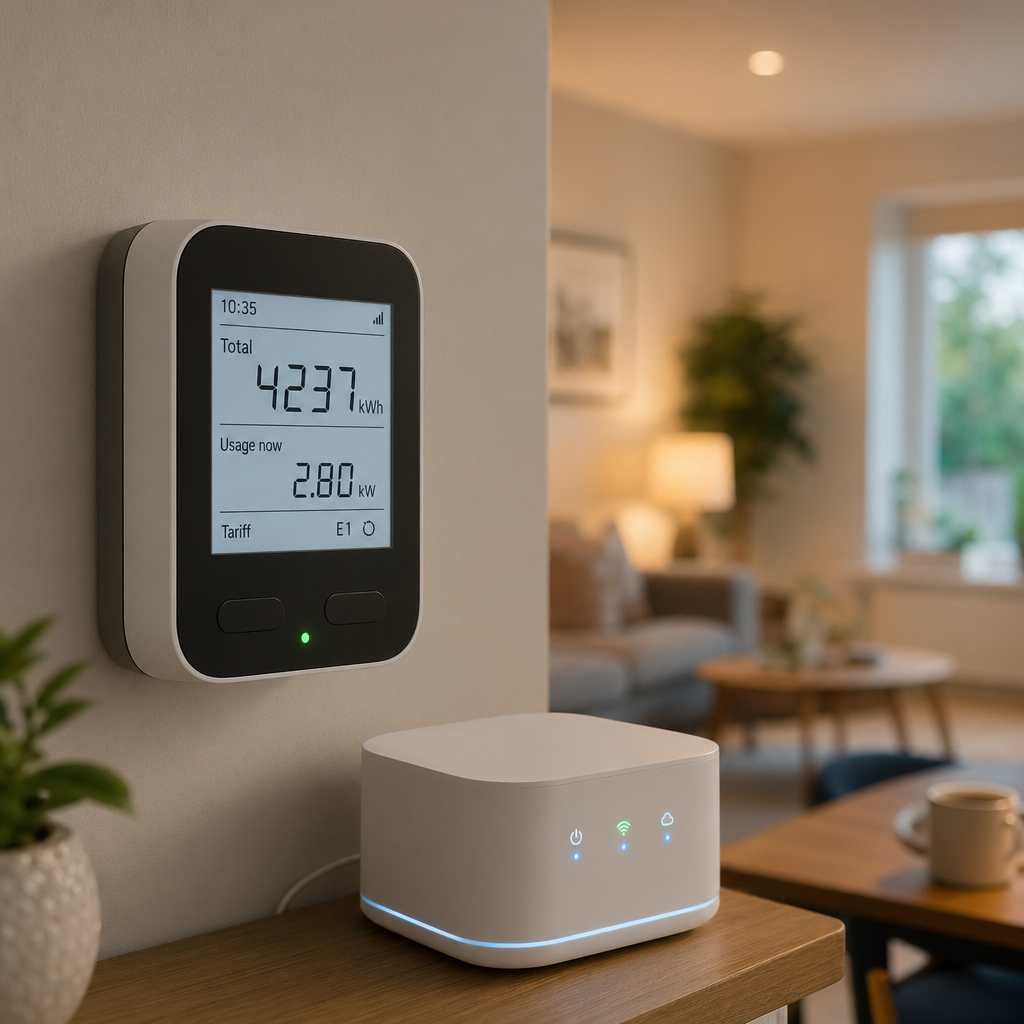
I’ll be honest, until fairly recently, I thought a “smart tariff” just meant you downloaded an app and felt vaguely good about yourself. I knew Octopus Energy had some kind of clever pricing thing going on, and I’d seen people in EV forums going on about saving hundreds of pounds a year, but I’d never actually sat down and worked out what any of it meant. Then our energy bill landed in January and I thought, right, let’s actually figure this out properly.
If you’ve got an EV, a home battery, solar panels, or even just a bit of flexibility about when your washing machine runs, there’s a genuine chance you’re leaving money on the table. Not a small amount, either. So here’s what I wish someone had explained to me six months ago.
What a Smart Tariff Actually Is
A standard energy tariff charges you the same rate for electricity regardless of when you use it. Whether you boil the kettle at 2am or at 6pm on a cold Tuesday in February, you pay the same pence per kilowatt-hour. Simple, predictable, and not particularly cheap.
A smart tariff breaks that model. It charges you different rates depending on when you use electricity, based on what’s happening on the national grid at that moment. The logic is straightforward: electricity is cheap when there’s loads of it available (windy nights, sunny afternoons when solar is pumping) and expensive when everyone’s cooking dinner at the same time and the grid is under pressure. Smart tariffs pass those price differences directly to you.
To use one, you need a smart meter capable of recording your usage in half-hourly slots. Most homes fitted with a SMETS2 meter (the second-generation smart meters that have been standard for the past few years) are compatible. If you’re not sure what you’ve got, Octopus will check for you when you apply.
The Three Tariffs Worth Knowing About
Octopus Agile is the wild one. Prices update every thirty minutes, tracking the wholesale electricity market in near real-time. Tomorrow’s prices are published after 4pm each day, so in theory you can plan ahead. When the grid has more electricity than it needs, prices can drop below zero, meaning Octopus actually pays you for the electricity you use during that window. That’s not a typo. It happened 370 times in the East Midlands alone between April 2025 and April 2026.
The flip side is that prices can spike during peak demand, typically 4pm to 7pm, and there’s a cap of £1 per kWh for extreme events. In that same period, prices exceeded 40p per kWh in 297 different half-hour slots. If you have no way to shift your usage away from those spikes, Agile can actually cost you more than a standard tariff. Octopus themselves are pretty clear about this: without a battery or some way to avoid peak hours, Agile probably isn’t worth it.
According to Octopus, the average Agile customer saved £440 compared to a standard tariff in 2023, but those savings came from people actively managing their consumption or having smart home setups doing it for them automatically.
Octopus Go is the simpler, more accessible option, specifically for EV drivers. You get a fixed cheap window overnight, typically 00:30 to 05:30, at a significantly reduced rate, and you pay a higher rate for everything outside that window. No complexity, no watching prices fluctuate. You just set your car to charge overnight and let it do its thing.
From April 2026, Go rates dropped sharply following the government’s decision to remove approximately £150 of green levy costs from household energy bills. That’s made it one of the cheapest overnight charging options available in the UK right now.
Octopus Intelligent Go is Go’s smarter sibling. It works with specific compatible EV models and chargers, and rather than just giving you a fixed cheap window, it integrates directly with your car and charger to automatically schedule charging. It can also extend the cheap window beyond the standard hours when grid conditions allow. The trade-off is that you need a compatible vehicle, so it’s worth checking the Octopus website to see if yours qualifies.
How This Looks in a Real Family Home
Let me put this in practical terms, because the theory is one thing and the reality is another.
If you’ve got an EV and you’re still charging it on a standard tariff, you’re likely paying well over 20p per kWh for every charge. Switch to Octopus Go and that overnight window drops dramatically. Over a year, for a family doing typical mileage, that’s a meaningful chunk of money saved without changing anything about your day-to-day life.
I have a Tesla Model 3 Long Range with a wall charger at home. Before I looked into this properly, I had it set to charge on a schedule, but I was on a flat tariff so the timing didn’t actually matter to my bill. With a Go-style tariff, the timing matters a lot.
For households with home batteries or solar, Agile opens up something more interesting. Smart home platforms like Home Assistant or IFTTT can monitor the Agile price feed and automatically charge your battery when prices are lowest, or even negative, then use that stored energy during expensive peak hours. Some people use tools like Octopus Watch to get alerts when cheap windows are coming up. It’s genuinely impressive automation once it’s running, though it does require a bit of upfront setup.
Even without a battery, there are low-effort wins. Running the dishwasher at midnight, scheduling the washing machine for 3am, setting the hot water immersion to heat up in the early hours rather than the evening. None of these changes are disruptive, but they add up.
Should You Actually Switch Right Now?
The honest answer is: it depends on your situation. If you’ve got an EV and you’re not on Octopus Go or Intelligent Go already, the case for switching is strong and the process is straightforward. The April 2026 rate reductions have made those overnight rates genuinely competitive, and there are no exit fees if you change your mind.
If you have a home battery, solar, or a solid smart home setup and you’re prepared to spend a bit of time on configuration, Agile is worth a serious look. If you’re on a standard flat tariff with an average lifestyle and you can’t shift much of your usage around, a smart tariff probably won’t save you much and might occasionally cost you more.
If You Want to Try It
The lowest-risk entry point is to sign up with Octopus Energy and switch to Octopus Go if you have an EV. Check your smart meter compatibility first. Octopus has a straightforward switching tool on their website, and because there are no exit fees, you can always move back to a standard tariff if it doesn’t suit you.
If you want to go deeper with Agile automation, a Raspberry Pi or an old laptop running Home Assistant is a popular starting point for monitoring prices and automating devices. It’s a decent weekend project if you enjoy that kind of thing.
For EV charging, a good smart home charger makes the whole thing significantly more manageable:
These tariffs are still listed as beta products by Octopus, which is worth keeping in mind. They’re well-established and widely used, but the technology and pricing structures do evolve. Keep an eye on your bills for the first couple of months after switching, just to make sure the numbers are working in your favour.
If this kind of practical, no-nonsense tech stuff is useful to you, I write about it regularly over at the Tech Dads Life newsletter. No fluff, no sponsored enthusiasm, just honest takes from someone who actually uses this stuff at home. Sign up at techdadslife.beehiiv.com and I’ll keep you posted.