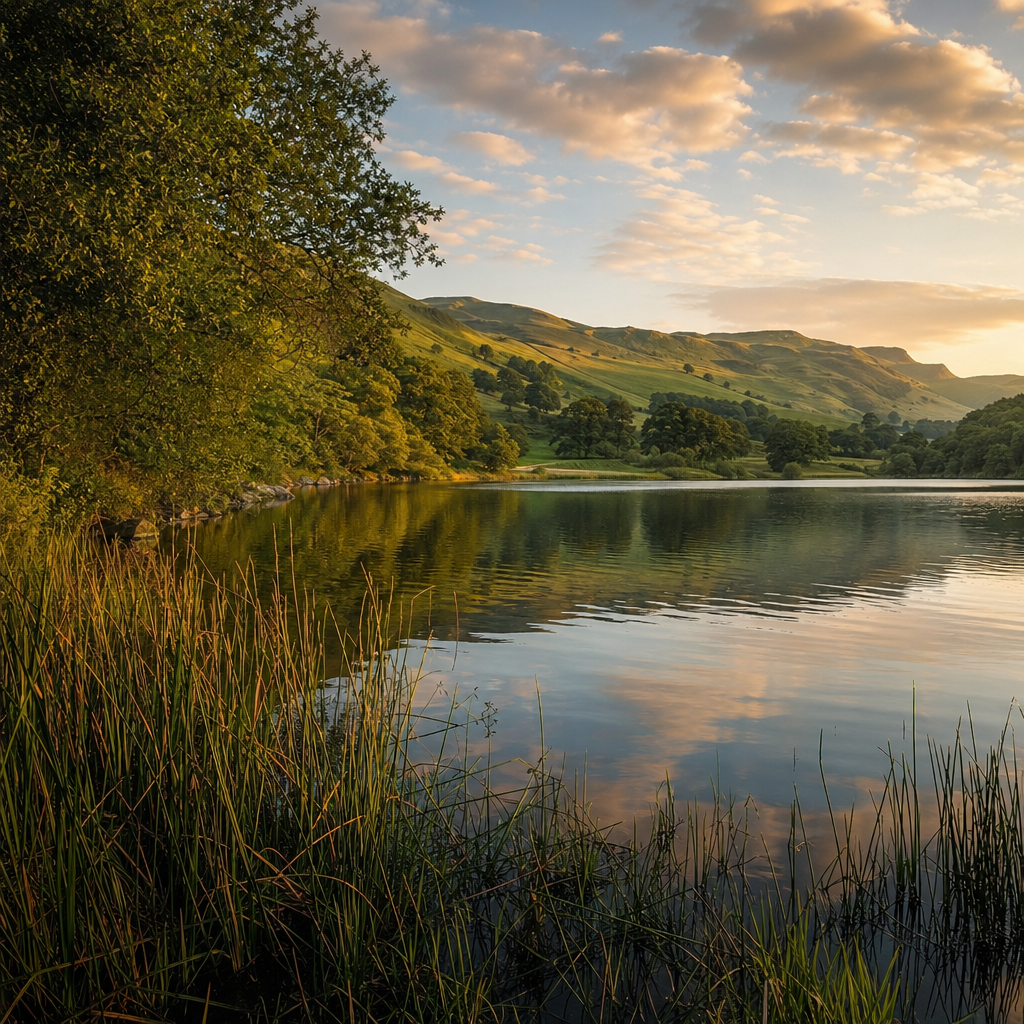
I’ll be honest with you. Until fairly recently, if you’d asked me what wild swimming was, I’d have assumed it meant doing lengths while listening to drum and bass. Turns out it’s considerably more wholesome than that, and considerably more popular than I ever expected. It came up because my youngest started asking about it after his mates mentioned going to swim in the river over the summer. My immediate response was somewhere between “that sounds brilliant” and “absolutely not without me doing some proper research first.” So I did the research. And here we are.
Wild swimming is simply swimming outdoors in natural water, whether that’s a river, a lake, the sea, or a tidal pool. No lanes, no chlorine, no queuing for the changing rooms. It sounds obvious when you say it like that, but there’s a whole community built around it, a growing body of evidence for the benefits, and an ever-expanding list of spots across the UK worth visiting. Participation has tripled since 2019, and an estimated 11.6 million people took part in outdoor water sports in 2023. So if it feels like everyone suddenly started talking about cold water dips, you’re not imagining it.
What Wild Swimming Actually Is
The appeal isn’t hard to understand. Cold water swimming is genuinely good for you. It can boost mood, improve sleep, improve circulation, and there’s something about being in natural water that just resets the brain in a way that a heated leisure centre pool simply doesn’t. For families specifically, it’s one of those rare activities where screens are irrelevant, everyone is doing the same thing, and the experience actually sticks in kids’ memories. There’s no paid DLC for jumping into a chalk stream.
The flip side is that it’s not a controlled environment, and that matters more when children are involved. Unlike a pool, you can’t necessarily see the bottom, the temperature varies, and the depth isn’t marked in helpful painted numbers. That’s not a reason to avoid it. It’s a reason to go in prepared.
The Best Spots in the South of England
If you’re in the South East, there are some genuinely excellent options without having to drive to Cornwall. The River Wey near Shalford in Surrey is often cited as one of the best beginner spots in the region. Shallow waters, sandy banks, meadows alongside you, and historic mills and bridges to look at when you need a reason to pause and pretend you’re not cold. You can park at Meadrow Car Park (GU7 3JF) for fairly modest fees and reach the swimming spot with a short walk. It’s exactly the kind of low-pressure, beautiful setting that makes this activity feel like a treat rather than an ordeal.
For Londoners or those passing through, the Hampstead Heath Ponds offer three swimming areas including a mixed pond. Expect moorhens and the occasional heron as fellow swimmers. Parking at East Heath Car Park costs around £5 for up to two hours. It’s a lovely spot, though noticeably busier at weekends.
In the South West, Bude Sea Pool in north Cornwall is one of the most family-friendly wild swimming spots in the country. It’s a semi-natural tidal pool sitting between Summerleaze and Crooklets beaches, managed by a local charity called Friends of Bude Sea Pool. At low tide it becomes a genuinely gentle space for children to splash around, learn to swim, or attempt bodyboarding without the full force of the Atlantic reminding them who’s in charge. If you want children to genuinely fall in love with wild water, this is a very good place to start.
The River Dart on Dartmoor is another excellent choice for a first river swim. Set within peaceful woodland inside Dartmoor National Park, the water is clean, clear, and the flow gentle enough that you won’t spend the whole time fighting the current. If you’re in the Cotswolds, Lake 32 at Cotswold Water Park is specifically set up for beginners and even offers an open water swimming induction with experienced guides. If I were taking a complete novice family member for their first wild swim, that structured introduction would feel reassuring.
Safety Rules for Families
This is the part that matters most, so I’m not going to rush through it.
Cold water is the single biggest factor that catches people out. The RNLI recommends acclimatising slowly rather than jumping straight in, and that’s especially important with children. Cold water reduces swimming ability significantly. The guidance is to assume you can swim roughly a tenth of the distance in cold water compared to a warm pool. That’s a dramatic reduction, and it means even a confident child should stay close to the shore and build up their range over time, not on the first visit.
Shivering is a warning sign. It indicates the early stages of hypothermia, and that’s the point to get out, get dry, and get warm. Wetsuits are genuinely helpful here. There are some excellent wetsuits made for children that not only regulate temperature but also add a degree of buoyancy. That’s an extra layer of reassurance when you’re watching from the bank.
Never swim alone. That’s a rule regardless of age, but it matters enormously with children in the water. Keep a constant eye on weaker swimmers. If you’re at a spot with a beach-style entry, check the depth yourself before letting the kids in. The slope can be deceptive and depth can change quickly. Life jackets or buoyancy aids are worth bringing for children who aren’t confident in the water.
The RNLI also recommends wearing a brightly coloured swim hat and taking a tow float with you. The hat makes you visible on the water and doubles as a reasonable barrier against the cold. The tow float gives you something to hold onto and helps others spot you. Neither is expensive, and both are worth having.
Should You Care Right Now?
Yes, especially if you’ve got kids at home and summer is anywhere on the horizon. Wild swimming is one of the genuinely good unplugged activities that the whole family can do together, costs very little, and creates proper memories. You don’t need to be a strong swimmer or particularly outdoorsy. You need a wetsuit for cooler months, a bit of research into a safe beginner spot, and the willingness to get cold for a few minutes before realising it’s actually magnificent.
If You Want to Try It
Start at Lake 32 in the Cotswold Water Park if you want a proper induction and a structured first experience. It’s designed for people who are new to open water swimming and the staff are there specifically to help. If you’re closer to the South East, the River Wey near Shalford is a relaxed, beautiful beginner spot with easy access. Either way, go with wetsuits if the water is likely to be below about 15°C, take a tow float, wear a bright hat, and tell someone where you’re going.
Don’t try to do a long swim on the first visit. Wade in slowly, give your body time to adjust to the temperature, and let the kids set their own pace. The goal on day one is to enjoy it, not to prove anything.
If you found this useful, you’ll like the Tech Dads Life newsletter. It covers the kind of stuff that actually matters to families, from tech and outdoor life to honest reviews and the occasional terrible pun. No spam, just good stuff. Sign up at techdadslife.beehiiv.com .
Why We Started: The Honest Backstory
I came to wild swimming relatively late, and it was driven by the same thing that drives a lot of tech dads toward it: screen fatigue. Not the kids’ screens - mine. There is something about standing chest-deep in cold river water that makes your email feel genuinely irrelevant. I am not sure any app has ever achieved the same effect.
We did our first proper family wild swim in the summer of 2024, in a river in Hampshire that a friend had been using for years. The kids were sceptical until they were in. Then, predictably, we could not get them out. My youngest, who is not a confident swimmer in a pool and actively avoids the deep end, waded in to her waist and stood there for twenty minutes in a state of complete contentment. There is something about natural water - the movement, the temperature, the fact that it is not a pool - that seems to shift the dynamic for children who have developed anxiety around swimming.
The kit has evolved since then. We have wetsuits for the colder months, tow floats that get used every time, bright swim hats that make spotting the kids trivial, and a change kit in a dry bag in the boot as a permanent fixture from May through October. The total investment was manageable - decent children’s wetsuits run from around £30 to £60, a tow float is about £20, and bright swimming hats are a couple of pounds each. The car boot kit has repaid itself many times over in spontaneous swims that we could not have done without it.
The thing nobody tells you about wild swimming with children: the first five minutes are always the worst. For everyone. Even now, after enough swims that I know what is coming, that initial cold water on the skin is a genuine shock to the system. The instinct is to get out. If you push through - or more accurately, if you shuffle in slowly enough that your body has time to adjust - the feeling that follows is worth the discomfort. Getting children past that first five minutes is the whole battle. Once they are in and moving, they will stay in until they are blue.
If you have been thinking about trying it, a still summer day in June or July is the time. The water is at its warmest, the evenings are long, and there are enough good beginner spots around the UK that you are almost certainly within an hour of somewhere suitable.