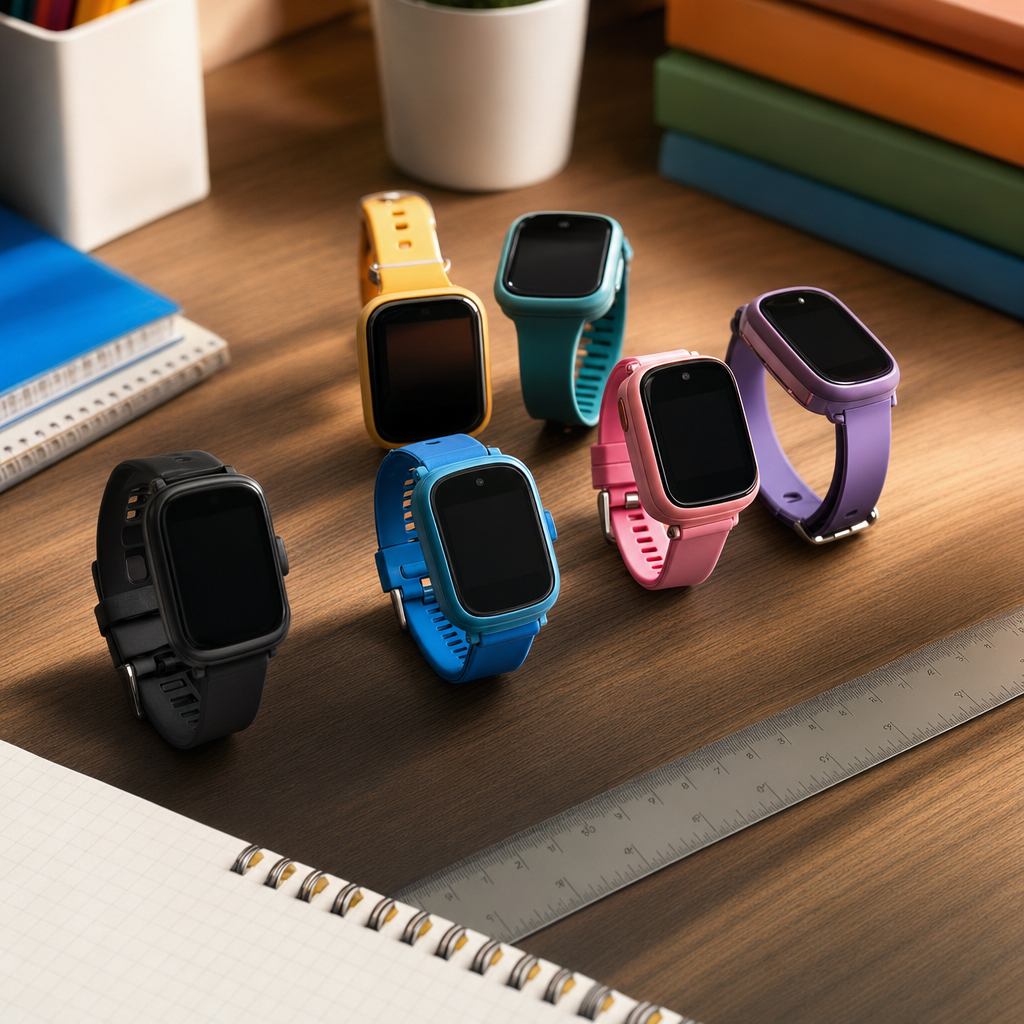
It starts with a playground conversation. Your kid comes home and announces that “literally everyone” in their class has a smartwatch. You do some quick mental maths, realise “literally everyone” probably means two kids and a supply teacher, but the seed is planted. Now you’re down a rabbit hole of GPS trackers, SIM plans, and watches that look like they were designed by someone who has never met an actual child. Deep breath. Let’s sort this out properly.
The kids’ smartwatch market in 2026 is genuinely better than it was even two years ago. But “better” also means “more crowded,” and the gap between a great device and an expensive disappointment is often just one or two features you didn’t think to check. Whether your child is seven and you want peace of mind on the walk to school, or they’re eleven and lobbying hard for a phone (and you’re lobbying harder against one), there’s a smartwatch that hits the sweet spot. You just need to know what you’re looking for.
GPS Tracking That Actually Works
This is the big one. Most parents aren’t buying a kids’ smartwatch because their child desperately needs to count their steps. You want to know where they are. But not all GPS is created equal.
Look for a watch that combines GPS with GLONASS or Galileo satellite systems, plus Wi-Fi positioning for when they’re indoors. A watch that only uses standalone GPS will struggle inside buildings, which is exactly where kids spend most of their time (schools, sports halls, your mum’s house). The best devices in 2026 now offer real-time tracking with updates every 60 to 90 seconds, and geofencing that pings your phone when they leave or arrive at set locations. If the spec sheet just says “GPS” with no further detail, treat that as a yellow flag.
Also, check how tracking data is displayed. A clean, responsive parent app makes all the difference. If the companion app looks like it was last updated during the first lockdown, move on.
Messaging and Calling Without the Wild West
A smartwatch can give your child a way to reach you, and a small circle of approved contacts, without handing them the entire internet in their pocket. That’s the whole appeal. But the implementation varies wildly.
The best watches in this category offer voice calling, pre-set text replies, and voice messages to a parent-approved contact list. Some now include basic video calling, which is handy if you want to actually see that they’re at the park and not, say, halfway up a tree. What you want to avoid is any device that allows unfiltered messaging or open chat features with strangers. Look for watches where the parent app gives you full control over who can contact your child. If the marketing leans heavily on “social features” aimed at kids chatting with each other freely, that’s worth scrutinising.
Durability and Battery Life (AKA the Dealbreakers)
Your child will get this watch wet. They will bash it against a wall. They will attempt to use it as a digging tool at the beach. This is not pessimism, it’s forecasting.
An IP68 water-resistance rating is the minimum you should accept. Ideally you want something that can survive a swim, not just a splash at the sink. Gorilla Glass or equivalent screen protection is a bonus, and a chunky, rubberised case design is your friend. Slim and sleek looks great on a press photo, but real kids need something that can survive a Year 4 lunchtime.
Battery life is the other silent killer of kids’ smartwatches. If a watch can’t get through a full school day on a single charge, it’s useless. Aim for at least two days of normal use. Some of the newer models are pushing three to four days now, and that’s the sweet spot where you’re not nagging them to charge it every single night. Nobody needs another device to charge. You’ve already got enough cables behind the TV to abseil down a building.
Monthly Costs and SIM Plans
Here’s where it gets sneaky. Many kids’ smartwatches require a SIM card or an eSIM with a data plan to enable GPS tracking and calling. That means an ongoing monthly cost on top of the purchase price.
Some brands bundle their own plans (often £5 to £8 per month), while others let you pop in any nano-SIM. The bundled plans are usually simpler to set up, but a cheap SIM-only deal from the likes of Smarty or Giffgaff can work out at £3 to £4 per month if the watch supports it. Always check before you buy. A watch that looks like a bargain at £80 becomes less impressive when it locks you into a £7.99 monthly plan you can’t opt out of.
The Conversation I Would Have First
Before buying anything, I would separate the parent’s reason from the child’s reason. Our reason is usually safety, contact, and delaying the full smartphone jump. Their reason is usually status, independence, and not feeling left out. Both are real, and pretending otherwise makes the whole decision harder.
The deal I would set is simple: the watch is for agreed contact, location safety, and independence practice. It is not a secret chat device, a bedtime toy, or a loophole around screen limits. I would explain the tracking honestly too. A child should know location sharing is switched on, who can see it, and when it will be checked. Quiet safety net, not constant surveillance.
I would also agree the charging routine on day one. Kids’ watches fail in boring ways. The GPS is fine, the parent app is fine, the SIM is fine, and then the thing is dead in a school bag because nobody charged it. Pick a visible charging spot and make it part of the evening routine, otherwise the watch becomes one more device you manage.
The Picks
Xplora X7 Play
The Xplora range has been a solid performer for a couple of years now, and the X7 Play is their best all-rounder for 2026. It offers GPS plus Wi-Fi positioning, voice and video calling, an SOS button, and a parent app that’s genuinely pleasant to use. There’s a step counter and a reward system that gamifies physical activity, which is a nice touch without being gimmicky. It takes any nano-SIM, so you’re not locked into a proprietary plan.
Pros: Excellent parent app, flexible SIM options, solid build quality. Cons: Screen is functional rather than flashy, and older kids might find the design a bit young.
myFirst Fone R2
This one’s aimed at the slightly older end of the kids’ smartwatch market, say eight to twelve. It’s got a round face that looks more like a “real” watch, which matters enormously to a ten-year-old’s credibility. GPS and GLONASS tracking, video calling, music playback, and a decent camera. It uses an eSIM with myFirst’s own plan, which is straightforward but does mean a monthly commitment of around £6.
Pros: Grown-up design kids actually want to wear, impressive feature set, good tracking accuracy. Cons: Locked into myFirst’s eSIM plan, slightly pricier upfront.
Vodafone Neo (Disney Edition)
If your child is younger (five to eight, roughly), the Vodafone Neo remains a strong choice. The Disney and Marvel character integration isn’t just a skin, it’s woven into the interface with animated 3D characters that guide the experience. GPS tracking, calling, messaging, and an activity tracker are all present. The catch is you’ll need a Vodafone SIM plan, which starts at around £7 per month on top of the device cost.
Pros: Fantastic for younger kids, polished interface, strong parental controls. Cons: Vodafone plan required, kids may outgrow the Disney angle quicker than you’d like.
Garmin Bounce
Garmin brought their reputation for rugged, reliable GPS devices to the kids’ market, and the Bounce is the result. It’s arguably the toughest watch on this list, with excellent multi-satellite tracking, geofencing, messaging, and genuinely impressive battery life (comfortably three to four days). It uses its own Garmin Jr. app and requires a data plan through their partnership, running around £5 per month.
Pros: Outstanding GPS accuracy and battery life, very durable, trusted brand. Cons: Design is more sporty than fun, fewer “entertainment” features than rivals.
Apple Watch SE (with Family Setup)
The premium option. If your household is already deep in the Apple ecosystem, Family Setup lets you pair a watch to your iPhone without your child needing their own phone. You get best-in-class build quality, accurate tracking, messaging, and the full suite of Apple’s parental controls. But you’re looking at £219 ($275) or more for the watch, plus a cellular plan. It’s a lot, but for older kids approaching secondary school, it’s the most future-proof choice.
Pros: Best ecosystem integration for Apple families, premium build, grows with the child. Cons: Significantly more expensive, overkill for younger children.
Quick Comparison
| Model | Price (GBP) | Best For | Verdict |
|---|---|---|---|
| Xplora X7 Play | £130 ($165) | All-round family pick, ages 5-10 | Best value for most families |
| myFirst Fone R2 | £170 ($215) | Style-conscious kids, ages 8-12 | Best for pre-teens who care about looks |
| Vodafone Neo | £100 ($125) + plan | Younger kids, ages 5-8 | Best for little ones who love Disney |
| Garmin Bounce | £150 ($190) | Active, outdoorsy kids | Best GPS and battery life |
| Apple Watch SE | £219 ($275) | Apple families, ages 10+ | Best premium option, most future-proof |
Bottom Line
For most families, the Xplora X7 Play is the one I’d recommend. It nails the fundamentals, GPS, calling, parental controls, and durability, without locking you into expensive monthly plans. It’s the sensible choice, and I mean that as a genuine compliment.
If your child is older and would rather eat their own homework than wear something “babyish,” the myFirst Fone R2 is worth the step up. And if budget is no object and you’re already an Apple household, the Apple Watch SE with Family Setup is the gold standard, just make sure you’re prepared for the ongoing cellular cost.
Whatever you choose, the real win here is giving your kid a taste of independence while keeping a quiet safety net in place. And delaying the phone conversation by at least another year. That alone is worth every penny.
My final buying filter would be: would I still be happy with this watch if the novelty wore off after two weeks? If the answer is yes because it still solves school pickup, walking home, sports clubs, or “I’m ready now” calls, it is probably worth considering. If the answer is only yes because the features look fun, I would wait.
📬 Want more honest tech advice for family life? I send out a weekly newsletter covering the gear, gadgets, and digital parenting tips that actually matter. No fluff, no spam, just useful stuff from one dad to another. Sign up free at Tech Dads Life