

Smart Glasses Are Having a Moment. But Will They Actually Stick Around?
Weekly Trend Watch #001 | April 2026 | CES 2027 Build-Up Series
Every few years, tech convinces us that face-worn gadgets are finally going to be a thing. Google Glass promised it in 2013 and quietly shuffled offstage. But something feels different in 2026. Smart glasses are back, they are genuinely useful, and this time the industry has brought serious firepower. The question for every tech dad watching their budget is the same one it has always been: is this real, or is it just very good marketing?
This is the first post in my CES 2027 Build-Up series, where I will be tracking one major trend every week throughout the year and building those into an annual prediction for what will dominate the show floor in Las Vegas next January. Smart glasses felt like the right place to start, because the signals right now are unusually loud.
What Changed at CES 2026?
CES 2026 was the moment smart glasses stopped being a niche corner of the show floor and became one of the dominant stories of the whole event. The category has genuinely matured, and it showed in three distinct ways.
First, the number of players exploded. Brands like Amazfit and XGIMI, who have historically made wearables and projectors, both launched smart glasses products. The reason is straightforward: the technology supply chain has matured to the point where reference designs are readily available, which means new entrants can ship competitive hardware faster and cheaper than ever before. More competition almost always benefits consumers.
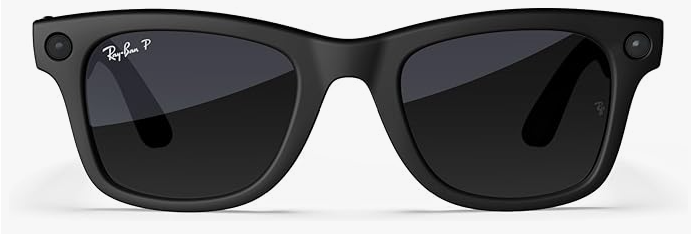
Second, the use cases got genuinely practical. Rokid launched its Style glasses at CES for $299, featuring a 12-hour battery, a 12MP camera, multi-LLM AI support including both GPT and DeepSeek, and real-time translation. These are not a novelty gadget. These are a product someone might actually wear on the school run or on the commute. Meta continued pushing the Ray-Ban line forward, adding teleprompter functionality and pedestrian navigation across 32 cities, with a Neural Band wristband that lets you control your glasses through EMG signals in your wrist.
Third, there was a clearer split emerging between two types of product: display-free AI audio glasses built for all-day use, and full AR display glasses with micro-LED optics built for gaming, productivity, and richer visual experiences. That split is healthy. It means the market is segmenting rather than chasing a single definition of what smart glasses should be.
The Privacy Elephant in the Room
There is a version of this story that is not quite so optimistic, and as a dad I think it is worth naming it directly.
At CES 2026, alongside the genuinely impressive hardware, there was a wave of always-on AI wearable devices that went much further. Lenovo demoed Project Maxwell, a concept aimed at recording and transcribing everything around you at all times to build a personal AI profile. SwitchBot showed off an 18-gram AI MindClip that records your conversations and sends them to the cloud. Plaud showed a wearable pin that continuously transcribes and summarises your day.
These are not smart glasses exactly, but they represent the same underlying push: ambient AI that is always listening, always watching, and always uploading. For families, this raises real questions about what is being recorded, where it is going, and who else might be in the frame when the camera is rolling. I am not saying these products should not exist. I am saying that as buyers we need to read the small print, and as parents we need to think carefully about what we normalise in our homes.
The best smart glasses in 2026 are upfront about what they capture and give you clear controls. The ones to avoid are the ones that treat your privacy as a feature to be sold to their platform.
Hype Cycle Check: Where Does This Sit Right Now?
Smart glasses as a category have been through the full Gartner Hype Cycle once already. They peaked with Google Glass around 2013, crashed hard through the trough of disillusionment, spent years quietly improving in enterprise and niche markets, and are now climbing the slope of enlightenment. That is actually a good place to buy in, because the hype has been reset by failure and the products that survive are the ones that have figured out genuine utility.
Here is my honest read on where things stand:
- LIKELY TO LAST: Display-free AI audio glasses at the $200 to $350 price point. The Ray-Ban Meta model has already proven consumer appetite exists. Rokid Style, Amazfit, and others entering this tier will drive prices down and quality up. Prescription lens support is becoming standard, which removes a massive barrier for a huge chunk of the population. This segment will be at CES 2027.
- WATCH CLOSELY: Full AR micro-display glasses. XREAL and RayNeo are pushing real hardware with impressive specs, and the XREAL partnership with Google on Android XR is significant. But battery life, weight, and price are still barriers. This feels like 2024 smartphones did in 2018: real, impressive, but not quite there yet for the mass market.
- VAPOURWARE RISK: Always-on ambient AI wearables that promise to record and remember your entire life. The concept is compelling but the privacy backlash will be severe and regulation is coming. Most of these CES concepts will not reach shelves in meaningful numbers.
What This Means for CES 2027
This is week one of what will become an annual prediction, so it is early to make firm calls. But the signals I am tracking suggest smart glasses will be one of the two or three defining categories at CES 2027.
By January 2027, I expect the display-free AI audio segment to have a proper three or four horse race with multiple sub-$200 options. I expect XREAL and its Google Android XR partnership to have shipped something that makes the AR display glasses category feel genuinely competitive. And I expect Meta to have iterated on the Ray-Ban Display model in ways that make the teleprompter and navigation features feel like table stakes rather than novelties.
The wild card is Apple. Reports have suggested an Apple AI Pin or glasses-adjacent product arriving in 2027. If that is true, CES 2027 will see every other manufacturer scrambling to position before Apple resets everyone’s expectations. That alone makes this category worth watching closely all year.
The Tech Dad Take
Would I buy a pair right now? Almost. I have been watching the Ray-Ban Meta line closely, and the Display version is compelling but the waitlist stretching into 2026 tells you supply has not caught up with demand. Rokid Style at $299 with prescription support and 12-hour battery is the product I would hand to a tech-curious family member today.
For the home, the big question is how you feel about a camera on someone’s face during dinner. That is a real conversation worth having before you buy. My take: clear physical shutter controls and a visible recording light are non-negotiable. If a pair of glasses does not have both of those, they are not coming into my house.
I will be tracking this category every few weeks throughout the year and feeding it into my CES 2027 annual prediction. If smart glasses continue building momentum the way they are, they will have a dedicated section in that piece come December.
What to Watch Over the Next Few Months
techdadslife.com | Weekly Trend Watch #001 | CES 2027 Build-Up Series

Technology & Digital Consultant, Property Industry, Photographer, Videographer, CAA Approved Drone Pilot, DIY Enthusiast, FA Coach, Solution Finder & Thinker.